


From the Field to the Dashboard – Built by Experts, for Experts.
Discover What's Really Happening in the Steel Industry
Use the AI-powered search engine to analyze production activity, market trends, and news faster than ever before.
Try the Free AI Search EnginePositive Outlook for Ukraine’s Steel Industry Amidst Recent Export Fluctuations
In Ukraine, the steel market is demonstrating resilience despite challenges, particularly highlighted by the articles “Ferroalloy exports from Ukraine fell to their lowest level since April 2024 in January“ and “Flat steel exports from Ukraine fell by 12.4% m/m in January,” which indicate significant drops in specific steel exports. Notably, this decline coincides with observable increases in activity levels at some steel production facilities, suggesting nuanced shifts in market dynamics.
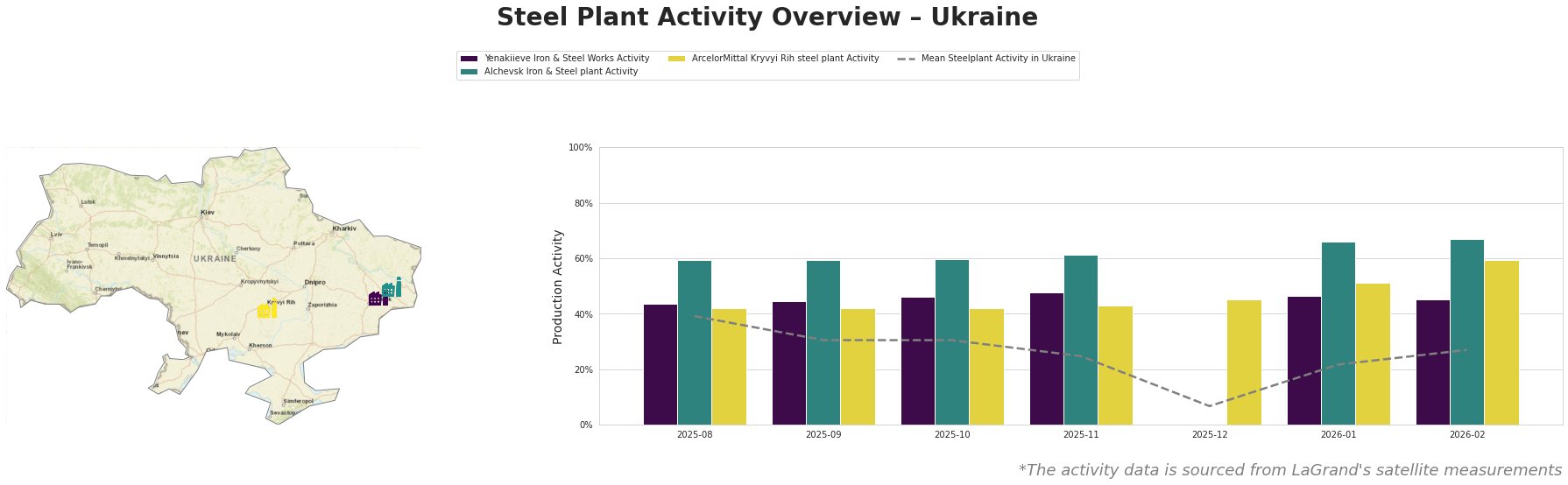
Yenakiieve Iron & Steel Works (YISW) has seen its activity level average at 45.0% in January and 27.0% in February, a drop from 44.0% in August, correlating to market expectations following “Ferroalloy exports from Ukraine fell to their lowest level since April 2024 in January.” In contrast, Alchevsk Iron & Steel Plant (AISP) has demonstrated increasing activity levels, with February reaching 67.0%, up from 61.0% in November, aligning with “Ukraine’s total steel exports up 8.1 percent in Jan 2026,” indicating a shift towards semi-finished products gaining demand. Meanwhile, ArcelorMittal Kryvyi Rih maintains healthy operational rates around 59.0% in February, suggesting stability and adherence to operational capability despite broader export declines.
In light of these observations, the market presents both opportunities and challenges. Steel buyers should strategically focus on procurement from facilities exhibiting upward trends in production, like AISP, while keeping a close watch on pricing, especially for flats and long products, in response to fluctuating semi-finished exports. Notably, reduced ferroalloy exports may create potential supply chain disruptions for certain steel segments, urging buyers to secure agreements with reliable producers amidst tightening supply. To capitalize on the emerging positive sentiment, steel stakeholders should also consider diversifying their supplier base, particularly looking towards plants demonstrating robust production resilience amid challenging export conditions.