


From the Field to the Dashboard – Built by Experts, for Experts.
Discover What's Really Happening in the Steel Industry
Use the AI-powered search engine to analyze production activity, market trends, and news faster than ever before.
Try the Free AI Search EnginePositive Outlook for Europe’s Steel Market: Activity Resilience Amid Supply Challenges
Recent developments in the European steel market, specifically in Ukraine, underscore buoyant activity levels despite notable production challenges. Articles titled “Zaporizhcoke reduced output by 3.2% m/m in April” and “Metinvest reduced steel production, but kept pig iron output at last year’s level” highlight declines in local coke production and steel output, attributed primarily to geopolitical disruptions. Notably, satellite-observed data reflects varying activity levels among key European steel plants amid these fluctuations.
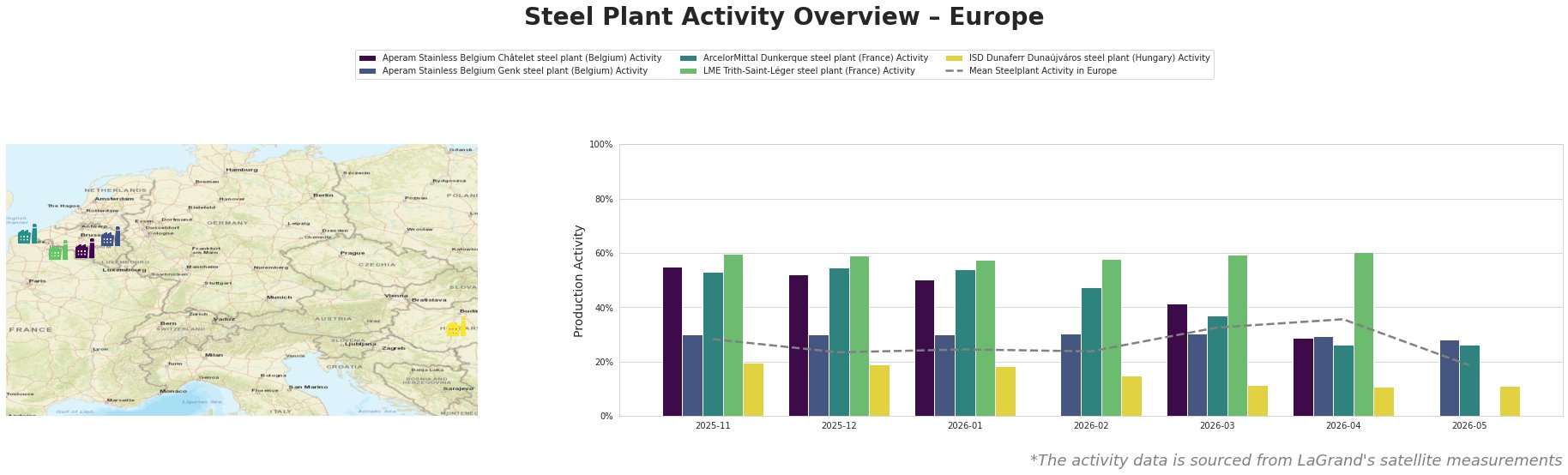
The Aperam Stainless Belgium Châtelet plant has observed a decline in activity, with a significant drop from 55% in November 2025 to 29% in April 2026. This trend may correlate with the “Metinvest reduced steel production” report, which indicates broader market pressures but lacks a direct reference to Châtelet operations. Conversely, ArcelorMittal Dunkerque’s activity declined to 26% in April, which may reflect challenges noted in Zaporizhcoke’s output reduction as a key supplier for the steel production chain.
In Ukraine, the “Ukraine reduced imports of coke by 9.9% y/y in Q1” article emphasizes a strategic responsiveness amid relying on fewer imports, which may see downstream impacts on plants like ISD Dunaferr. Despite a broad downturn in measured activity, the relative stability at Metinvest in pig iron output reflects attempts to maintain production capacity in light of challenges faced.
Potential supply disruptions are evident, particularly in coke availability from Ukraine, potentially affecting operations across Europe relying on these imports. As such, steel buyers should curate procurement strategies focusing on regions with stable supply lines and consider alternatives to Ukrainian sources. Establishing contacts with suppliers from Poland and other regions could mitigate impacts stemming from ongoing geopolitical instability and supply chain disruptions.