


From the Field to the Dashboard – Built by Experts, for Experts.
Discover What's Really Happening in the Steel Industry
Use the AI-powered search engine to analyze production activity, market trends, and news faster than ever before.
Try the Free AI Search EnginePositive Market Outlook for German Steel Industry Amid Policy Discussions
Germany’s steel sector is poised for growth as recent insights reveal an uptick in plant activities amidst evolving climate policy debates. Key developments from “Emissionshandel in der EU: Merz’ rätselhafte Klimadebatte“ and “Friedrich Merz auf CDU-Parteitag: Der neue Sound des Bundeskanzlers“ indicate that Chancellor Merz’s optimistic discourse on the economy is correlated with rising activity levels in selected steel plants, notably the Benteler Steel Tube Lingen plant, where activity reached 71% in January 2026. This aligns with a gradual recovery trend across the industry, despite recent fluctuations.
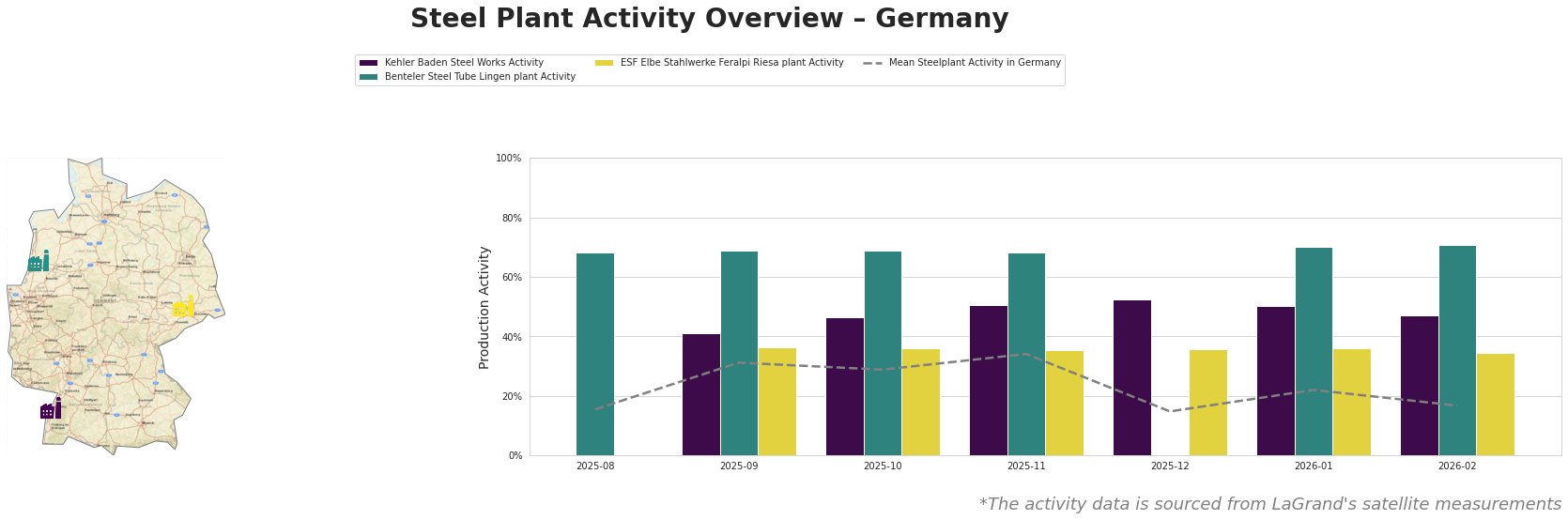
The Kehler Baden Steel Works, located in Baden-Württemberg, experienced a notable increase to 52% in December 2025 but has since settled at approximately 47% by February 2026. This fluctuation appears disconnected from any recent policy shifts, indicating operational variances independent of political discussions.
At the Benteler Steel Tube Lingen plant in Lower Saxony, the activity surged impressively to 71% by January, reflecting immediate responsiveness to the economic optimism expressed by political leaders such as in “Friedrich Merz auf CDU-Parteitag: Der neue Sound des Bundeskanzlers.” This segment is critical as it serves the automotive and construction sectors, which may benefit from a potential increase in orders as the national economy strengthens.
Conversely, the ESF Elbe Stahlwerke Feralpi Riesa plant reached a peak of 36% activity in January but dwindled slightly to 34% by February, suggesting a stabilization phase. No direct correlation could be established with the recent news articles, indicating that local factors may be influencing this plant’s operations more than federal policy.
Despite minor fluctuations, the overall positive sentiment from policymakers and the reported boosts in steel plant activity indicate a favorable environment for procurement strategies. Buyers should consider securing contracts particularly with Benteler and potentially beneficial agreements with Kehler, while monitoring any regulatory implications from ongoing discussions highlighted in “German heating proposals ‘jeopardise climate targets’“. This aligns with expected changes in heating laws that could influence end-user demand for steel products in connection with climate goals.
In conclusion, a proactive approach to procurement is advised, leveraging the upward trajectory of activity in the German steel sector, especially amid supportive governmental discussions.