


From the Field to the Dashboard – Built by Experts, for Experts.
Discover What's Really Happening in the Steel Industry
Use the AI-powered search engine to analyze production activity, market trends, and news faster than ever before.
Try the Free AI Search EngineNegative Steel Market Outlook in Germany: Rising Heating Costs and Sluggish Plant Activities
Germany’s heating policy reform poses significant risks to the climate and the steel market. Recent reports, such as German heating proposals ‘jeopardise climate targets’ (2026-02-24) and Deutschland-Blog: Grüne warnen vor “neuer Heizkostenfalle” | FAZ (2026-02-25), underline growing concerns about the proposed heating law’s ability to meet climate targets, potentially leading to increased emissions and heating expenses. This impending legislation is expected to exacerbate an already challenging environment for steel manufacturers, particularly as fall-offs in satellite-observed plant activity indicate declining operational efficiency and capacity.
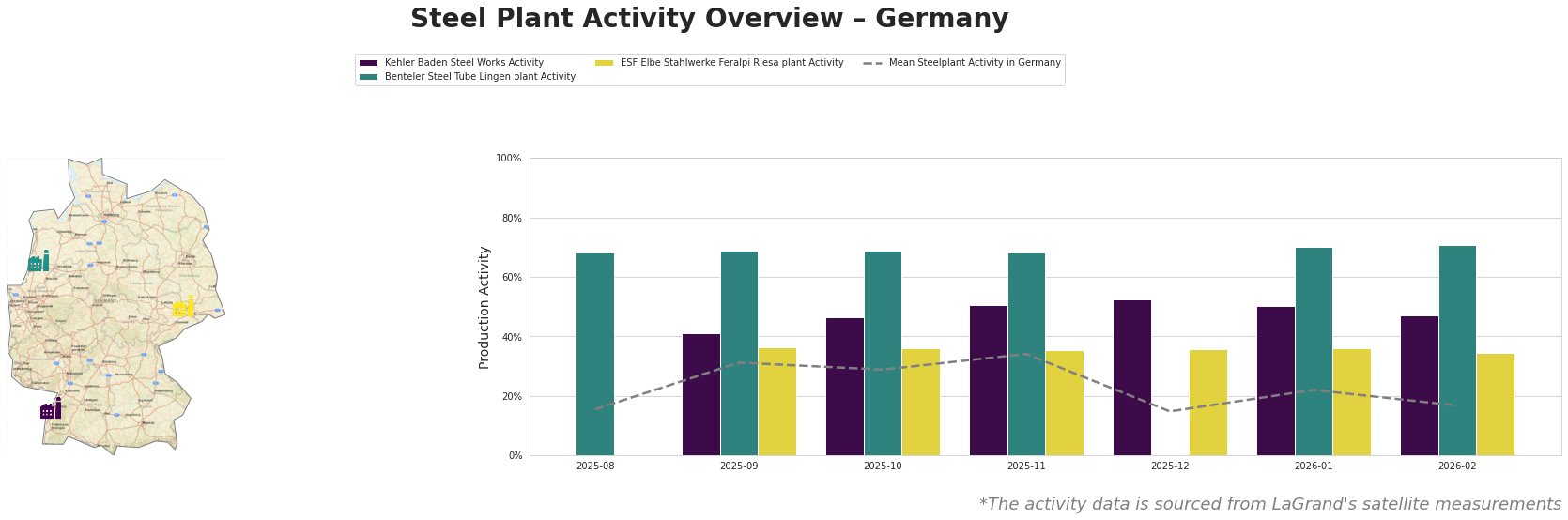
In recent months, the mean activity across German steel plants has shown substantial fluctuations, peaking at 34.0% in November 2025 before crashing to a low of 15.0% by December 2025. This significant drop could be linked to the increasing uncertainties surrounding climate legislation as articulated in the news articles. The Kehler Baden Steel Works maintained a relatively stable operation with activity fluctuating between 41.0% and 68.0%. Notably, its recent activity in February 2026 dropped to 47.0%, correlating with the heightened concerns regarding heating costs highlighted in Was tun im Heizungskeller? (2026-02-25).
The Benteler Steel Tube Lingen plant displayed a noteworthy increase in February 2026, reaching a peak activity level of 71.0%. This rise suggests resilience in the face of adverse market sentiment, although it may not be sustainable given the overarching challenges. Conversely, ESF Elbe Stahlwerke Feralpi Riesa experienced lower activity levels, remaining stable yet low, around 34% in early 2026, again highlighting the broader industry concerns linked to the legislative changes.
Analyzing the implications, the combination of evolving heating policies and declining plant activities is likely to lead to supply disruptions, particularly for plants that are already facing financial strain due to increased operational costs. Steel buyers should reassess their procurement strategies in light of potential shortages, focusing on securing contracts with more resilient facilities like Benteler, while also considering the volatility suggested by recent activity trends.
Given these developments, steel buyers are encouraged to prioritize partnerships with plants demonstrating stable or increasing activity levels, such as Benteler Steel Tube, while remaining vigilant about the ongoing legislative changes that threaten the profitability and operational capacities of plants in this volatile environment.