


From the Field to the Dashboard – Built by Experts, for Experts.
Discover What's Really Happening in the Steel Industry
Use the AI-powered search engine to analyze production activity, market trends, and news faster than ever before.
Try the Free AI Search EngineNegative Sentiment Prevails in Europe’s Steel Market Amid Weak Demand and Geopolitical Uncertainties
Recent observations indicate a negative sentiment in the European steel market, primarily influenced by weakening demand across the sector. The stability reported in “European longs prices mostly stable domestically and for exports“ and the drop in hot-rolled coil prices as captured in “Prices for hot-rolled coils in Europe fell by 2-4% m/m in May“ reflect a cautious market that is struggling amid unclear EU quotas and a slowing economy. While some plants show steady activity, the overall outlook is marred by geopolitical uncertainties and stagnant sales.
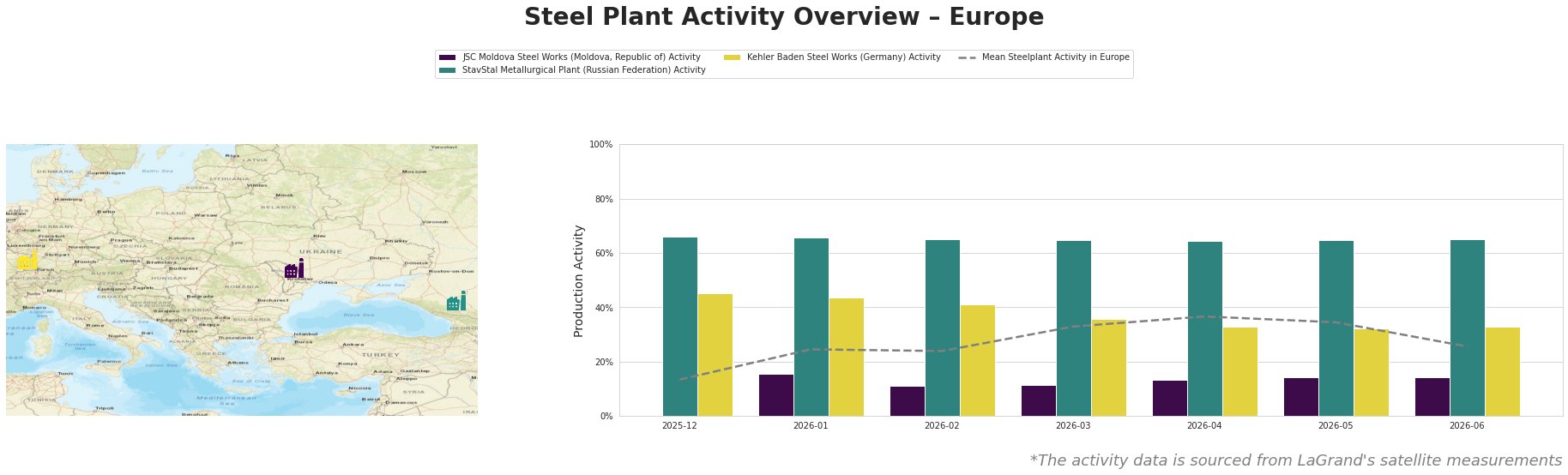
The JSC Moldova Steel Works has shown marked variability with a low activity peak at just 16% in January. This trend aligns with weak consumer demand highlighted in both “European longs prices mostly stable domestically and for exports” and “Prices for hot-rolled coils in Europe fell by 2-4% m/m in May,” indicating that buyers are deferring purchases due to uncertainty over future price movements and quotas. Conversely, StavStal Metallurgical Plant has maintained activity around 65%, contrasting the mean activity levels, with no recent news directly attributed to its relative stability.
In Kehler Baden Steel Works, activity fell to 32% in May, reflecting broader market hesitancy due to geopolitical instability and seasonal slowdowns in demand, as documented in the aforementioned news articles.
Given these findings, market participants should prepare for potential supply disruptions, particularly in volatile regions such as Moldova and Germany. Buyers are advised to:
- Adjust Procurement Strategies: Focus primarily on immediate needs and avoid stockpiling amid unclear future pricing dynamics.
- Exploit Export Opportunities: Engage with suppliers in regions maintaining price stability for export-ready raw materials, as seen with Turkish rebar pricing adjustments in the “European longs prices mostly stable domestically and for exports.”
- Monitor Quota Developments: Stay informed on the new EU quota measures set to commence in July, as they are expected to influence both pricing and availability significantly across various steel products.
With the current market conditions, swift adaptability in procurement strategy will be critical for navigating this challenging landscape effectively.