


From the Field to the Dashboard – Built by Experts, for Experts.
Discover What's Really Happening in the Steel Industry
Use the AI-powered search engine to analyze production activity, market trends, and news faster than ever before.
Try the Free AI Search EngineNegative Sentiment Dominates Iran’s Steel Market Amid Geopolitical Tensions and Plant Activity Declines
Recent developments in Iran’s steel market reflect adverse trends tied to geopolitical tensions. As highlighted in the article US Mars crude nears $105/bl on supply concerns: Update, rising global crude oil prices following threats to the Strait of Hormuz have severe implications for steel production costs in Iran. This sentiment is reinforced by the US-Iran war: Latest news, which suggests a significant drop in global refinery runs, hinting at potential constraints in raw material supply affecting the steel sector.
The observed satellite data indicates a notable decline in activity at key steel plants correlating with these geopolitical developments.
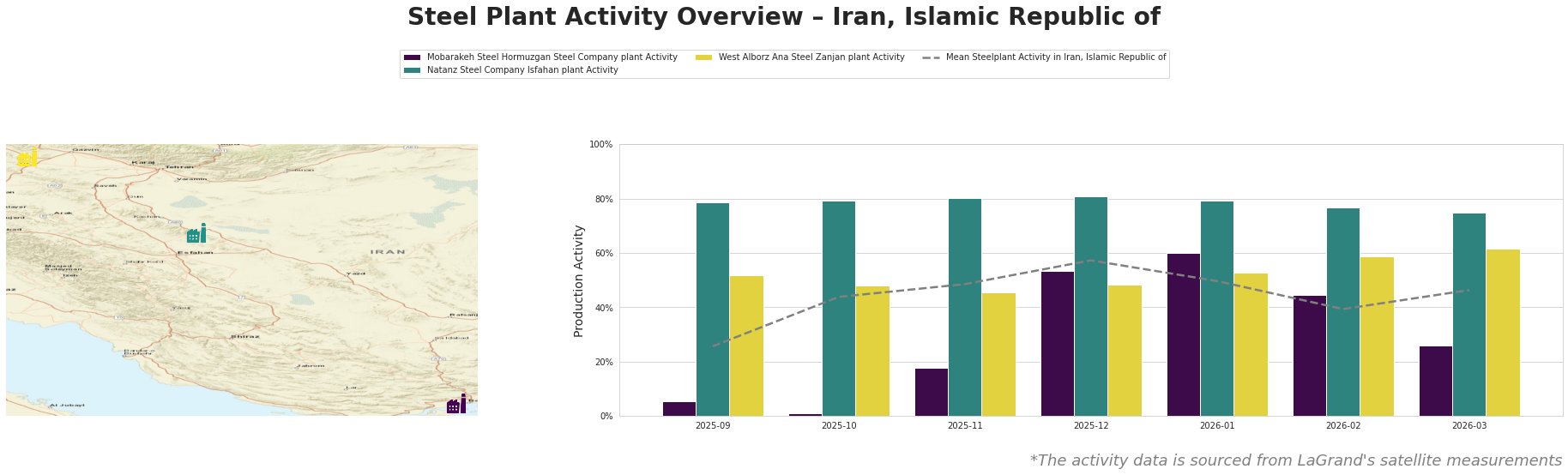
Mobarakeh Steel, a key player in Hormuzgan, exhibited a sharp decline from 53.0% in December 2025 to just 26.0% in March 2026, potentially influenced by the Hormuz bottleneck may take ‘few weeks’ to fix: Hamm communication regarding disruptions affecting oil supply and general production conditions. Conversely, Natanz Steel maintained relatively stable activity levels around 79-81%, indicating its resilience despite rising costs impacting the steel sector.
For West Alborz Ana Steel in Zanjan, activity remained somewhat stable at around 62.0% in March 2026, despite regional instability concerns. This stability may not shield against future fluctuations, as escalating operational costs tied directly to crude oil prices (noted at nearly $105/barrel) could impact overall production dynamics across Iranian steel plants.
Steel buyers should prepare for potential supply disruptions, particularly from Mobarakeh Steel, which relies heavily on stable energy costs and crude oil prices. It is advisable to consider diversifying procurement sources or securing contracts ahead of potential price hikes, especially if geopolitical tensions persist or escalate, as noted in the US-Iran war: Latest news.
By actively monitoring these developments and adjusting procurement strategies accordingly, stakeholders can mitigate risks associated with these confirmed market downturns.