


From the Field to the Dashboard – Built by Experts, for Experts.
Discover What's Really Happening in the Steel Industry
Use the AI-powered search engine to analyze production activity, market trends, and news faster than ever before.
Try the Free AI Search EngineNegative Outlook for Asia’s Steel Market: Supply Concerns Emerge Amidst Declining Activity Levels
Recent activity in the Asian steel market reflects a difficult landscape, primarily driven by notable downturns in operational levels at major steel plants. The article “India is considering introducing a requirement for green steel in public procurement“ highlights a significant shift towards low-carbon steel, which may further complicate supply dynamics through mandated changes. Additionally, observed satellite data indicates marked decreases in activity across key plants, notably tying such declines to shifting market sentiments exposed in ongoing legislative changes.
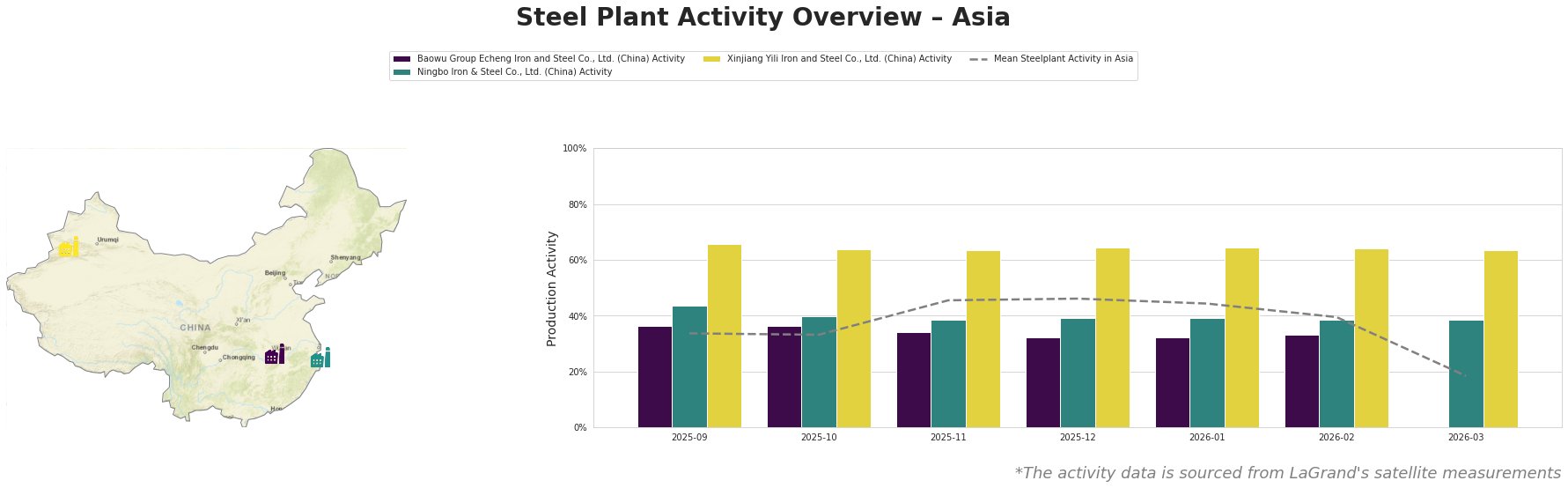
In March 2026, activity at Baowu Group Echeng Iron and Steel Co. saw a dramatic drop to an unrecorded value, marking a steep decline from 33% the previous month. This decline aligns with ongoing market shifts as discussed in “India is considering introducing a requirement for green steel in public procurement,” suggesting that the emphasis on green steel could be causing disruptions in traditional steel production avenues. This plant, which has a production capacity of 4.4 million tons per year, relies heavily on integrated production methods, and reduced activity here could lead to supply constraints for steel buyers.
Ningbo Iron & Steel Co. Ltd., with stable activity at 39%, has maintained operations amidst the broader downturn; however, it remains vulnerable to the changing procurement policies linked to green steel initiatives highlighted in the aforementioned article. The focus on innovative production methods for low-carbon outputs may increase operational costs and deter traditional production in the long term.
Xinjiang Yili Iron and Steel Co. Ltd. retained a performance level of 64%, which is relatively resilient compared to its counterparts. Nevertheless, continued emphasis on carbon emissions reductions could compel this plant to also pivot its practices, impacting supply reliability in the regional market.
In summary, the negative sentiment across Asia’s steel market indicates potential supply disruptions, particularly linked to Baowu Group’s declining activity. Steel buyers should prepare for adjusted procurement strategies, possibly prioritizing diversified suppliers and engaging with those adapting to emerging requirements for low-carbon steel. Immediate engagement with suppliers who show flexibility in transitioning towards greener production methods is recommended to mitigate risks stemming from these legislative shifts.