


From the Field to the Dashboard – Built by Experts, for Experts.
Discover What's Really Happening in the Steel Industry
Use the AI-powered search engine to analyze production activity, market trends, and news faster than ever before.
Try the Free AI Search EngineItaly’s Steel Market Faces Significant Downturn as Production Activity Declines
Italy’s steel market is experiencing a very negative sentiment, driven by low demand and stagnant prices. According to the article “European long steel prices stable amid weak demand, low buyer appetite“, recent market conditions have prompted Italian producers to push for price increases despite ongoing resistance from buyers. Satellite data indicates that activity at major steel plants has dropped significantly, aligning with reports of a cautious market outlook.
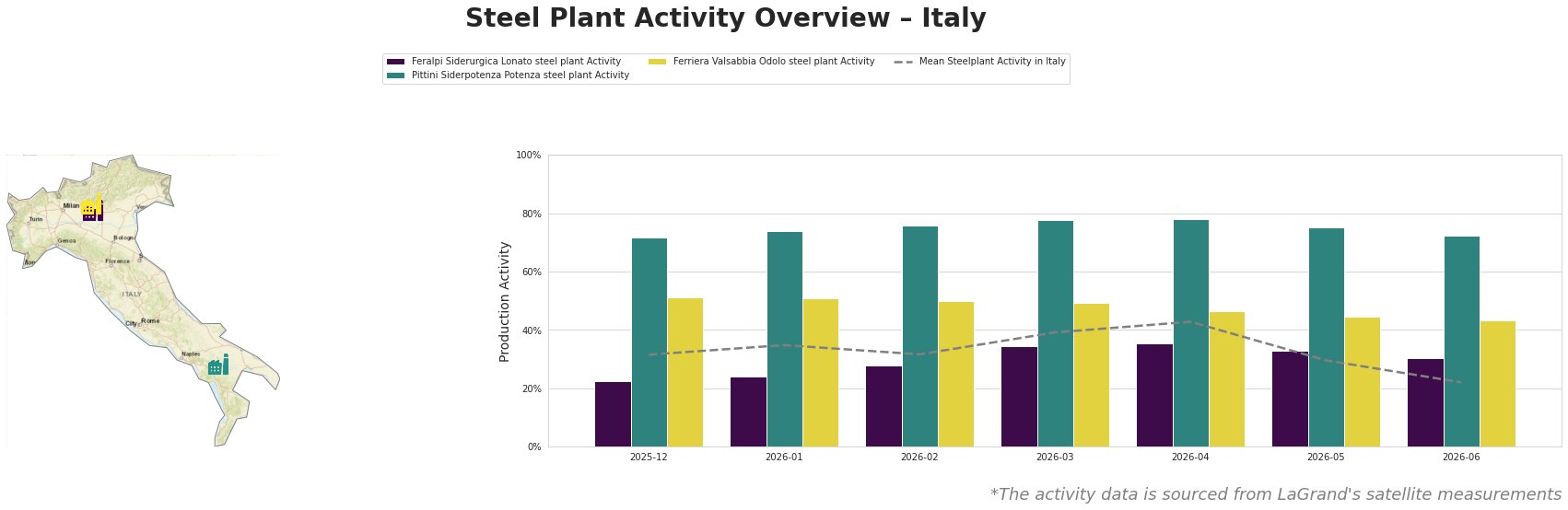
Recent evaluations show a pronounced decline in steel plant activities, reflecting broader market instability. The Feralpi Siderurgica Lonato steel plant, with a monthly activity drop from 35% to 30% in June, reflects reduced operational capability amidst weak demand reported in “Prices for European long products are stable against the background of weak demand and low appetite of buyers.” In contrast, the Pittini Siderpotenza Potenza plant remains relatively stable; however, its activity has also declined from a peak of 78% to 72%, indicating cautious production levels in response to declining orders. Finally, Ferriera Valsabbia Odolo exhibited a downward trend, decreasing from 46% to 43%.
Given this context, buyers should be cautious. The ongoing refusal of buyers to accept price increases, as highlighted in “European longs steel traders see weaker 2H,” indicates a long-term weakness in demand. With production levels showing significant drops, particularly at Feralpi and Ferriera plants, procurement strategies should shift towards lean inventory practices. Buyers are advised to negotiate prices aggressively, taking advantage of the current overcapacity and stable price levels. Additionally, monitoring developments surrounding EU regulatory adjustments will be critical for future supply strategies.
In conclusion, the marked decline in activity across key plants, coupled with weak market demand, emphasizes an impending supply and demand imbalance, warranting immediate action from steel buyers to secure better purchasing terms and avoid potential supply disruptions.