


From the Field to the Dashboard – Built by Experts, for Experts.
Discover What's Really Happening in the Steel Industry
Use the AI-powered search engine to analyze production activity, market trends, and news faster than ever before.
Try the Free AI Search EngineIran’s Steel Market Faces Severe Disruption Amidst Escalating Military Conflict
Iran’s steel industry is grappling with significant operational disruptions, primarily influenced by geopolitical tensions. Reports such as “Khamenei killed in US-Israeli attack: Update 2“ and “Iran rejects US talks as conflict widens“ highlight a drastic deterioration in regional stability, which has directly correlated with observed changes in steel plant activity levels.
Recent satellite data indicate a sharp decline in activity levels across Iranian steel plants. The mean activity dropped drastically from 43% in February to 18% by March. Specifically, Khorasan Steel Complex Khuzestan maintained relatively higher levels of activity at 82% as of February, yet has since seen a considerable downturn. West Alborz Ana Steel Zanjan plant experienced high fluctuations, reported at 89% in February but is anticipated to follow a declining trend in line with overall market sentiment. Natanz Steel Company Isfahan plant, previously at 75%, has faced stagnation amidst the turmoil. As these plants navigate the fallout from military conflict, they are increasingly susceptible to further operational disruptions.
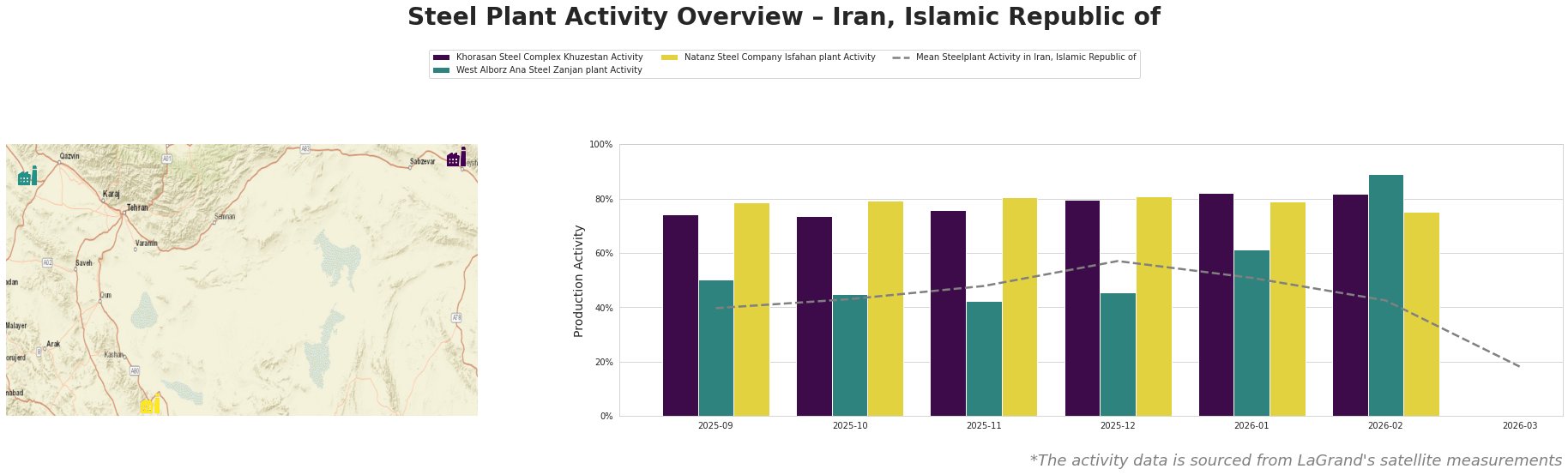
Khorasan Steel Complex Khuzestan, a major DRI and EAF-based producer, maintained heightened activity levels as of February 2026 but undoubtedly faces risks related to military escalations following Khamenei killed in US-Israeli attack: Update 2. Its imminent operational stability is now threatened by uncertainties and possible supply chain interruptions.
West Alborz Ana Steel Zanjan plant has seen volatile activity, with observable responses to extant geopolitical issues, particularly against the backdrop of the statements made in “Iran rejects US talks as conflict widens”. With its activity peaking at 89%, it suggests reliance on ongoing market access which may now be compromised.
Natanz Steel Company Isfahan plant, involved in producing semi-finished steel products, also mirrors this trend of increasing instability, showing 75% in February but potentially heading towards a low activity projection as geopolitical tensions escalate.
Disruptions in supply chains and production variances at key plants underscore the necessity for steel buyers to adopt a cautious procurement approach. Analysts should prepare for increased price volatility and potential shortages in regional steel supplies. Immediate actions may include diversifying sourcing strategies and exploring alternative supplier relationships alongside developing contingency plans to hedge against these emerging market risks.