


From the Field to the Dashboard – Built by Experts, for Experts.
Discover What's Really Happening in the Steel Industry
Use the AI-powered search engine to analyze production activity, market trends, and news faster than ever before.
Try the Free AI Search EngineIran Steel Market Faces Severe Disruption Amid Rising Geopolitical Tensions
Military tensions in the Middle East, particularly concerning Iran’s involvement and the closure of the Strait of Hormuz, are significantly impacting the steel market. Notably, articles such as “How is the Middle East tension affecting the steel industry?“ and “Global steel sector weighs impact of Iran conflict“ indicate that increased energy costs and logistic challenges are evident due to heightened regional conflicts, impacting plant operations across Iran.
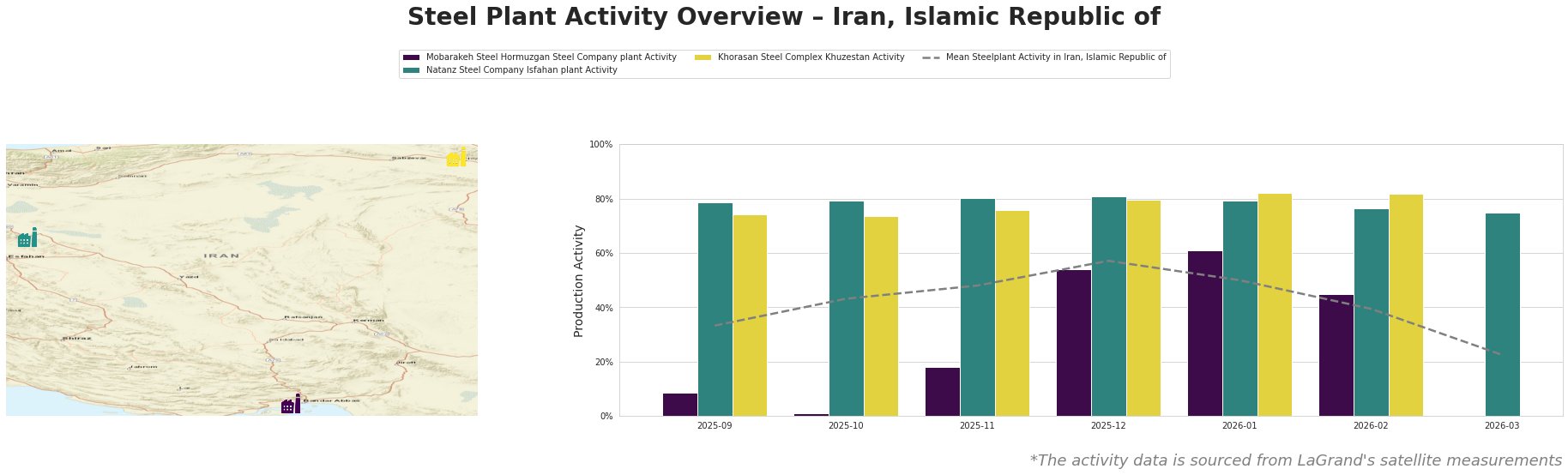
Amidst the geopolitical turmoil, Mobarakeh Steel witnessed a dramatic decline in activity, plummeting to 1% in October 2025 from previous levels, marking a stark drop as reported by “Conflict with Iran creates a risk of rising steel prices.” This could reflect direct supply chain disruptions and challenges linked to increased logistic costs and operational challenges reported across the sector.
For the Natanz Steel Company, activity has fluctuated around the 79-81% range until a slight decline to 75% in March 2026. While this indicates relative stability, the rising insurance and shipping costs noted in “How are tensions in the Middle East affecting the steel industry?“ suggest that future operations may remain at risk.
Meanwhile, Khorasan Steel Complex displayed stable operations until early 2026, maintaining around 80% until disruptions began to seemingly materialize as geopolitical tensions escalated, as corroborated by various news sources, though first quarter data remains pending.
The overall market sentiment is Very Negative, emphasized by “The global steel sector is weighing the consequences of the conflict in Iran,” underlining that emerging supply and cost pressures could persist without resolution.
Evaluated Market Implications
Given the observed activity and connection to reported news regarding the conflict, there are clear potential supply disruptions anticipated primarily from Mobarakeh Steel, which displayed a severe decrease in operational activity linked to geopolitical tensions. Buyers should consider diversifying steel procurement sources to mitigate risk as the Strait of Hormuz and regional disruptiveness are likely to inflate costs and affect delivery schedules.
Immediate recommendations for procurement include:
– Mobarakeh Steel may be unreliable given a deep drop in activity; buyers should seek alternatives.
– Look to regions less impacted by shipping delays and insurance issues, monitoring the Natanz and Khorasan outputs for stabilization trends.
The hiring of logistics consultants familiar with changing regional maritime routes should also be a priority to preemptively address potential bottlenecks in the supply chain and shipping logistics, especially as marine insurance costs soar.