


From the Field to the Dashboard – Built by Experts, for Experts.
Discover What's Really Happening in the Steel Industry
Use the AI-powered search engine to analyze production activity, market trends, and news faster than ever before.
Try the Free AI Search EngineGermany’s Steel Market Faces Turbulent Waters Amidst Legal Setbacks and Declining Plant Activity
Recent developments in Germany have significantly affected the steel industry’s sentiment, reflected in sharply decreased operational levels across key plants. On March 23, 2026, the article BGH: Umwelthilfe scheitert mit Klimaklage gegen BMW und Mercedes reported a critical legal setback for environmental regulation efforts against major automotive players like BMW and Mercedes-Benz. The Federal Court’s ruling, which restricts climate accountability to legislative frameworks, signals ongoing uncertainty in the automotive sector’s environmental commitments. This legal backdrop likely influences steel consumption, given the automotive industry’s pivotal role as a steel end-user.
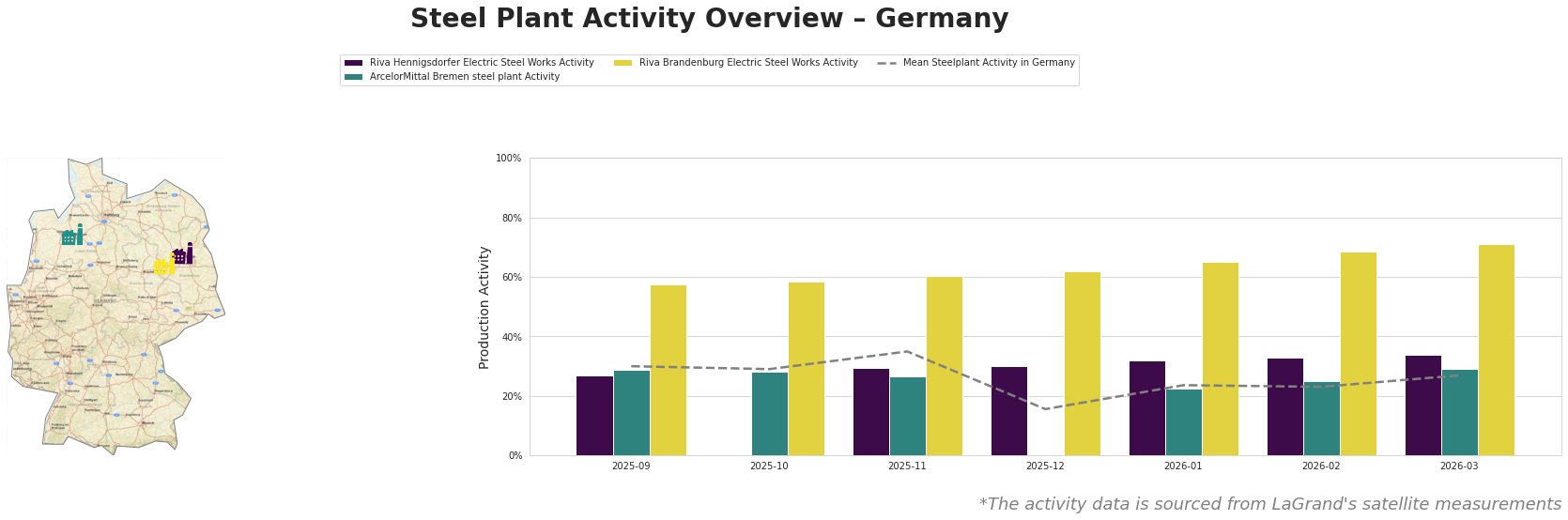
Satellite data indicates a troubling decline in activity levels. The Mean Steelplant Activity in Germany has seen a stark drop from 35% in November 2025 to a low of 16% by December, demonstrating substantial instability. Notably, the ArcelorMittal Bremen steel plant experienced a further decline, from 29% to 23% in January 2026, reflecting a continuous downward trend despite the lack of direct ties to the legal climate issues raised in the news articles. Meanwhile, the Riva Hennigsdorfer Electric Steel Works has shown fluctuating activity, peaking at 34% in March following a slight increase but overall remains below average.
Evaluating Specific Plants
Riva Hennigsdorfer Electric Steel Works has maintained a relatively higher activity level compared to the average over the past months, peaking at 34% in March. However, the connection to the larger market sentiment remains tenuous as no direct impact from the recent legal events was noted.
ArcelorMittal Bremen steel plant, critical for producing finished rolled products, has shown a decrease from 29% in September 2025 to a notable low of 23% in January 2026. As the automotive sector grapples with stricter environmental scrutiny and resultant production slowdowns, this decline may signal potential supply difficulties, particularly since this plant is integral to multiple industries encompassing automotive and infrastructure.
Riva Brandenburg Electric Steel Works continues to demonstrate resilience with activity escalating to 71% in March; however, earlier drops to as low as 60% raise concerns regarding its operational consistency amidst a broader systemic decline.
Market Implications and Recommendations
Given the Very Negative sentiment reflected in the observed satellite data and the legal uncertainties impacting end-user demand, steel buyers are advised to consider the following:
-
Anticipate Supply Disruptions: With ArcelorMittal Bremen showing signs of reduced output, procurement teams should consider diversifying sources, especially for automotive-related steel products, to mitigate risks.
-
Monitor Market Activity Levels: Continuous tracking of plant activities will be crucial as new regulations and market pressures unfold. Buyer reliance on real-time data can inform timely purchasing decisions.
-
Negotiate Long-term Contracts: Steel buyers should seek securing favorable terms with producers, especially from more resilient plants like Riva Brandenburg, to ensure supply stability in the face of decreasing market trends.
These actions are essential to navigate a landscape marked by volatility and uncertainty in Germany’s steel market.