


From the Field to the Dashboard – Built by Experts, for Experts.
Discover What's Really Happening in the Steel Industry
Use the AI-powered search engine to analyze production activity, market trends, and news faster than ever before.
Try the Free AI Search EngineEurope Steel Market Update: Stability Amid Supply Hesitations and Price Concerns
The European steel market is currently experiencing a neutral sentiment, with notable price resistance and cautious purchasing behavior in the region. The article “European longs market at a standstill, further price hikes possible“ outlines the ongoing stagnation driven by high prices and material shortages, particularly in Poland. This sentiment aligns with observed lower activity levels at various plants, particularly reflecting hesitations in purchasing for inventory replenishment.
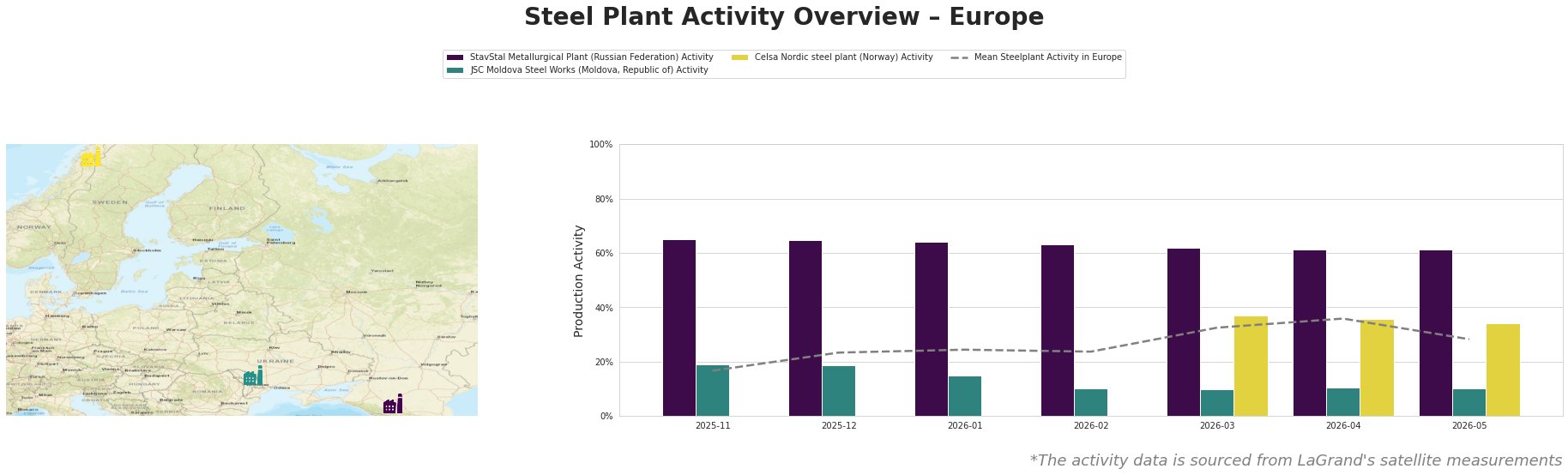
Activity at StavStal Metallurgical Plant has seen minor fluctuations, maintaining a steady operation around 61.0%, despite regional price pressures as noted in the “Bulgarian longs prices mostly unchanged amid balanced demand, sufficient stocks.” Comparatively, JSC Moldova Steel Works has remained at a low activity rate, hitting 10.0% recently, consistent with weak demand and pricing challenges discussed throughout these articles.
Celsa Nordic observed a slight decline in activity levels down to 34.0%, potentially influenced by hesitancy in the European longs market as indicated in “European longs market at a standstill…” where buyers in Poland and Spain resist higher prices. Thus, there’s a clear linkage between reported supply hesitations and the recent satellite activity data.
With price stability in Bulgaria and soft demand in other regions, steel buyers should consider strategically timing purchases to capitalize on potential future price decreases while holding sufficient stock levels. Specifically, buyers in Poland should be cautious in their purchasing commitments, as further price increases are anticipated, possibly influenced by broader regional supply dynamics.
In summary, for steel procurement professionals, it’s recommended to:
– Leverage current stable pricing environments in Bulgaria for mild procurements.
– Assess stock levels critically in relation to expected price hikes indicated in news articles to avoid procurement pressures in July.
– Maintain flexibility in sourcing options, particularly looking to Turkish and Algerian import prices while being acutely aware of the geopolitical implications affecting pricing trends.