


From the Field to the Dashboard – Built by Experts, for Experts.
Discover What's Really Happening in the Steel Industry
Use the AI-powered search engine to analyze production activity, market trends, and news faster than ever before.
Try the Free AI Search EngineDeclining Steel Plant Activity in Europe: Navigating Supply Challenges Amid Climate Policy Uncertainty
Germany’s shifting climate policy is raising concerns over the steel market, intensifying pressure on production as seen in recent developments. Notably, the articles German heating proposals ‘jeopardise climate targets’ and Deutschland-Blog: Grüne warnen vor “neuer Heizkostenfalle” | FAZ underscore how proposed laws could hinder emissions reductions, thus affecting overall industrial activity. Satellite data reflects these tensions, as evidenced by declining activity levels at various steel plants.
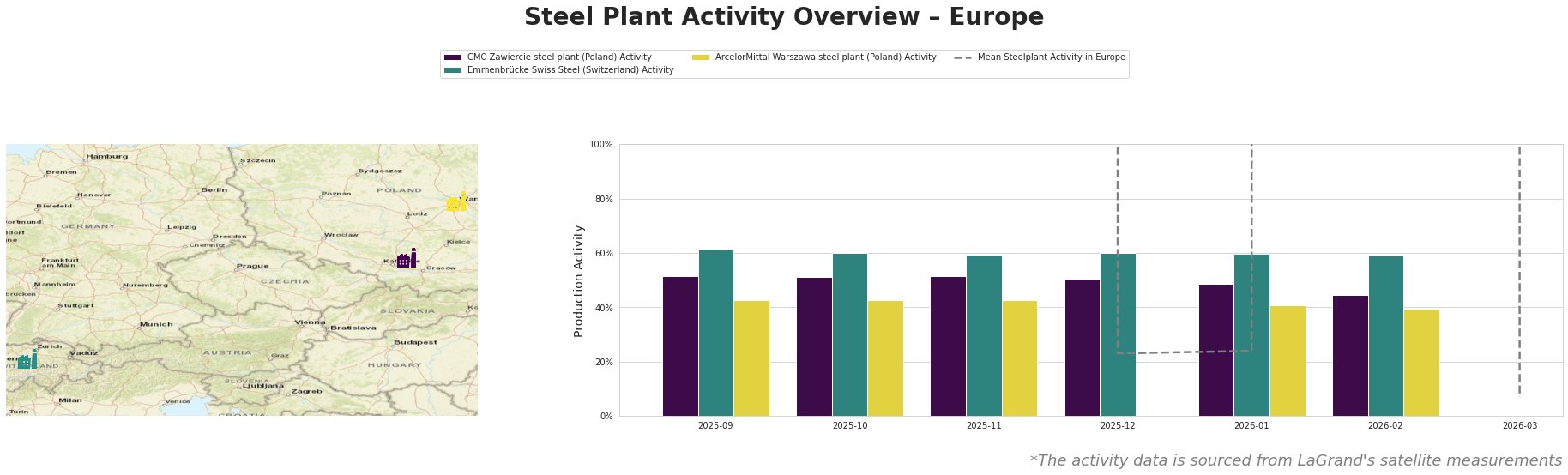
CMC Zawiercie’s activity fell from 51% to 45% in February 2026, well below the average of 43%, directly correlating with the signs of instability from the newly proposed heating law (source: German heating proposals ‘jeopardise climate targets’). Emmenbrücke maintained slightly higher levels despite recent pressure, yet its forthcoming trends may reflect broader market sentiments towards climate challenges. ArcelorMittal Warszawa’s decrease to 40% likewise resonates with calls for more stringent climate mandates, indicating a market risk due to regulatory uncertainty.
At CMC Zawiercie, which operates a significant Electric Arc Furnace (EAF) and primarily services sectors like automotive and infrastructure, the recent decline in activity will likely impact output projections. The connection to coal dependency concerns raised in the Was tun im Heizungskeller? piece demonstrates potential volatility in supply chains. Meanwhile, Emmenbrücke Swiss Steel continues to grapple with fluctuating power sources, hampered by the broader energy transition debates influencing production viability.
The implications of recent policy shifts suggest potential supply disruptions, particularly in regions where steel production interlaces with stringent energy laws. The consistent declines highlight a need for steel buyers to adapt their procurement strategies proactively.
Recommendations for Steel Procurement Professionals:
- Prioritize Procurement Plans: Given the drop in activity levels, securing contracts ahead of potential supply disruptions is advisable, especially from stable plants such as Emmenbrücke.
- Monitor Policy Developments: Close attention to evolving legislation such as the reforms discussed in the provided articles is crucial, potentially influencing sourcing costs and availability.
- Diversify Supplier Bases: Exploring partnerships across Europe could mitigate risks associated with localized disruptions from climate policy impacts, ensuring a resilient supply chain.
Adaptation and foresight will be essential in navigating this challenging market landscape.