


From the Field to the Dashboard – Built by Experts, for Experts.
Discover What's Really Happening in the Steel Industry
Use the AI-powered search engine to analyze production activity, market trends, and news faster than ever before.
Try the Free AI Search EngineAsia’s Steel Market Faces Major Downturn Amid Rising Geopolitical Tensions
The Asian steel market is currently experiencing a significant downturn, driven primarily by escalated geopolitical tensions, notably highlighted in the articles “Iran launches missiles at Israel“ and “US retaliates after Iran downs chopper: Update.” The recent conflicts have led to noteworthy declines in activity levels at several steel plants, particularly in the wake of intensified military actions affecting regional stability and supply chains.
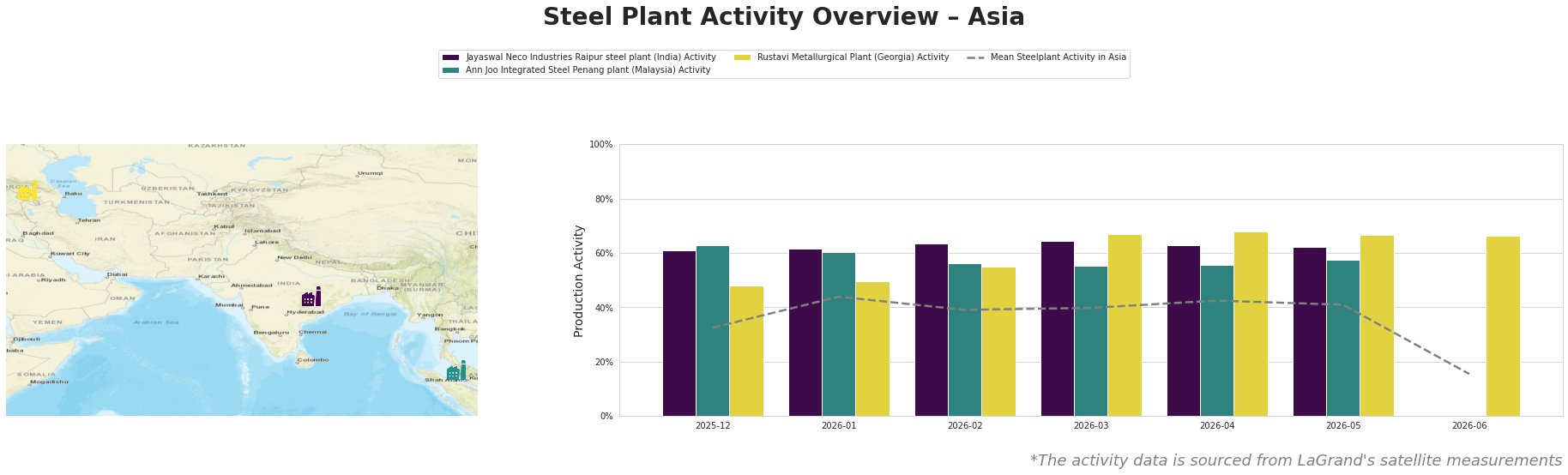
Activity levels at the Jayaswal Neco Industries Raipur steel plant demonstrate a sharp descent from 62% in May to an inactivity in June, coinciding with the increasing severity of regional military tensions as described in “Iran launches missiles at Israel.” The absence of recent operational data from this plant indicates potential future supply disruptions stemming from these geopolitical stresses.
Conversely, the Ann Joo Integrated Steel Penang plant showed declining activity, with a drop from 63% in December to inactive status in June. While there is no explicit news connection for this decline, the overall turbulent market conditions likely contribute to its inactivity. This could signal a hesitance in the local market to engage in production due to supply chain vulnerabilities.
The Rustavi Metallurgical Plant maintained a relatively stable level, fluctuating between 66% and 68% activity in the last two months measured. No direct linkage to the recent surge of conflict has been observed, indicating resilience in operations despite the overarching market downturn.
The sustained military engagements and subsequent responses—such as the “US will retaliate after Iran downs chopper: Trump“—are expected to contribute to significant supply disruption risks in the coming months, possibly impacting procurement schedules for steel buyers.
Given the current low activity levels, steel procurement professionals should implement immediate actions to secure alternative supply sources and closely monitor geopolitical developments to navigate potential further disruptions effectively. Focusing on long-term contracts with reliable suppliers could mitigate risks associated with sudden market shifts attributed to geopolitical events.