


From the Field to the Dashboard – Built by Experts, for Experts.
Discover What's Really Happening in the Steel Industry
Use the AI-powered search engine to analyze production activity, market trends, and news faster than ever before.
Try the Free AI Search EngineAsia Steel Market Update: Activity Fluctuations Amid Energy Security Concerns
Steel activity in Asia has demonstrated a Neutral sentiment this month, largely shaped by geopolitical developments as highlighted in the article titled Energy security fears drive diversification spend: IEA. The conflict in the Middle East has raised energy security concerns, resulting in fluctuating operational levels across key steel plants.
Recent satellite data reveals noteworthy changes in activity levels at prominent plants, specifically aligned with shifts in the market landscape introduced by escalating manufacturing costs detailed in Factories face soaring costs as Iran war causes supply shocks. Observed activity levels have varied, with certain plants struggling due to rising input costs and energy price pressures linked to these geopolitical tensions.
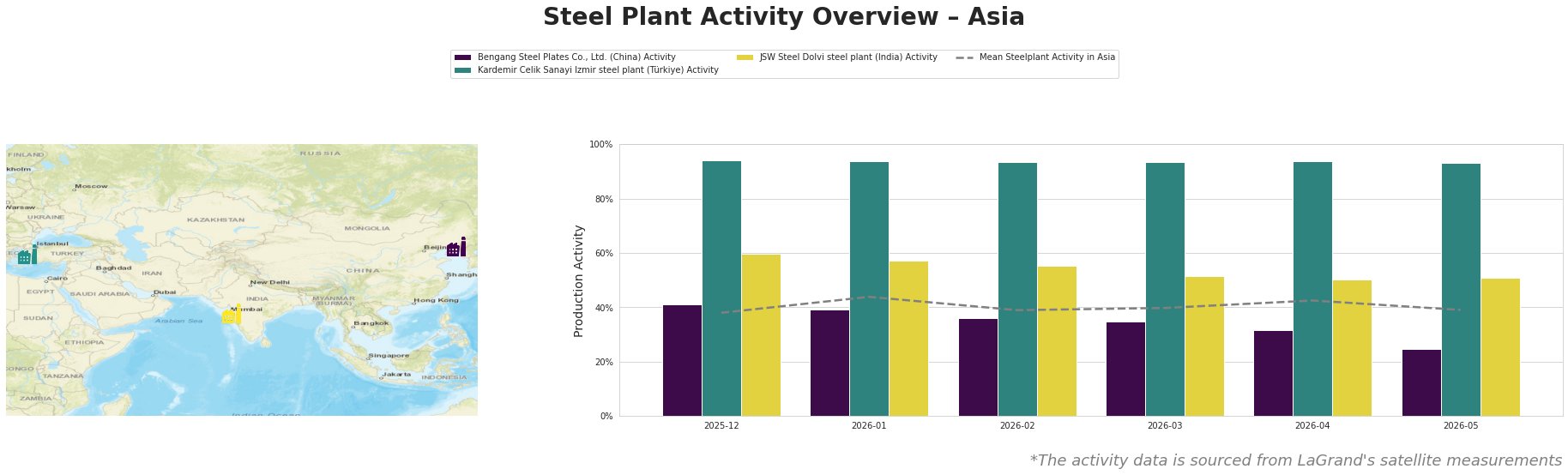
Bengang Steel Plates Co., Ltd. in Liaoning, China, reported a significant drop in activity to 25% in May, down from 32% in April, marking a noteworthy decline that suggests operational challenges amid rising operational costs as per findings from Factories face soaring costs as Iran war causes supply shocks. Conversely, JSW Steel Dolvi in India maintained more stable output levels, fluctuating minimally yet remaining under pressure, with the output at 51%, suggesting better supply management as indicated by market performance in South Korea.
Kardemir Celik in Turkey continued strong output levels near 93%, showing resilience in an otherwise volatile environment. Activity at Kardemir remains consistent despite broader industry pressures, potentially making it a secure source of supply during this turbulent period.
The ongoing energy crisis, escalated by geopolitical events, affirms potential supply disruptions, particularly for Bengang Steel, where operational efficacy continues to wane. Supply dynamics indicate that steel buyers should closely monitor these fluctuations.
To mitigate risks amid these developments, steel buyers are advised to establish:
– Long-term agreements with Kardemir Celik, ensuring steadier supply from a plant operating near full capacity.
– Contingency plans focusing on nearby geographies to compensate for potential disruptions from Bengang Steel.
– Regular communication with suppliers to navigate ongoing pricing pressures and establish procurement flexibilities, especially in light of pending oil price increases as suggested by US majors warn oil prices rise as stocks fall.
In summary, with activity levels responding to geopolitical pressures, tailored procurement strategies focusing on resilience will optimize supply chain stability in the current landscape.