


From the Field to the Dashboard – Built by Experts, for Experts.
Discover What's Really Happening in the Steel Industry
Use the AI-powered search engine to analyze production activity, market trends, and news faster than ever before.
Try the Free AI Search EngineAsia Steel Market Report: Neutral Sentiment Amid Rising Energy Prices and Activity Fluctuations
The steel market in Asia remains neutral as recent developments indicate a balancing act between supply chain constraints and plant activity levels. Notably, The World Bank forecasts a 24% increase in global energy prices in 2026 and US is oil supplier of last resort as Hormuz disruptions worsen, creating an environment of volatility that has implications for steel production. Satellite-observed activity data from prominent steel plants indicates fluctuations consistent with these macroeconomic pressures, although no direct relationship can be established between the reported activity changes and the news items cited.
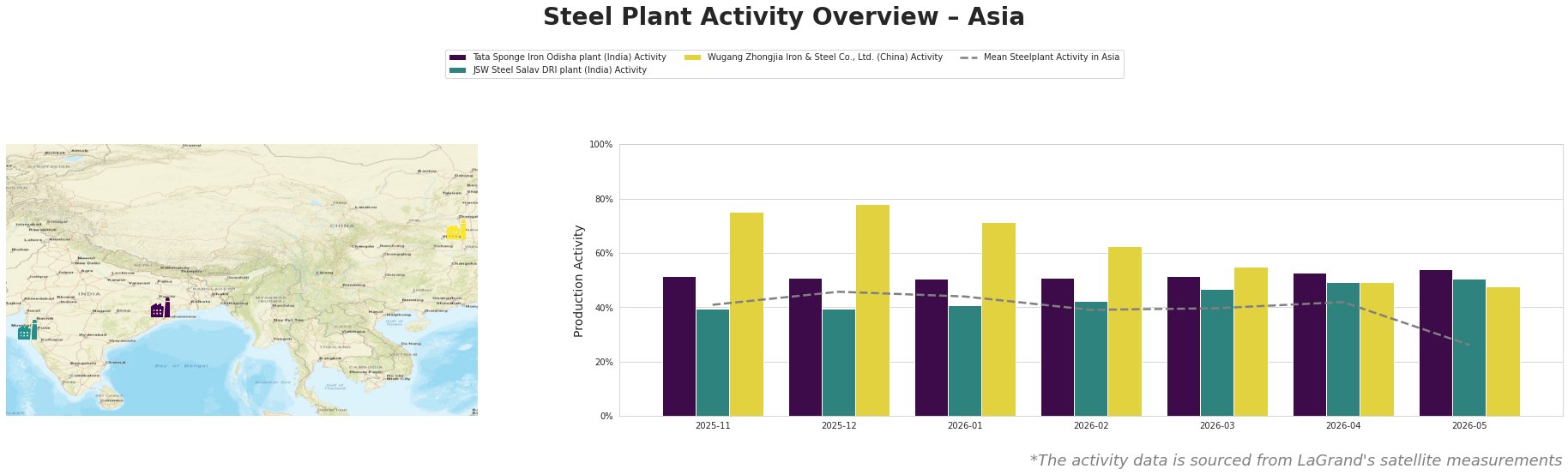
The Tata Sponge Iron Odisha plant has maintained a relatively stable activity level around 51-54%, indicating resilience despite rising energy costs and ongoing geopolitical tensions. Its notable activity rise to 54% in May suggests preparedness against supply interruptions. However, no explicit connection to the recent news can be established.
The JSW Steel Salav DRI plant exhibited a slight increase from 40% in November to 51% by May, paralleling broader regional activity trends. This improvement could be indicative of a cautious producer response to increasing energy prices as cited in The World Bank forecasts a 24% increase in global energy prices in 2026.
In contrast, Wugang Zhongjia Iron & Steel Co., Ltd. has seen a decline from a peak of 78% in December to 48% by May. This drop mirrors concerns from US is oil supplier of last resort as Hormuz disruptions worsen, suggesting tightened supply chains are impacting operational capacities.
Steel procurement professionals should consider the implications of rising energy prices and fluctuating steel plant activity. Engaging with suppliers who monitor energy market trends can mitigate some risks associated with potential disruptions. It is advisable to explore contracts that offer flexibility in pricing, given the volatility introduced by geopolitical factors affecting energy supply, as evident from the current market dynamics observed at JSW Steel and Wugang Zhongjia.
In conclusion, while the Asian steel market sentiment is currently neutral, emerging trends and geopolitical news merit close monitoring, especially given their potential impact on procurement strategies in the upcoming months.