


From the Field to the Dashboard – Built by Experts, for Experts.
Discover What's Really Happening in the Steel Industry
Use the AI-powered search engine to analyze production activity, market trends, and news faster than ever before.
Try the Free AI Search EngineAfrica’s Steel Market Faces Decline Amid Geopolitical Turbulence and Domestic Activity Slowdown
The African steel market is grappling with negative sentiment driven by external geopolitical issues and internal production challenges. Recent reports such as “Middle East tensions delay EU steel imports“ and “Tensions in the Middle East are delaying steel imports to the EU“ illustrate how rerouting steel shipments to Europe is disrupting trade routes, thereby impacting regional demand. As longer lead times and higher transportation costs emerge, African steel plants are reflecting these broader trends with marked declines in operational activity.
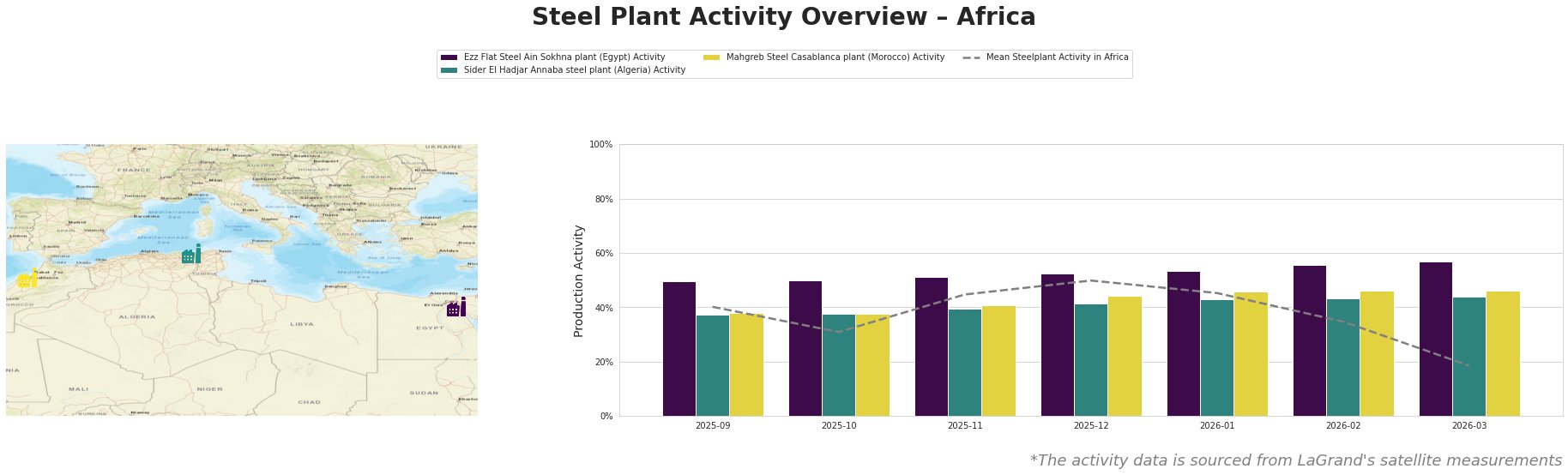
Ezz Flat Steel Ain Sokhna Plant: Activity has been declining from a high of 57.0% in March 2026, reflecting a significant drop in steel demand due to geopolitical turmoil as detailed in “Tensions in the Middle East are delaying steel imports to the EU.” This plant, which utilizes DRI and EAF technologies, primarily produces semi-finished and finished rolled products. The plant’s operational adjustments may reflect a tighter market, where rising costs are unavoidable amid cautious European purchasing behavior.
Sider El Hadjar Annaba Plant: The plant saw a minor increase to 44.0% activity in March 2026, yet overall trends show stagnation. There is no direct connection established with the reported delays affecting European imports. Its integrated operations and product categories, specifically hot-rolled coils and rebar, remain vulnerable, but market participants assume the situation will stabilize as nearby regions adjust.
Mahgreb Steel Casablanca Plant: Activity has remained stable at 46.0%, even as European imports slow down, suggesting a localized demand for products across sectors such as automotive and construction. Nonetheless, rising logistics costs from shifting shipping routes, as noted in “Middle East tensions delay EU steel imports,” suggest caution for future procurement plans.
The negative market sentiment indicates potential supply disruptions, particularly for plants relying on exports to Europe. Steel buyers should consider prioritizing contracts with regional suppliers who can meet domestic demand while minimizing long lead times exacerbated by international conflicts. Specifically, procurement decisions should focus on maintaining supplier relationships with the Mahgreb Steel Casablanca plant, which is likely to capitalize on stable demand in local markets, while remaining alert to fluctuating costs driven by geopolitical tensions that may impact logistics across Africa.