


From the Field to the Dashboard – Built by Experts, for Experts.
Discover What's Really Happening in the Steel Industry
Use the AI-powered search engine to analyze production activity, market trends, and news faster than ever before.
Try the Free AI Search EngineAsia Steel Market Report: Neutral Sentiment Amid Coking Coal Supply Challenges and Steel Output Trends
Steel market activity across Asia remains neutral, influenced by increasing coking coal imports and fluctuating steel production levels. Recent reports, including “China has increased coking coal imports by 25% y/y over the past five months“, and “CISA mills’ daily crude steel output up 0.8% in mid-June 2026, stocks also up“, highlight significant shifts in plant activity and supply levels. Notably, while coking coal imports surged due to domestic supply issues linked to mine closures, steel output reported slight growth alongside rising inventories, signaling a potential disconnect between production and demand.
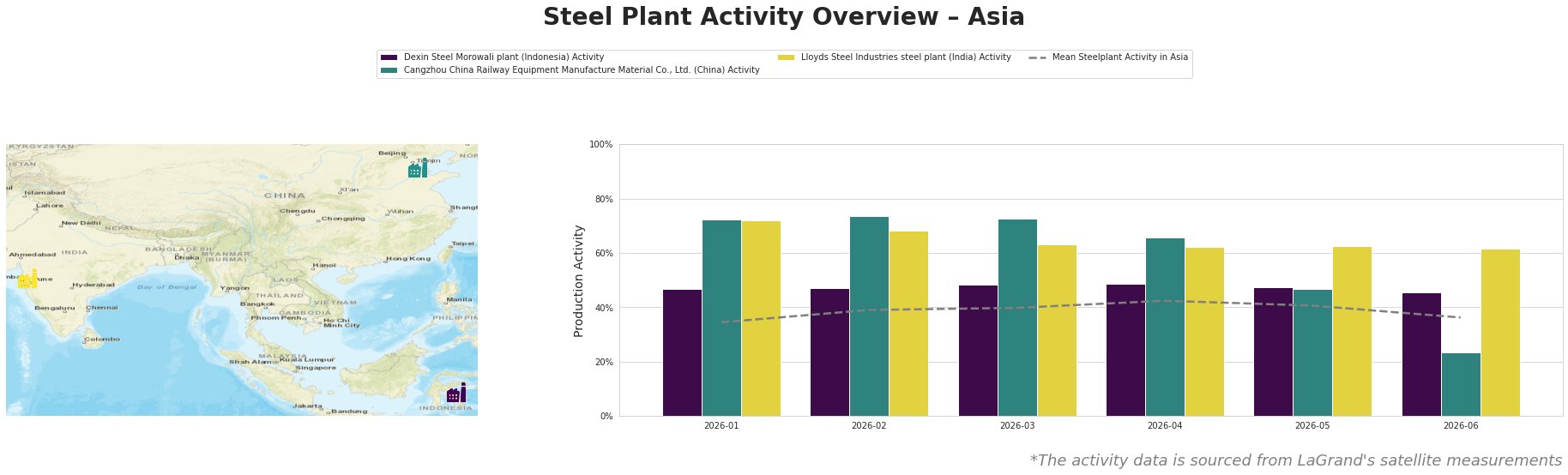
The Dexin Steel Morowali plant in Indonesia showed a marginal decline in activity, dropping to 45% in June from 48% in May. This trend may not connect directly to recent coal supply changes but reflects the generally waning steel market activity as observed across many plants.
In contrast, the Cangzhou China Railway Equipment Manufacture Material Co., Ltd. in Hebei experienced a marked decrease in activity, plunging to 23% in June from 47% in May, likely influenced by the CISA report indicating weak demand amid stock build-up despite rising production levels.
The Lloyds Steel Industries plant in Maharashtra maintained stable activity at 62% in June, consistent with previous months, potentially indicating resilience against the broader market trends impacting other plants.
Supply issues are expected to linger, particularly due to the 25% y/y increase in coking coal imports and reported price fluctuations in “Prices for coking coal rose in June,” suggesting challenges in securing quality inputs for steel production.
Steel buyers and market analysts are advised to:
- Monitor changes in coking coal prices closely, especially in light of the disruptions outlined in the reports, which may affect operational costs.
- Consider purchasing strategies that align with the anticipated seasonal slowdown in July and August as highlighted, preparing for potential price increases driven by supply shortages.
- Evaluate inventory strategies based on the rising stocks reported by CISA to avoid overexposure to the steel surplus, which could adversely affect pricing in upcoming months.
These actionable insights stem directly from the interplay of reported news and satellite activity data, providing a grounded perspective for informed procurement decisions in a cautious market environment.