


From the Field to the Dashboard – Built by Experts, for Experts.
Discover What's Really Happening in the Steel Industry
Use the AI-powered search engine to analyze production activity, market trends, and news faster than ever before.
Try the Free AI Search EngineSteel Market Outlook for Asia: Negative Sentiment Amidst Activity Drops and Geopolitical Tensions
Steel market activity in Asia is experiencing a notable downturn, influenced heavily by geopolitical tensions revolving around the recent US-Iran discussions. Articles titled “Iran says Hormuz closed; US says flows intact“ and “Trump Iran framework gambles on diplomacy despite warning Tehran will ‘lie and cheat’“ highlight escalating uncertainties surrounding vessel traffic and regional stability following Iran’s claims of closing the Strait of Hormuz. This instability could impact shipping and supply chain logistics vital to steel procurement.
Measured Activity Overview
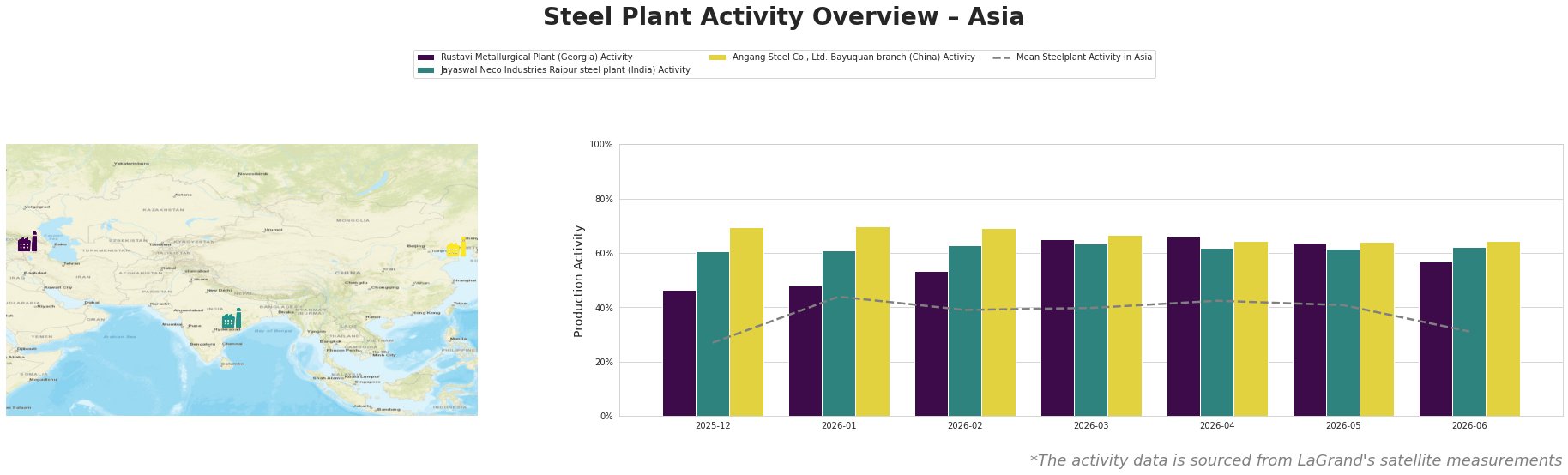
Steel plant activity levels have notably decreased, with the mean activity decreasing from 41.0% in May to 31.0% in June 2026. Rustavi Metallurgical Plant’s activity dropped from 66.0% in April to 57.0% in June, while Jayaswal Neco has remained relatively stable around 62.0%, and Angang Steel Co. has held steady at 64.0%. The decline in overall activity, particularly at Rustavi, could be linked to the geopolitical climate and uncertainty regarding regional supply chains discussed in the recent articles.
Steel Plant Insights
Rustavi Metallurgical Plant, located in Georgia, showcases a declining activity trend, from 66.0% in April to 57.0% in June. This decline corresponds with concerns raised in “Iran says Hormuz closed; US says flows intact,” where geopolitical tensions threaten supply chains, potentially affecting iron ore logistics crucial for the plant’s operations. Rustavi produces various steel products, servicing sectors like construction and energy, and currently exhibits a risk of diminished supply.
Jayaswal Neco Industries, based in India, maintained activity levels at 62.0% in the past months, indicating some resilience despite regional uncertainties. This consistency may suggest solid domestic demand, although potential disruptions in international markets could still pose a threat. The geopolitical implications mentioned in “Trump Iran framework gambles on diplomacy despite warning Tehran will ‘lie and cheat’” could challenge further growth if diplomatic tensions escalate.
Angang Steel Co., located in Liaoning, China, has also maintained steady activity at 64.0% in June. This indicates a robust operational stance amidst the regional turmoil, yet the company’s dependency on stable international shipping routes raises questions should tensions in the Strait of Hormuz disrupt logistics.
Evaluated Market Implications
As geopolitical unrest persists in the region, particularly influenced by the US-Iran discussions and potential shipping disruptions in the Strait of Hormuz, procurement professionals should prepare for possible supply interruptions, especially from Eastern European and Indian manufacturers. Rustavi’s drop may warrant immediate re-evaluation of contract terms due to its fading capacities.
Recommendations for steel buyers include:
– Monitor geopolitical developments closely, especially those related to the US-Iran negotiations, to anticipate disruptions in transportation and supply.
– Diversify sourcing strategies to mitigate risks associated with impacted manufacturers, particularly from the region.
– Prioritize procurement from suppliers demonstrating stability, such as Jayaswal Neco and Angang Steel, who have shown resilience in activity levels amidst geopolitical pressures.
The market sentiment remains negative, and strategic supply chain adjustments will be key for steel buyers navigating these uncertainties.