


From the Field to the Dashboard – Built by Experts, for Experts.
Discover What's Really Happening in the Steel Industry
Use the AI-powered search engine to analyze production activity, market trends, and news faster than ever before.
Try the Free AI Search EngineSteel Market Update for Asia: Neutral Sentiment Amid Varying Plant Activity
Recent developments in the Asia steel market highlight a neutral sentiment driven by geopolitical factors and fluctuating plant activity levels. Notably, the IMO warns against strait of Hormuz transits and its implications on maritime shipping could directly influence steel procurement strategies, albeit no immediate connections to steel plant activities were observed. Furthermore, reports like Bunker lead times grow since US-Iran war began indicate tightening supply conditions that can affect raw material costs and availability.
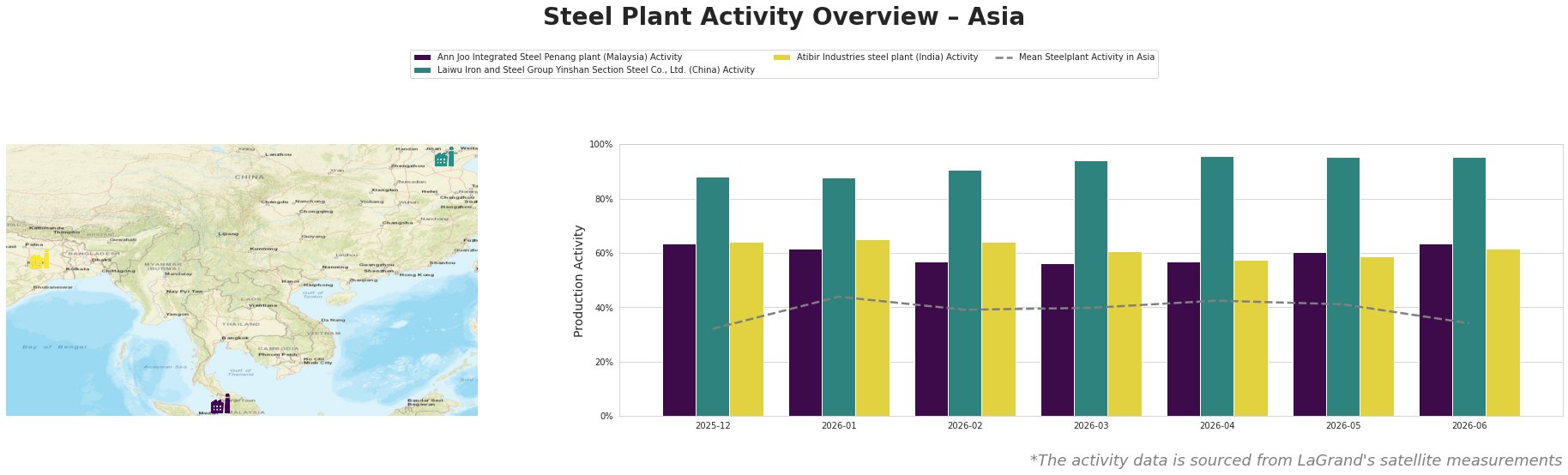
The observed steel plant activities show notable fluctuations, with Ann Joo Integrated Steel Penang plant’s activity stabilizing at 64% as of June, maintaining consistent output despite broader market uncertainties. In contrast, Laiwu Iron and Steel Group saw peak activity levels of 96% in April, potentially raised by preemptive purchasing yet dropping as concerns around securing reliable transportation routes for raw materials persist, relevant to insights from Shipowners remain cautious on US-Iran deal announcement.
Atibir Industries, while showing variability, maintained levels around 59% in June, hinting at stability amidst fluctuating demand in the region.
Notable correlations between plant activities and news developments may be limited. The announcements surrounding the US-Iran agreement to end hostilities ‘complete’ and Hormuz tanker traffic unchanged after US‑Iran deal point to a cautiously optimistic trade outlook, but the anticipated impact on steel procurement remains mixed at best.
The decline in mean activity in June to 34% reflects overarching uncertainties tied to shipping concerns, indirectly influenced by geopolitical events in the Strait of Hormuz.
To navigate the current market landscape, steel buyers should consider:
-
Securing Contracts in Advance: With shipping lead times extending, as indicated by the rise in bunker fuel bookings, establishing procurement contracts early is advisable to mitigate potential disruptions.
-
Exploring Alternative Shipping Routes: Given safety concerns in the Strait of Hormuz, buyers should evaluate alternative shipping options to ensure steady material supply.
-
Monitoring Geopolitical Developments: Continuous updates on US-Iran relations will be essential in forecasting market conditions and potential procurement adjustments in the coming months.
Overall, while the Asian steel market’s sentiment remains neutral, strategic foresight in planning is required to align procurement practices with emerging geopolitical realities.