


From the Field to the Dashboard – Built by Experts, for Experts.
Discover What's Really Happening in the Steel Industry
Use the AI-powered search engine to analyze production activity, market trends, and news faster than ever before.
Try the Free AI Search EngineAustralia Steel Market Outlook: Activity Declines as Decarbonization Goals Weaken
Recent developments in Australia’s steel industry indicate significant challenges, primarily driven by BHP’s scaling back of decarbonization projects in iron ore operations, as detailed in BHP is scaling back decarbonization projects at its iron ore operations – media reports and BHP has abandoned a number of projects to decarbonize the iron ore business. This trend contributes to declining activity levels in key steel plants, a situation underscored by satellite data reflecting notable drops.
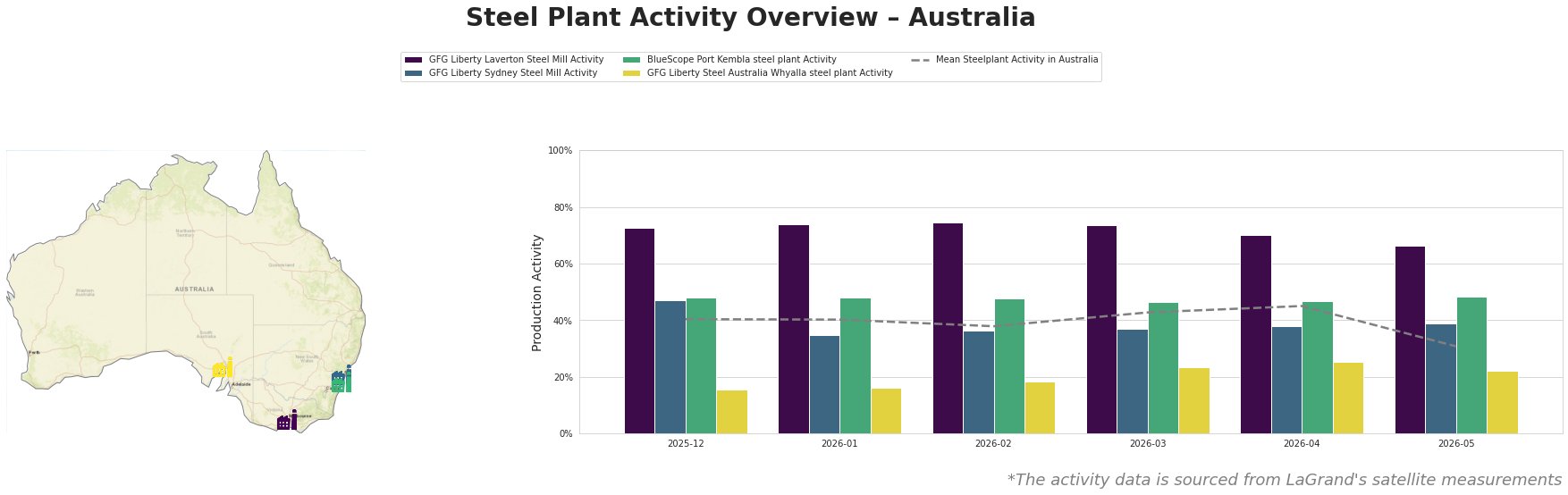
GFG Liberty Laverton experienced a decrease in activity from 73% to 66% since December 2025, correlating with broader market insecurities. GFG Liberty Sydney showed less resilience, falling from 47% to 39%, conforming to the sentiment catalyzed by BHP’s scaling back on sustainable projects, potentially affecting confidence in the steel sector. BlueScope Port Kembla maintained a steady level between 46% and 48%, but the general downturn signifies potential threats to future output. GFG Liberty Steel Australia’s Whyalla plant, with the lowest activity level at 16%, raises alarms about operational viability in light of the struggle to adapt to rising costs and weak demand, echoing the implications of BHP scraps Pilbara iron ore decarbonization project amid rising costs and weak economics.
BHP’s reduced spending and halted projects bolster concerns surrounding the foundational support for steel demand in Australia, leading to potential procurement volatility. To navigate this landscape effectively, steel buyers should consider:
-
Increased Monitoring of Supply Chains: Given GFG Liberty Steel Australia Whyalla’s low activity levels alongside BHP’s decisions to delay key projects, establishing solid supply chain relationships with more stable players like BlueScope becomes crucial.
-
Strategic Inventory Management: With the mean activity level declining to 31%, companies should evaluate their inventory to mitigate potential supply disruptions, particularly from mills showing upswings towards exhaustion of operational capacity.
-
Diversifying Sourcing Options: Engage alternative suppliers and consider global procurement options that could offset domestic volatility in light of declines driven by reduced local production capacity.
Strategic foresight aligned with this evolving scenario will be essential to maintain competitiveness and ensure steadiness in procurement amid challenging times in Australia’s steel market.