


From the Field to the Dashboard – Built by Experts, for Experts.
Discover What's Really Happening in the Steel Industry
Use the AI-powered search engine to analyze production activity, market trends, and news faster than ever before.
Try the Free AI Search EngineNeutral Outlook on European Steel Market: Supply Chain Concerns Amidst Activity Variability
Recent developments in the European steel market, particularly in the UK, highlight potential supply disruptions. The BCC warns that changing steel quotas in the UK could disrupt supply chains and Calls grow for UK steel quota revisions reveal increasing concern among industry players regarding upcoming changes in the UK’s steel import quotas. These proposed adjustments may limit access to necessary steel imports and raise costs, impacting production capabilities across Europe.
Measured Activity Overview
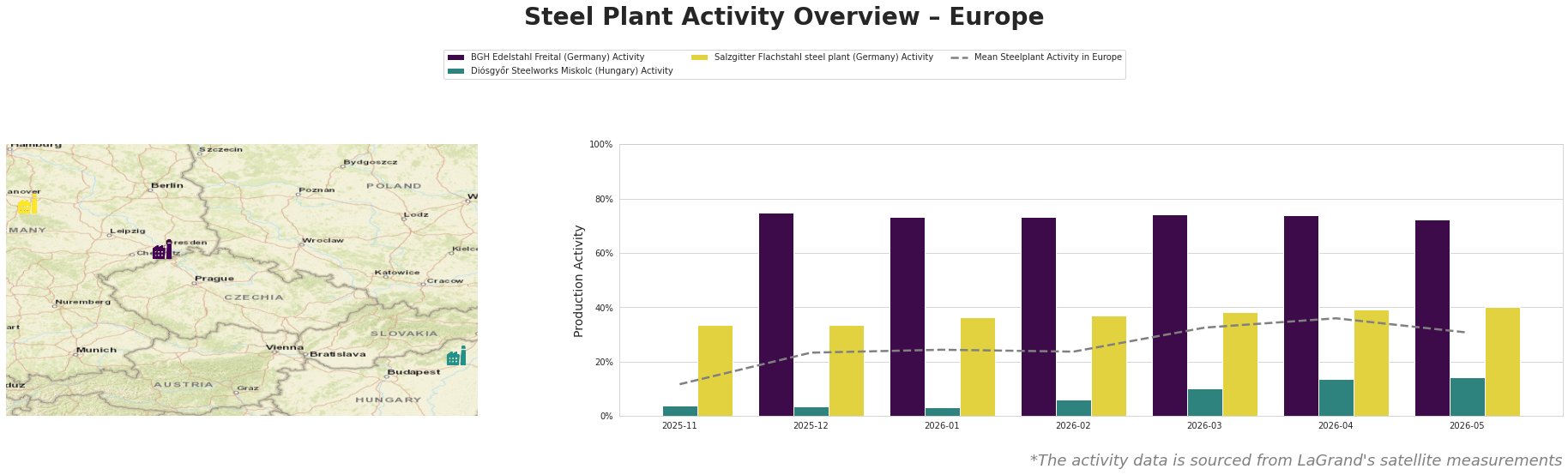
Overall activity levels increased, peaking at 36% in April before stabilizing to 31% in May 2026. BGH Edelstahl Freital showed significant variability, reaching 75% capacity utilization in December but decreasing to 72% by May, indicating fluctuations that could correlate with market uncertainties, although no direct link to the news articles could be established. Diósgyőr Steelworks Miskolc remained low at approximately 14% activity in recent months, suggesting a sustained production challenge possibly linked to the market dynamics highlighted in the BCC warns that changing steel quotas in the UK could disrupt supply chains. Conversely, Salzgitter Flachstahl maintained a steady upward trajectory, reaching 40% utilization in May, reflecting resilience against fluctuating market conditions.
BGH Edelstahl Freital
As a prominent player in the stainless and tool steel markets, BGH Edelstahl Freital has seen a considerable drop from a high of 75% in December to 72% in May. This swing in production could reflect concerns raised in the Calls grow for UK steel quota revisions, indicating heightened operational adjustments in anticipation of supply challenges.
Diósgyőr Steelworks Miskolc
Holding a capacity of 550,000 tons through electric arc furnaces, Diósgyőr Steelworks Miskolc consistently operated below 15% activity, suggesting critical hurdles in sourcing materials or demand shifts. No direct correlation was found with the quoted news articles, underscoring ongoing difficulties that necessitate strategic attention.
Salzgitter Flachstahl
With a robust capacity of 5,200 tons and utilizing blast furnace technology, the Salzgitter Flachstahl facility has demonstrated resilience, increasing activity from 33% to 40%. This upward trend may indicate successful adaptations to supply challenges or effective mitigation strategies in response to the concerns raised about UK import quotas.
Evaluated Market Implications
The developments within the UK steel import quota landscape notably indicate potential supply disruptions, especially for manufacturers relying on stable import channels. Steel buyers must proactively evaluate sourcing strategies, particularly when addressing the challenges linked with the BCC warns that changing steel quotas in the UK could disrupt supply chains and Calls grow for UK steel quota revisions. To minimize risks, stakeholders should consider diversifying suppliers and increasing inventory levels ahead of quota changes, especially in regions where capacity remains restricted, such as with Diósgyőr Steelworks Miskolc. Monitoring operational capacity shifts in BGH Edelstahl Freital and Salzgitter Flachstahl will also be crucial to navigating upcoming market fluctuations effectively.