


From the Field to the Dashboard – Built by Experts, for Experts.
Discover What's Really Happening in the Steel Industry
Use the AI-powered search engine to analyze production activity, market trends, and news faster than ever before.
Try the Free AI Search EnginePositive Momentum in Germany’s Steel Market: April 2026 Production Insights
Germany’s steel production is witnessing a resurgence, with a significant increase attributed to improved production levels across key plants. Reports such as “Germany increased steel production by 9.5% y/y in April“ and “Germany’s crude steel production increase in april“ directly correlate with observed boosts in plant activity, indicating a solid recovery trajectory despite previous downturns.
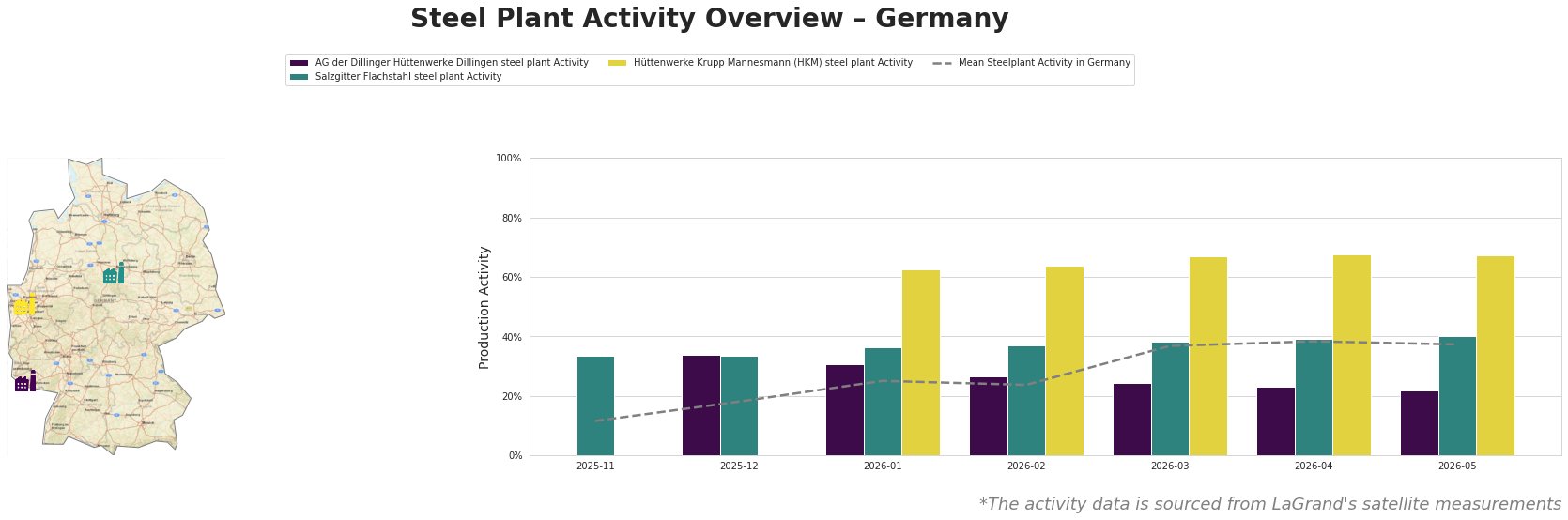
The AG der Dillinger Hüttenwerke Dillingen plant saw its activity drop to 23% in April, a significant decrease given recent production growth. This aligns with reports noting that while production rose overall, specific plants are still below capacity utilization, as highlighted in “German crude steel output up 9.1 percent in Jan-Apr 2026.” Meanwhile, Salzgitter Flachstahl registered a rise to 39% activity, maintaining a steady growth trend that ties back to increased demand for their hot rolled products. The Hüttenwerke Krupp Mannesmann (HKM) plant continued robust performance at 68%, reaffirming its role in supporting increased crude steel production.
The increase in production volume by 9.5% year-on-year emphasized in the analyzed articles is a clear indicator of a stabilizing demand for steel in Germany and the EU. With overall production improvements observed, steel buyers should prepare for a tighter supply regime as plants ramp up efforts to bridge capacities, especially as full capacity utilization appears to remain an aspiration rather than a reality.
As a result, buyers must consider proactive procurement strategies tailored to active plants currently producing efficiently, particularly the Salzgitter Flachstahl and HKM plants, which are achieving higher activity levels. Given the dips in Dillinger’s output, procurement from this plant may come with risks of delays. It is advisable to secure contracts with a focus on consistently high-performing plants to avoid potential disruptions while navigating a still-recovering steel supply chain landscape.