


From the Field to the Dashboard – Built by Experts, for Experts.
Discover What's Really Happening in the Steel Industry
Use the AI-powered search engine to analyze production activity, market trends, and news faster than ever before.
Try the Free AI Search EngineInsights into the Current Steel Market in Germany: Activity Trends and Climate Policy Impacts
Germany’s steel industry is currently experiencing a Neutral market sentiment, shaped by ongoing discussions surrounding energy costs and climate goals. Key articles, such as Energiewende: Klimaziele sind nicht das Problem and Expertenrat: Deutschland wird Klimaschutzziele wohl verfehlen, highlight concerns over Germany’s ability to meet its climate targets amid rising emissions and energy costs. Notably, there is a disconnect between these issues and steel plant activity levels, which have not shown significant fluctuations directly correlated to the climate discussions.
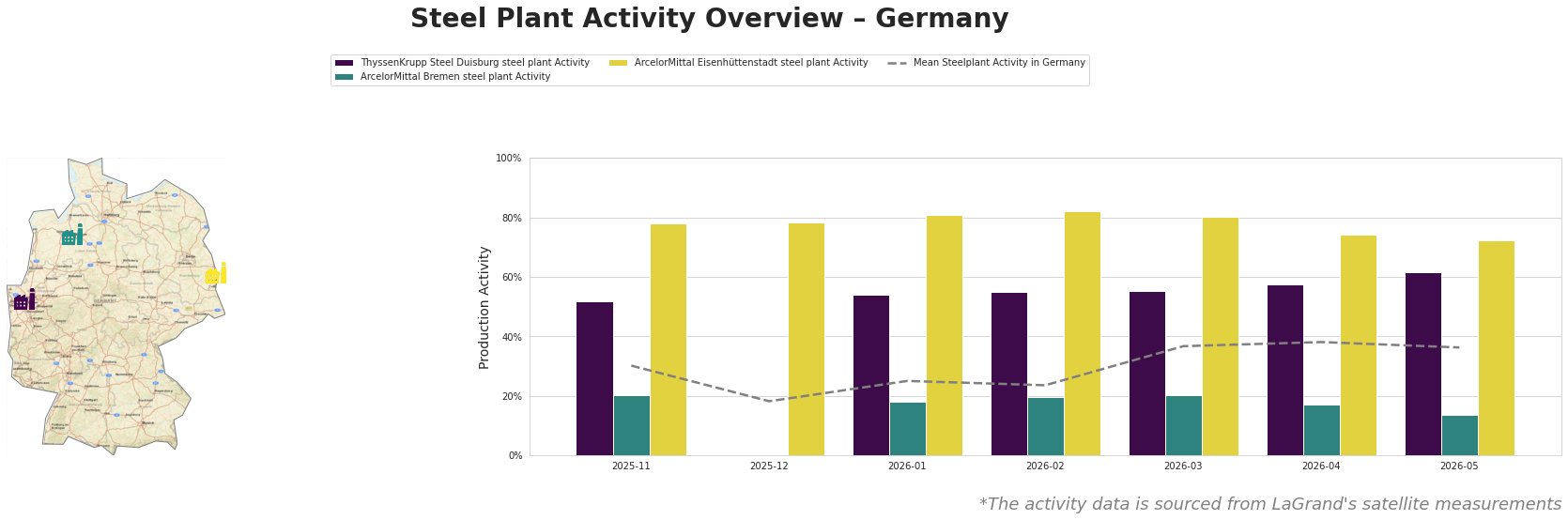
The ThyssenKrupp Duisburg steel plant demonstrated a gradual increase from 52.0% in November to a peak of 62.0%, a trend possibly reflecting improved economic conditions despite falling emissions overall as discussed in Klimaziele verfehlt – na und?. Meanwhile, ArcelorMittal Bremen saw its activity drop to 14.0% by May 2026, just as the discussions intensified around the implications of climate targets (notably unestablished links).
Activity at ArcelorMittal Eisenhüttenstadt remained relatively stable, oscillating around the 80% mark, indicating resilience amidst environmental policy pressures. The fluctuations observed in above-average activity despite broader emissions concerns could suggest an ongoing demand for steel products in essential sectors like automotive and infrastructure.
Given the ongoing debates on energy affordability detailed in Energiewende: Klimaziele sind nicht das Problem, buyers should consider securing contracts with ThyssenKrupp Duisburg for rising output, whereas ArcelorMittal Bremen might offer more competitive pricing as its production wanes. Analysts should further monitor regulatory developments that could shift operational metrics, particularly as legislative changes to heating guidelines may disrupt supply patterns.
Overall, while there are no direct correlations established between plant performance and climate policy, fluctuations in activity should prompt targeted procurement strategies from buyers, especially favoring producers with upward trends in activity levels—or those well-positioned to adapt to evolving market conditions driven by climate discussions.