


From the Field to the Dashboard – Built by Experts, for Experts.
Discover What's Really Happening in the Steel Industry
Use the AI-powered search engine to analyze production activity, market trends, and news faster than ever before.
Try the Free AI Search EngineVery Positive Outlook for Ukraine’s Steel Industry: Satellite Data Shows Recovery Amid EU Policy Changes
Ukraine’s steel industry is witnessing a significant upturn in activity, as recent satellite observations highlight a resurgence in productivity levels across key plants, despite ongoing reliance on imports. Notably, UK Steel CEO Gareth Stace points out in the article UK steel sector still needs imports: Stace the critical need for increased domestic production amidst external import challenges, which aligns with our observed data.
Activity levels at the Metinvest Zaporizhstal steel plant peaked at 32% in December 2025 and have remained stable, demonstrating resilience as 2026 began. Similarly, the Donetsksteel Metallurgical Plant revealed an active but fluctuating status, where production had stabilized around 20% in January, highlighting a focus on regional market demands. In contrast, Alchevsk Iron & Steel plant showed impressive figures, reaching 60% in January, reflecting robust operational capacity despite external pressures.
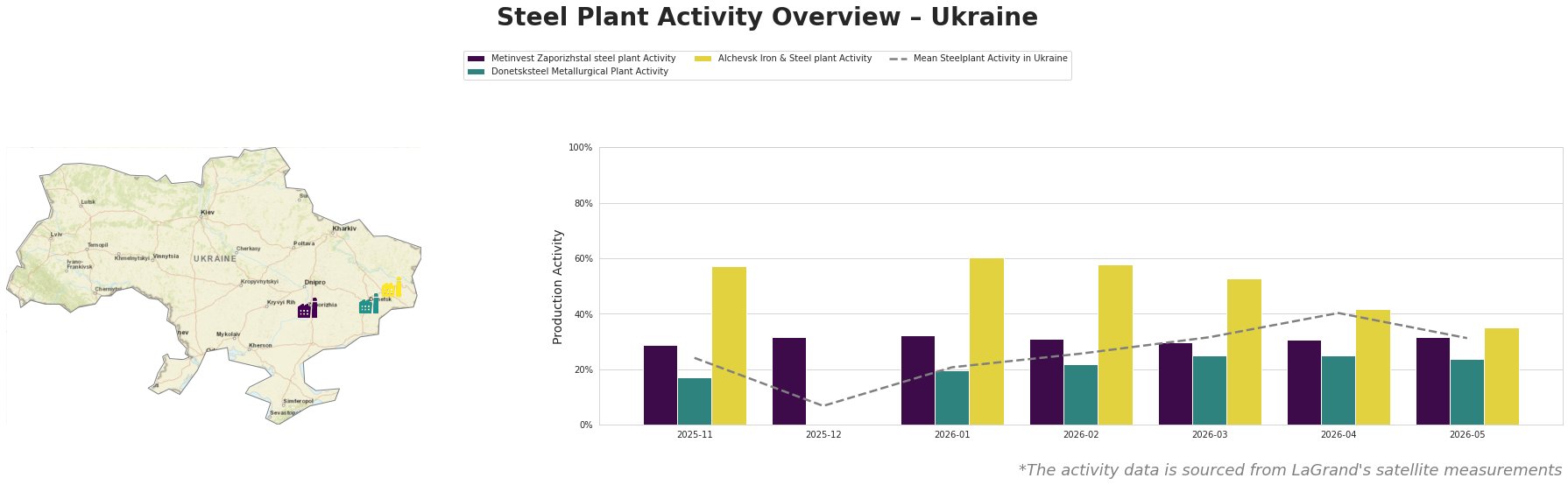
Metinvest Zaporizhstal, leveraging its integration and capacity for producing hot-rolled and cold-rolled products, has reported an uptick in activity corresponding with Stace’s call for enhanced local production. The article Changing the structure of steel imports to the UK: a discussion between UK Steel and ISTA emphasizes that domestic output must rise in the face of anticipated import restrictions, setting a favorable environment for robust local steel sourcing.
The Donetsksteel Metallurgical Plant, primarily focused on crude steel, continues to face operational constraints due to its aging infrastructure, with production not connecting clearly to recent news. Alchevsk Iron & Steel, with notably high activity at 60%, aligns with current growth trends in demand for structural shapes and slabs, marking a critical area for procurement strategies.
Given these insights, steel buyers should consider securing supplies now to capitalize on the increased capability of the Metinvest and Alchevsk plants before potential future disruptions. As EU policies evolve, anticipation of heightened tariffs may further strain import availability. Buyers are advised to engage directly with domestic producers and plan for stockpiling, particularly from the more active facilities, to mitigate risks associated with the reliance on imports highlighted in recent discussions.