


From the Field to the Dashboard – Built by Experts, for Experts.
Discover What's Really Happening in the Steel Industry
Use the AI-powered search engine to analyze production activity, market trends, and news faster than ever before.
Try the Free AI Search EngineSteel Market Update: Neutral Sentiment Amid Upcoming CBAM Challenges in Asia
Recent developments in the Asian steel industry reflect a neutral market sentiment, influenced by anticipated regulatory costs and shifting plant activities. Key insights arise from the articles “Irepas: CBAM to favour verified mills by 2027“ and “CarbonChain: Default emission values could double or triple CBAM costs,” which highlight impending compliance burdens under the EU’s Carbon Border Adjustment Mechanism (CBAM). However, no direct correlation with steel plant activity changes could be established at this time.
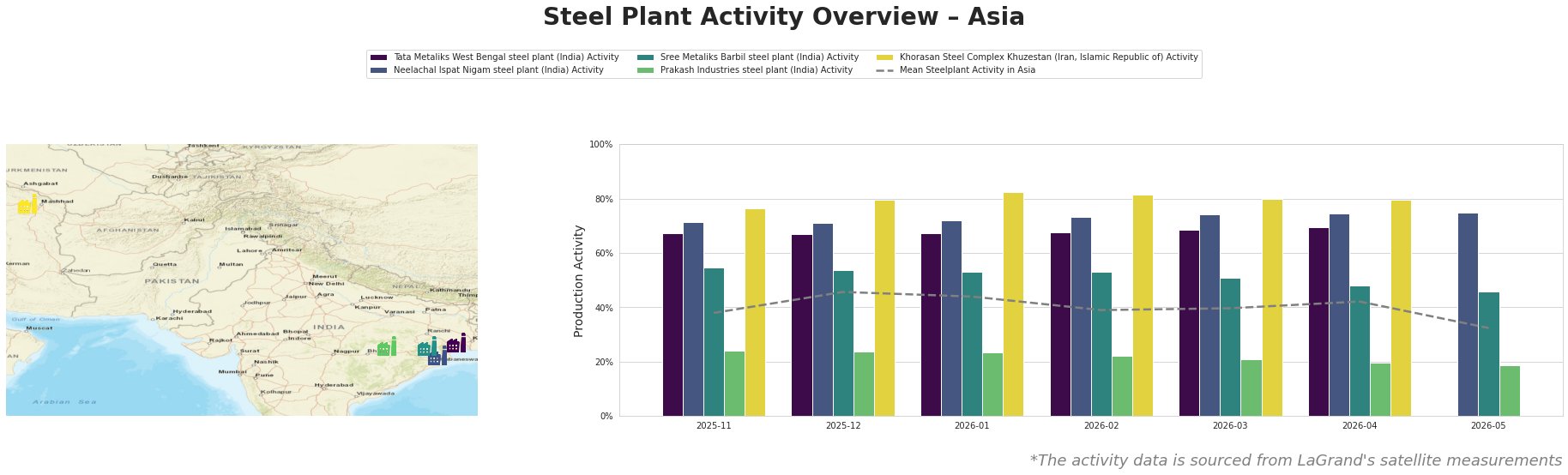
The Tata Metaliks West Bengal plant maintains a steady activity level around 67–70%, without notable fluctuations in the past months, indicating stability amid upcoming regulatory pressures. In contrast, the Prakash Industries plant shows a decline from 24% in November 2025 to 19% in May 2026, suggesting potential challenges in navigating rising operational costs linked to compliance requirements set out in “CarbonChain: Default emission values could double or triple CBAM costs.” No direct relationship can be established between the activity metrics of Tata Metaliks and the upcoming regulatory changes.
The Neelachal Ispat Nigam plant experiences a gradual increase, peaking at 75% activity in May, aligning with expectations from the Irepas meeting insights about verified emissions potentially favoring certain mills by 2027.
Evaluating market risks reveals ongoing supply chain pressures, especially for the Prakash Industries plant, where decreased activity could lead to procurement challenges. Thus, steel buyers should consider:
- Prioritizing suppliers with robust emissions data verification capabilities now, especially those in Japan and South Korea, as highlighted in “Irepas: CBAM to favour verified mills by 2027”.
- Monitoring the evolving activity levels of mills like Tata Metaliks and Neelachal Ispat, which, despite stable operations, face future uncertainties with regulatory costs impacting procurement strategies.
Engaging with suppliers who proactively address compliance ahead of CBAM’s implementation timeline may mitigate rising costs and maintain supply chain continuity.