


From the Field to the Dashboard – Built by Experts, for Experts.
Discover What's Really Happening in the Steel Industry
Use the AI-powered search engine to analyze production activity, market trends, and news faster than ever before.
Try the Free AI Search EngineAsia Steel Market Faces Severe Downturn Amidst Uncertain WTO Reforms
The steel market in Asia is currently experiencing a Very Negative sentiment, primarily driven by geopolitical tensions and trade disputes affecting production. Recent articles such as Welthandel im Wandel – Die WTO muss reformiert werden, doch die Fronten sind verhärtet and WTO: Weg frei für digitalen Handel highlight the escalating gridlock within the WTO that threatens global trade dynamics, likely impacting demand for steel products. Notably, satellite-observed data indicates a significant decline in activity across major steel plants, reinforcing the grim outlook.
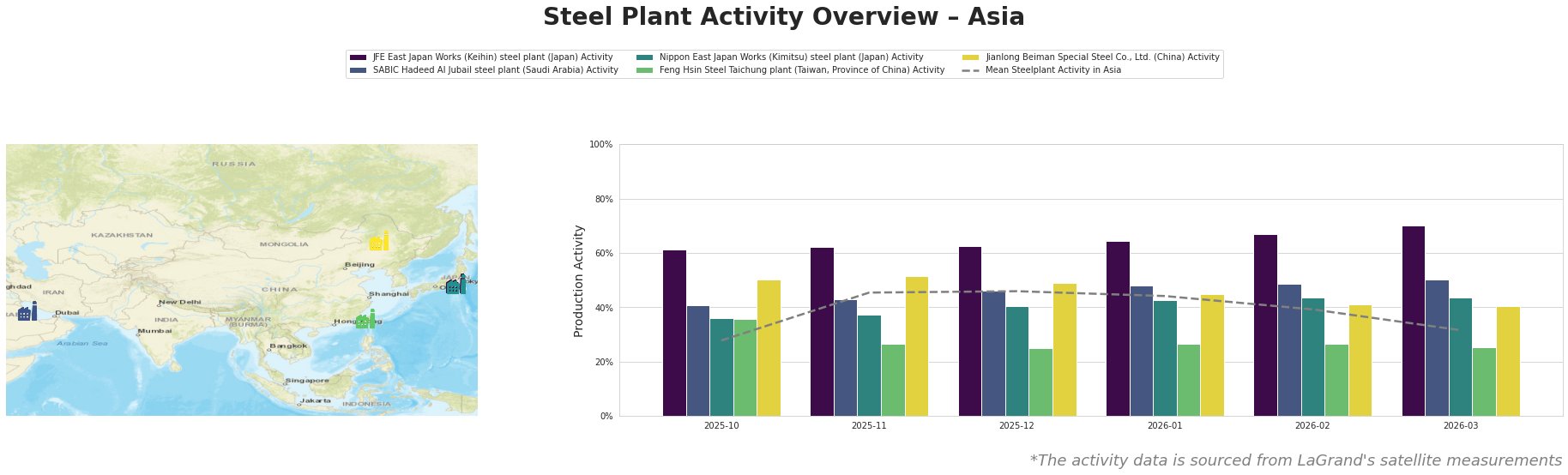
Recent activity levels reflect notable declines particularly in the four months leading to March 2026. The mean activity across observed plants dropped to 32.0%, down from 46.0% in December. Specifically, the Feng Hsin Steel Taichung plant’s activity fell from 36.0% in October to only 25.0% by March 2026, amid reports on the stagnating trade environment attributed to WTO discussions. The Nippon East Japan Works (Kimitsu) showed a slight decrease but remained more stable around 44.0%.
The JFE East Japan Works (Keihin) steel plant experienced the most substantial increase, peaking at 70.0%, which may reflect operational adjustments in response to increasing concerns about future trade volatility stemming from the Welthandel unter Trump: Ist die WTO reformierbar? This could indicate a temporary effort to maximize output before potential disruptions.
Evaluating the market implications:
- Potential supply disruptions could arise from the SABIC Hadeed Al Jubail plant as its operational stability might be compromised given the negative broader market sentiment and its declining activity trends from 43.0% in November to just 50.0% in March.
- Steel buyers should consider diversifying procurement strategies, particularly focusing on the JFE East Japan Works (Keihin) for near-term supply, as evidenced by its peak performance, while simultaneously preparing for potential gaps in supply from plants like Feng Hsin Steel Taichung and SABIC.
In light of the current geopolitical climate and fluctuating output, it is recommended that procurement officers maintain close monitoring of both the WTO reform discussions and plant output metrics to adaptively respond to market conditions.