


From the Field to the Dashboard – Built by Experts, for Experts.
Discover What's Really Happening in the Steel Industry
Use the AI-powered search engine to analyze production activity, market trends, and news faster than ever before.
Try the Free AI Search EngineEuropean Steel Market Sentiment Turns Negative Amid Climate Legal Developments and Low Activity Levels
The European steel market is experiencing a negative sentiment largely due to recent legal setbacks for major automotive companies tied to climate accountability. Notable articles such as BGH: Umwelthilfe scheitert mit Klimaklage gegen BMW und Mercedes and Bundesgerichtshof: Umwelthilfe scheitert mit Klimaklagen gegen BMW und Mercedes-Benz highlight a pivotal moment in Germany’s approach to emissions legislation, potentially stalling automakers’ demand for steel. This backdrop reflects the lower activity levels in key steel plants, evidenced by recent satellite data.
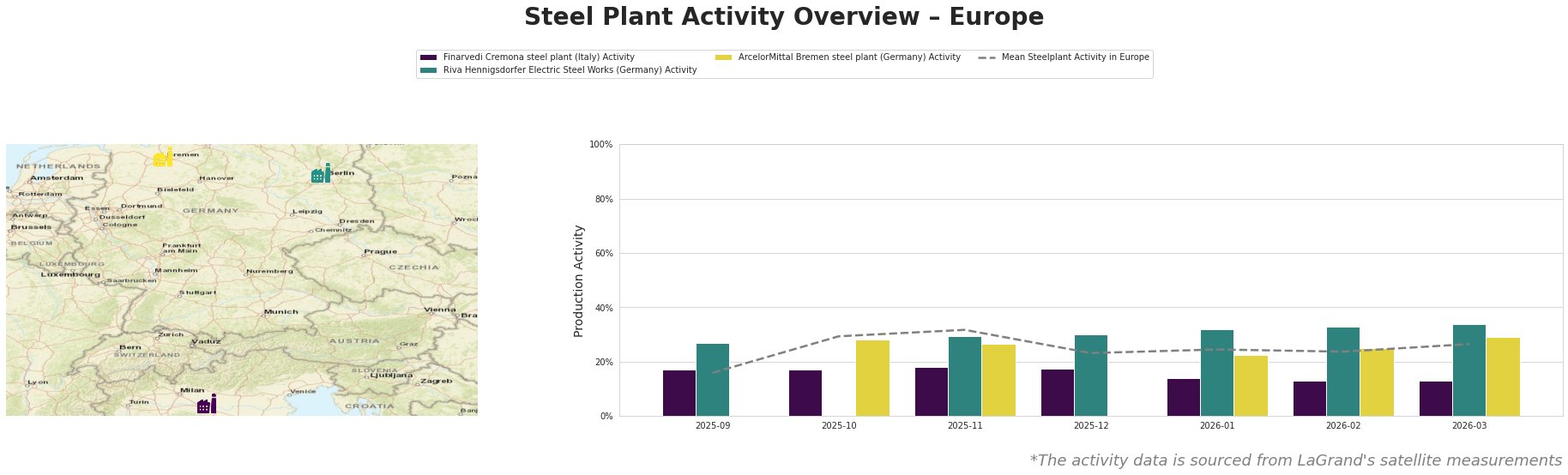
Activity levels at Italian Finarvedi Cremona saw a decline to 13% in March, down from a peak of 18% in November. This drop aligns, albeit indirectly, with the recent shift in the automotive industry’s climate litigation landscape, particularly the outcomes reported in BGH: Umwelthilfe scheitert mit Klimaklage gegen BMW und Mercedes, suggesting potential fluctuations in demand. Meanwhile, Riva Hennigsdorfer’s activity peaked at 34% in March, yet the instability in the automotive sector may not support sustained demand growth. Activity at ArcelorMittal Bremen shows a modest rise to 29% as of March, but the fluctuating mean activity across the continent suggests a general downturn.
The aftermath of the court’s decision reaffirms that corporate accountability for emissions will likely keep automotive demand subdued, directly impacting steel procurement requirements. A review of procurement strategies should reflect these conditions.
Potential supply disruptions are anticipated at the Finarvedi Cremona plant due to its significant drop in activity, while Riva Hennigsdorfer’s gains are not sufficient to offset the broader market’s insecurity. Steel buyers, particularly those in the automotive sector, should contemplate diversifying suppliers to mitigate risks associated with specific plant shutdowns or activity changes.
In summary, procurement strategies should focus on immediate assessment of supply sources and remain flexible to adapt to fluctuating market conditions driven by ongoing legal and climate considerations within the European automotive landscape.