


From the Field to the Dashboard – Built by Experts, for Experts.
Discover What's Really Happening in the Steel Industry
Use the AI-powered search engine to analyze production activity, market trends, and news faster than ever before.
Try the Free AI Search EngineSouth America Steel Market Faces Downturn Amid Supply Chain Disruptions
Recent tumult in the global oil market, spurred by the Iran war and its spillover effects, is impacting the South American steel sector negatively. Key news articles like “Brazil scraps tax on diesel amid Iran war“ and “Petrobras halts marine fuel indications in Brazil“ detail a volatile economic environment, leading to decreased steel activity levels in the region’s major plants, particularly in Brazil and Argentina.
In March 2026, satellite activity data reflects a stark downturn across South American steel plants, with the mean activity plunging to 14%, marking one of the lowest points recorded. Specifically, the Simec Pindamonhangaba plant’s activity fell by almost 10% to 41% during this period. This reduction may correlate with rising fuel costs and logistics challenges as highlighted by the government’s decision to scrap the diesel tax aimed at alleviating rising oil prices. Moreover, the TenarisSiderca Campana plant in Argentina reports a drop in activity as well, reaching 42%, indicating operational strain possibly linked to increased costs affecting production.
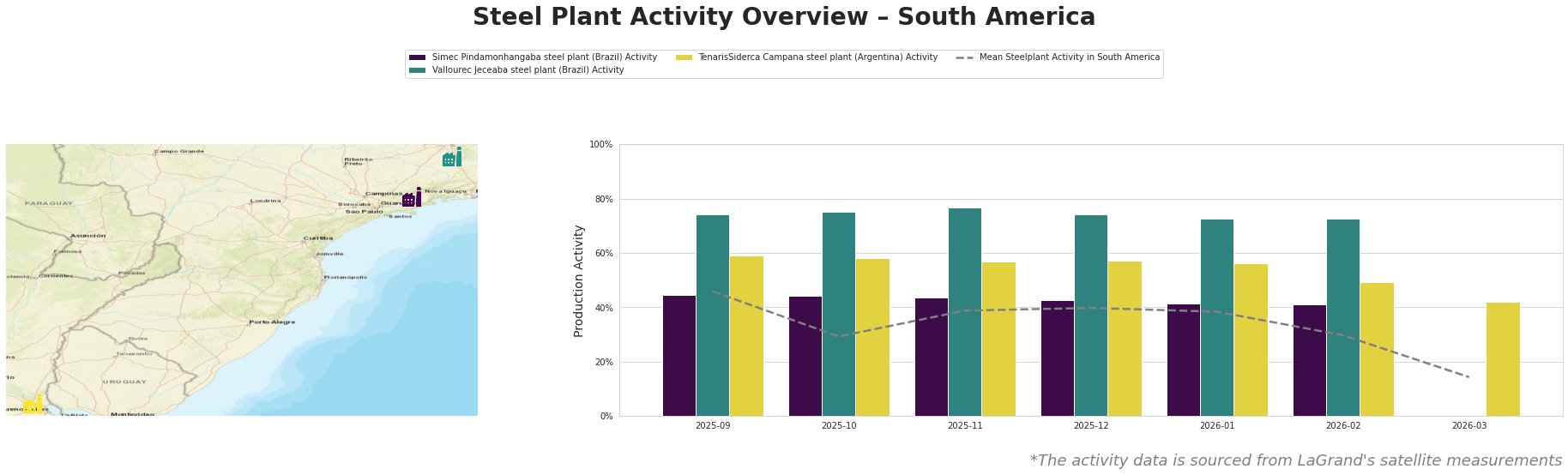
The Simec Pindamonhangaba steel plant (São Paulo) has seen a decline to 41% activity this March, with its operational pressures likely aggravated by the “Brazil scraps tax on diesel amid Iran war” initiative, aimed at counteracting oil price spikes and enhancing local fuel reliability. However, the connection remains indirect as specific operational impacts were not documented.
Conversely, activity at the Vallourec Jeceaba plant has not been explicitly observed during this downturn, yet its reliance on steel pipe production for the energy sector exposes it to the cyclical nature of energy markets. Without reported activity levels, no direct correlation can be established.
The TenarisSiderca Campana steel plant (Buenos Aires) also faced declines, now reported at 42%, aligning with broader economic disruptions stemming from rising international oil prices, as revealed in the “Petrobras halts marine fuel indications in Brazil” article. Operational reliance on fuel efficiency and transportation costs in the wake of governmental tax adjustments poses logistical challenges.
Given the current circumstances, steel buyers should consider diversifying supply chains and hedging against fuel price volatility. Immediate procurement actions should focus on securing contracts with local producers not heavily reliant on diesel imports, and potential collaborations to stabilize costs in this fluctuating market.