


From the Field to the Dashboard – Built by Experts, for Experts.
Discover What's Really Happening in the Steel Industry
Use the AI-powered search engine to analyze production activity, market trends, and news faster than ever before.
Try the Free AI Search EngineSteel Market Surge in Asia: Tariffs Driving Production and Opportunities
Recent developments in the Asian steel market demonstrate a very positive outlook, driven by strategic tariff implementations in the US. Notably, “New 25% Steel and Aluminum Tariffs Take Effect March 12 in US Boosting Domestic Producers“ and “US to roll out new tariffs on major trading partners“ present a landscape ripe for investment and growth among Asian steel producers.
Satellite data indicates significant shifts in steel plant activity throughout Asia, reflecting varied responses to these tariff changes. The activity measured across significant plants—SeAH Besteel Gunsan, Baosteel Desheng Stainless Steel, and Ansteel Group—is particularly noteworthy, showcasing recent peaks and declines in operations.
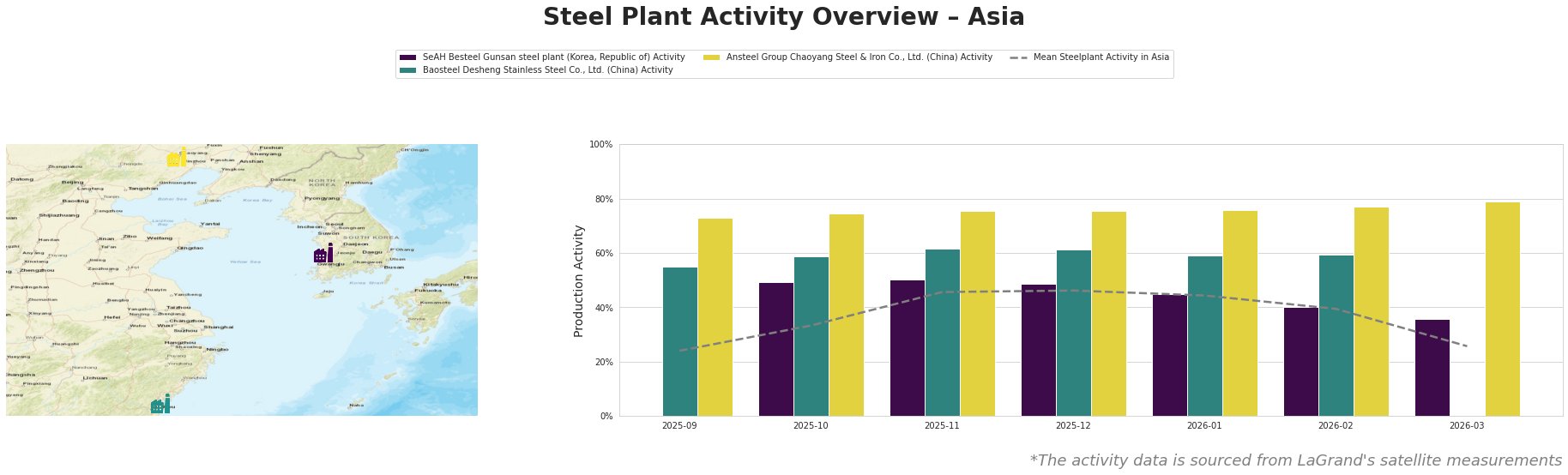
SeAH Besteel Gunsan, which operates with Electric Arc Furnaces (EAF), showed a decline from 49.0% in October to 36.0% in March, correlating with heightened tariffs announced, which may have led to strategic production reductions in anticipation of market shifts due to U.S. policies. Baosteel Desheng, employing an integrated production process, maintained stable activity around 75.0% before experiencing some declines in recent months, though exact connections to the tariffs remain unclear. In contrast, Ansteel Group reached a peak activity of 79.0% in March, indicating resilience and possibly successful adjustments in line with the changing market dynamics driven by the tariffs.
The potential implications for buyers are significant; with tariffs raising U.S. prices, Asian suppliers may find increased demand for competitively priced products. However, the reduced activity at SeAH raises concerns about potential supply disruptions; buyers should consider diversifying sources and securing contracts early. Procurement professionals are advised to closely monitor these developments, especially concerning active tariffs and their cascading effects on global supply chains and pricing mechanisms. Actively engaging with Asian producers who show growth potential, such as Ansteel, may yield advantageous purchasing opportunities in this evolving landscape.