


From the Field to the Dashboard – Built by Experts, for Experts.
Discover What's Really Happening in the Steel Industry
Use the AI-powered search engine to analyze production activity, market trends, and news faster than ever before.
Try the Free AI Search EngineItaly’s Steel Market Faces Challenges Amid Heightened Costs and Weak Demand
Recent analysis of Italy’s steel market reveals significant concerns stemming from geopolitical tensions and economic pressures, directly impacting production levels and pricing. The articles “European heavy plate round-up: European heavy plate moves higher on feedstock concerns“ and “European HRC prices edge higher, but weak demand and near-dead imports curb activity“ shed light on the volatile landscape. Notably, the recent shutdown of imports from Iran and increased freight costs due to the ongoing conflict in the Middle East have translated into rising slab prices, which have now reached $550-580/t CFR Italy, further complicating local market dynamics.
Measured Activity Overview
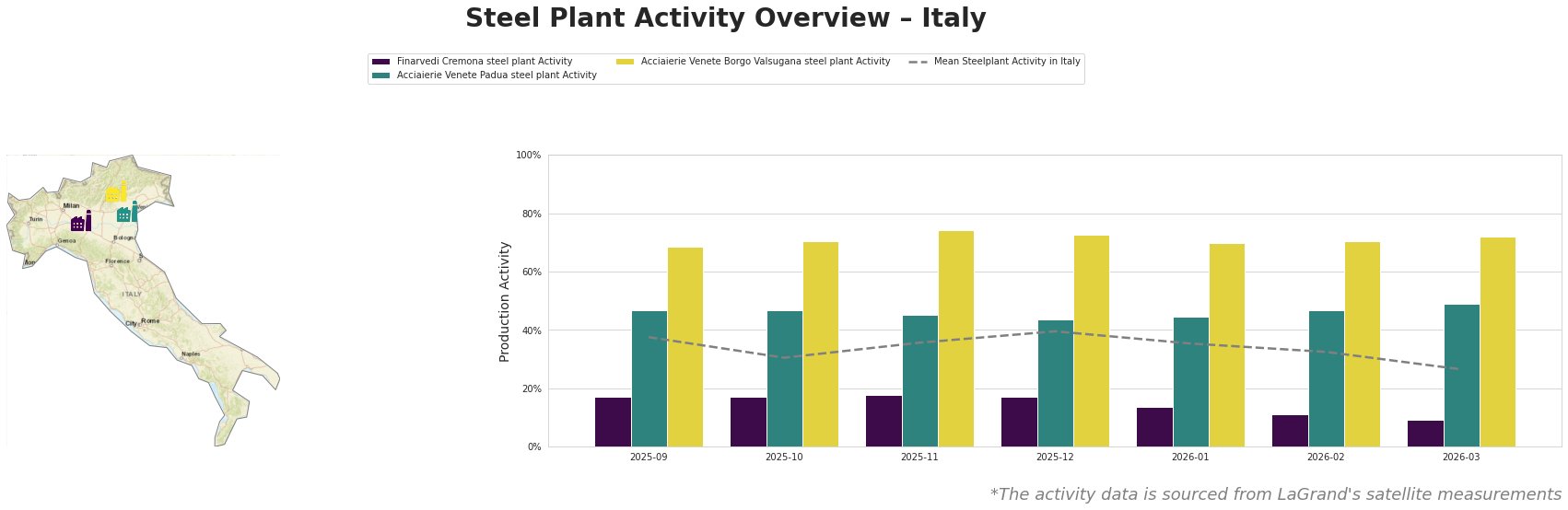
Activity levels at Italian steel plants have experienced a noticeable decline. The Finarvedi Cremona steel plant has diminished significantly from 17.0% to 9.0% by March 2026. These drops align with the rising costs mentioned in “European heavy plate round-up: European heavy plate moves higher on feedstock concerns,” indicating price increases that have pressured production. In contrast, Acciaierie Venete Borgo Valsugana showed resilience with more stable output, maintaining around 70-74% despite the overall trend.
Evaluated Market Implications
Given the data, procurement professionals should be cautious about potential supply disruptions, particularly from the Finarvedi Cremona steel plant, which has shown significant drops likely linked to deteriorating demand and rising costs, as highlighted in the articles. As slab prices increase and geopolitical unrest persists, the market sentiment remains negative. Buyers are advised to:
- Prioritize procurement from Acciaierie Venete Borgo Valsugana as it has exhibited more stable activity levels aligning with ongoing needs for semi-finished goods in construction and automotive sectors.
- Monitor slab pricing trends closely, as the increases noted in heavy plates and HRC pricing due to supply chain pressures could further exacerbate costs, warranting strategic bulk purchasing if prices stabilize.
- Delay non-urgent purchases until the market stabilizes, given the fluctuations in energy costs and logistics challenges illustrated by “European HRC prices edge higher, but weak demand and near-dead imports curb activity.”
In summary, the Italian steel market is facing challenging conditions influenced by external economic factors, requiring strategic purchasing strategies to mitigate costs and ensure supply continuity.