


From the Field to the Dashboard – Built by Experts, for Experts.
Discover What's Really Happening in the Steel Industry
Use the AI-powered search engine to analyze production activity, market trends, and news faster than ever before.
Try the Free AI Search EngineStrong Activity Boost in European Steel Markets Amid Regulatory Changes
The European steel market is experiencing a significantly positive trend characterized by new regulatory approvals and advancements in production capacities. Recent developments, specifically “The European Parliament has approved interagency negotiations on the steel trade regime“, highlight measures that could enhance production and stabilize market dynamics. Concurrently, satellite data signals show fluctuating activity across key steel plants, particularly driven by regulatory changes and energy pricing issues noted in “EU steel producers call for urgent action on energy prices“.
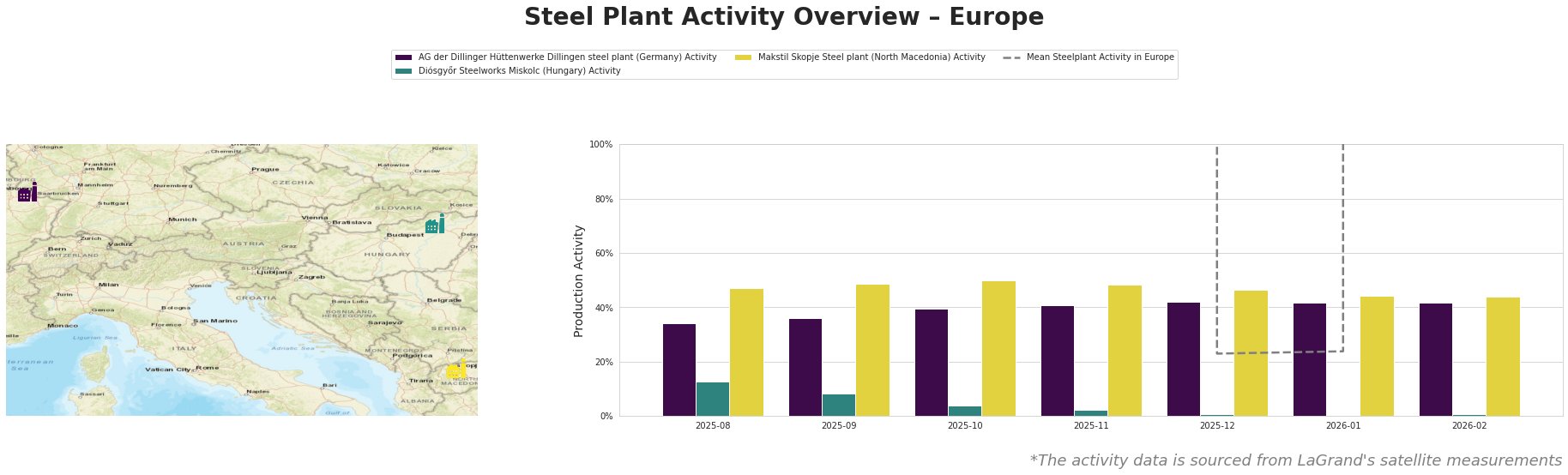
The AG der Dillinger Hüttenwerke Dillingen steel plant, with a crude steel capacity of 2.76 million tonnes, maintains steady activity at 42% as of January 2026, closely aligning with the upward trajectory in capacity utilization across Europe following the new regulatory measures. Diósgyőr Steelworks Miskolc, primarily engaged in electric arc furnace production, showed a notable drop in activity to 0% in January 2026, which can be linked to energy price spikes detailed in “EU steel producers call for urgent action on energy prices”. In contrast, the Makstil Skopje Steel plant remains resilient with activity hovering around 44% as competition intensifies in the region despite the overall mean decline.
Potential supply disruptions are likely at Diósgyőr due to its drastic activity reduction, indicating a supply pinch that steel buyers should anticipate. Strategic procurement actions are recommended:
1. Diverse Sourcing: Engage with multiple suppliers, especially those in regions like Germany with stable operations (e.g., AG der Dillinger), to mitigate risks stemming from fluctuating output from Eastern Europe.
2. Long-Term Contracts: Secure longer-term agreements with producers like Makstil that exhibit consistent operational levels.
3. Monitor Regulatory Changes: Stay aligned with government negotiations on trade regimes to capitalize on any capacity increases or material availability tied to EU scrutiny of energy pricing.
By proactively addressing these conditions and maintaining flexibility in sourcing, steel buyers can navigate this markedly positive but volatile market landscape effectively.