


From the Field to the Dashboard – Built by Experts, for Experts.
Discover What's Really Happening in the Steel Industry
Use the AI-powered search engine to analyze production activity, market trends, and news faster than ever before.
Try the Free AI Search EngineNegative Trends in Asia’s Steel Market: Satellite Data Reveals Declining Plant Activity
Asia’s steel market is witnessing significant declines in plant activity levels, primarily attributed to ongoing geopolitical tensions. Events detailed in “Liveblog USA unter Trump: Trump: Ohne Deal wird es „sehr traumatisch“ für Iran | FAZ“ and “Liveblog USA unter Trump: Trump – Machtwechsel im Iran wäre „das Beste“ | FAZ“ may have contributed to these trends; however, no direct linkage with plant activity was established.
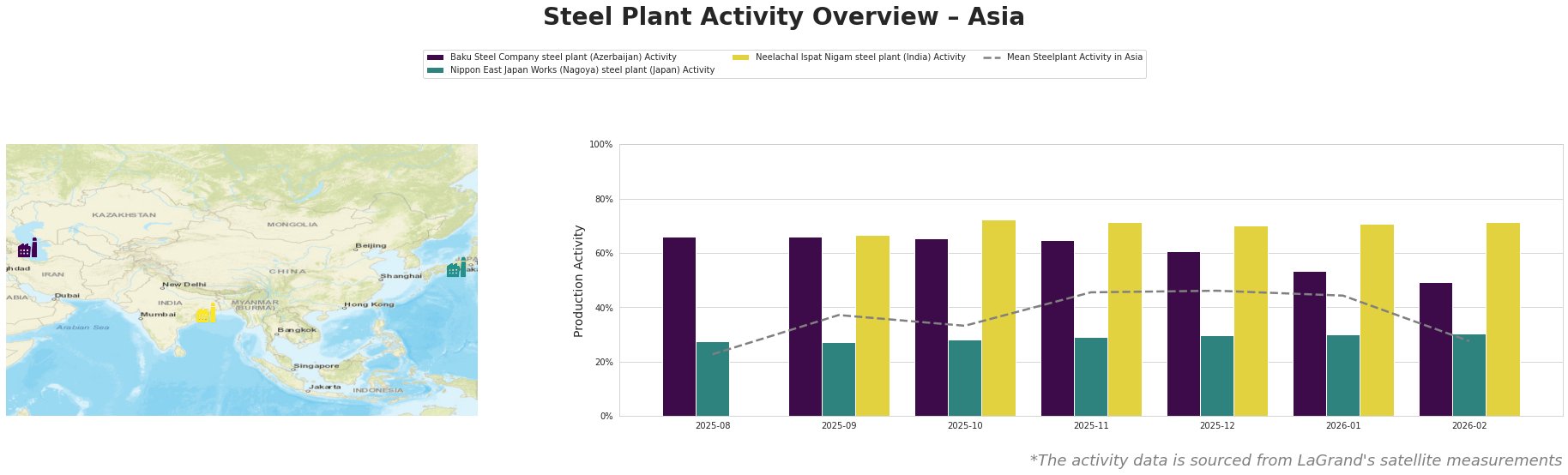
The Baku Steel Company observed a decrease from 53% in January 2026 to 49% in February 2026, aligning with a broader negative market sentiment but lacking a direct correlation to the cited news articles. Nippon East Japan Works has remained relatively stable at around 30%, while Neelachal Ispat Nigam has fluctuated between 67% and 71% over the last six months, indicating consistent performance.
The notable decline in activity across these plants, particularly at the Baku Steel Company where the drop points to an overall depressed market, suggests potential supply disruptions. Steel buyers may find it prudent to manage inventories carefully and engage with suppliers proactively to mitigate potential shortages.
Given these conditions, steel procurement professionals are advised to closely monitor geopolitical developments and consider diversifying supply chains or negotiating contracts that allow for flexible terms to respond to changing production landscapes effectively.