


From the Field to the Dashboard – Built by Experts, for Experts.
Discover What's Really Happening in the Steel Industry
Use the AI-powered search engine to analyze production activity, market trends, and news faster than ever before.
Try the Free AI Search EngineEurope Steel Market Report: Trade Dynamics & Activity Metrics Amidst Rising Tariff Tensions
Recent developments in Europe show a Neutral market sentiment as steel plant activity levels fluctuate amid external trade pressures. “Trump withdraws EU, UK tariff threat” indicates a direct correlation to observed activity levels in steel plants. Following the announcement, significant changes occurred but without a resolute trajectory.
Satellite data highlight the following recent trends within key plants across Europe:
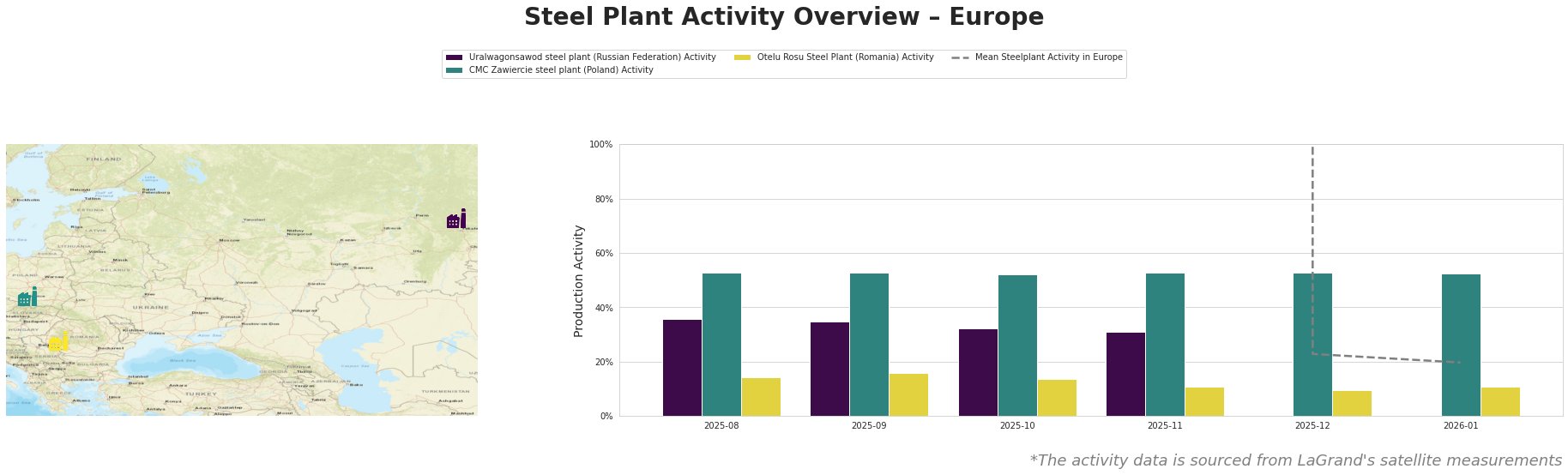
The Uralwagonsawod plant reported a decline from 36.0% to 20.0%, and significant fluctuations leave it uncertain amid tariff discussions. However, the CMC Zawiercie plant remained stable around 53.0%, showing resilience despite tariff volatility due to robust demand in the automotive and construction sectors. Contrarily, the Otelu Rosu plant noted a drop from 14.0% to 11.0%, indicating possible procurement challenges amid competitive pressures as captured in the “Trump scraps plans for additional tariffs on a number of European countries“ article emphasizing geopolitical impacts on trade.
In light of the current landscape, procurement professionals should consider the following actions:
- Secure Contracts with CMC Zawiercie: Given its stability while others fluctuate, securing long-term contracts can help maintain consistent supply levels.
- Monitor Uralwagonsawod & Otelu Rosu’s Activity: The pronounced volatility in activity levels suggests preparing contingency plans or exploring alternative suppliers to mitigate risks associated with potential supply disruptions.
- Consider Policy Impacts: The links between trade tensions (as discussed in “Streit um Grönland: Ein Erpressungsversuch mit Folgen”) and observed plant activities cannot be overlooked; staying informed on EU trade relations remains vital for procurement strategies.
As market dynamics evolve, maintaining focus on strategic alliances and adaptable procurement tactics will be crucial to navigate the complexities of the European steel sector.