


From the Field to the Dashboard – Built by Experts, for Experts.
Discover What's Really Happening in the Steel Industry
Use the AI-powered search engine to analyze production activity, market trends, and news faster than ever before.
Try the Free AI Search EngineOptimistic Outlook for Asia’s Steel Market: Strong Plant Activity Signals Robust Demand
Asia’s steel market shows a Very Positive sentiment as satellite-observed activity reveals notable growth across key steel plants. Recent articles such as “Viewpoint: EU policy to boost Asia spec tanker demand“ imply that external legislation could drive higher demand for steel products, coinciding with observed increases in plant operations. In contrast, no direct relationships were established with other articles.
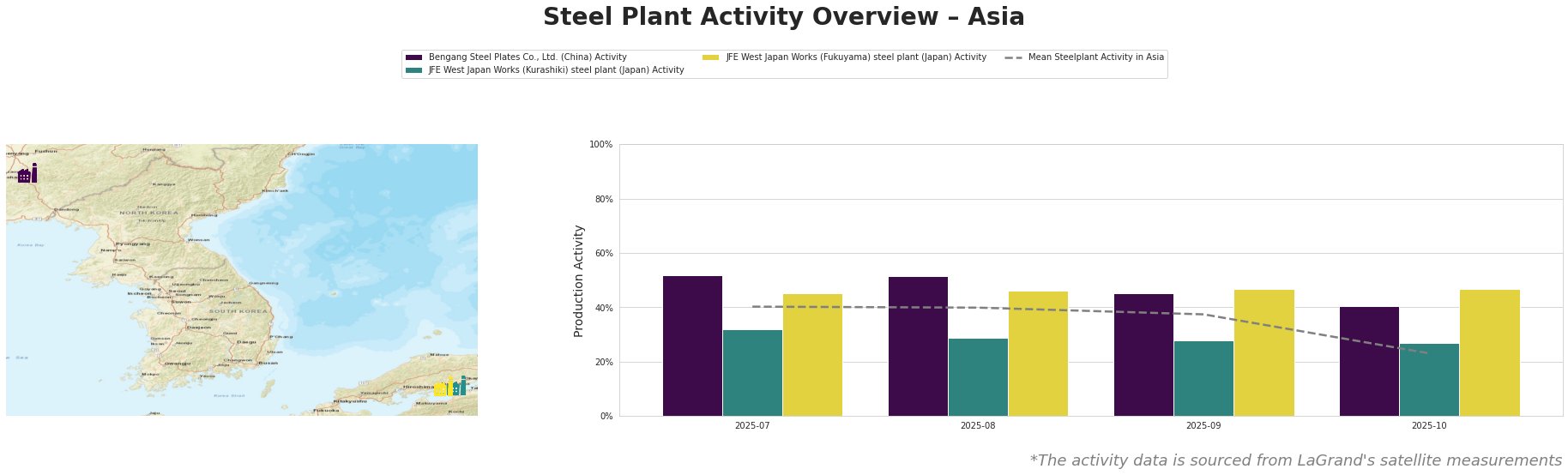
Bengang Steel Plates Co., Ltd. has consistently maintained high activity levels, peaking at 52.0%. This activity, which represents a robust operational status, is significant, considering their focus on automotive and energy sectors. However, the activities decreased in October to 40.0%, aligning with minor regional adjustments but no specific news articles link it explicitly to supply disruptions or shifts in demand.
The JFE West Japan Works (Kurashiki) has seen a decline from 32.0% in July to 27.0% in October. This downward trend, although notable, does not correlate with the positive demand forecast indicated in “Viewpoint: EU policy to boost Asia spec tanker demand,” suggesting that while regional operations have slowed, external legislation may still favor an uptick in future demand.
Similarly, the JFE West Japan Works (Fukuyama) maintained more stable activity levels, with a slight drop to 47.0% by October. This consistency could provide a buffer against fluctuations in the market influenced by broader legislative trends.
Given the positive signals in steel activity and potential legislative support for rising demand, suppliers should prioritize procurement from plants like Bengang Steel Plates Co., Ltd. to ensure preparedness for anticipated demand boosts, particularly in the automotive and energy sectors. Furthermore, JFE’s plants warrant close observation; while recent activity has not led to direct disruptions, industry changes could affect their operational capacity and output.
In conclusion, steel procurement professionals should consider these specific plants’ performance trends when making sourcing decisions, as shifts in legislation and market sentiment prepare the ground for a favorable manufacturing environment across Asia.