


From the Field to the Dashboard – Built by Experts, for Experts.
Discover What's Really Happening in the Steel Industry
Use the AI-powered search engine to analyze production activity, market trends, and news faster than ever before.
Try the Free AI Search EngineVery Positive Outlook for Asian Steel Market Amid New US Tariff Developments
The Asian steel market is currently experiencing a robust upward trend, largely influenced by the recent changes in US tariff policies. Significant activity shifts in steel plants were observed following the news articles titled “US high court strikes down Trump’s tariffs: Update“, and “New Trump tariffs to exempt energy, metals, USMCA“, which outline the voiding and subsequent reimplementation of tariffs affecting global steel trade. While these announcements have led to mixed sentiment in international trading spheres, activity levels in selected Asian steel plants have exhibited resilience and potential growth.
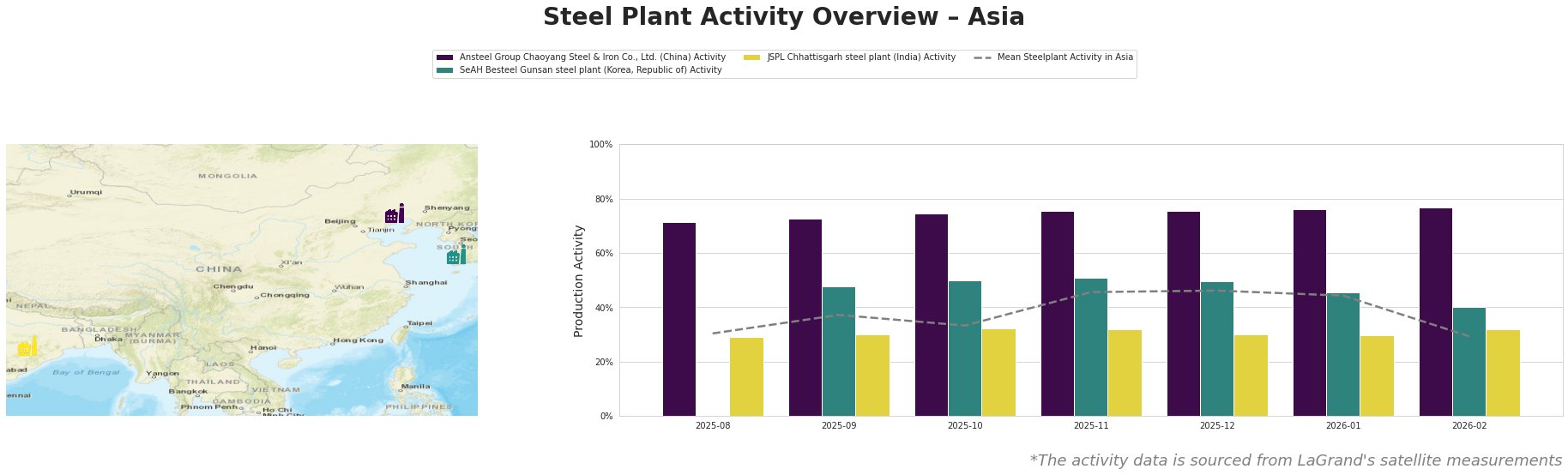
The Ansteel Group Chaoyang Steel & Iron Co. has shown a remarkable increase in activity, peaking at 77% on February 28, 2026, which may relate to the anticipation of lower competitive pressures from US tariffs. Direct connections to the “US high court strikes down Trump’s tariffs” article, which may alleviate fears of international trade restrictions, could suggest enhanced exporting capabilities. Other facilities, such as the JSPL Chhattisgarh steel plant, show limited variation with a stable 30-32% activity range during the same period, highlighting resilience amidst tariff uncertainties without explicit direct connection to recent U.S. developments.
SeAH Besteel Gunsan’s activity, although fluctuating, reached a high of 51.0% in November 2025 and a drop to 40.0% by February 2026, which does not clearly correlate with the news provided. Meanwhile, the mean activity level across the Asian plants indicates increasing volatility that indicates potential market shifts, but no direct articles link to these specific changes.
The market implications of these developments signal potential supply disruptions in steel networks due to varying activity levels. Specifically, steel buyers may consider increasing procurement from firms such as Ansteel Group that are poised for higher production rates post-tariff announcements. As tariffs can lead to increased costs and supply shortages, sourcing from plants exhibiting rising capacity is vital. Buyers should closely monitor the SeAH Besteel and JSPL plants for adjustments as fluctuations could present tactical opportunities for procurement aligned with quick market response.
Given the very positive outlook substantiated by the observed activities and the external economic context, proactive engagement with robust suppliers in the region is essential for optimizing procurement strategies in the Asian steel market moving forward.