


From the Field to the Dashboard – Built by Experts, for Experts.
Discover What's Really Happening in the Steel Industry
Use the AI-powered search engine to analyze production activity, market trends, and news faster than ever before.
Try the Free AI Search EngineUrgent Insights: Asia’s Steel Market Faces Severe Disruptions Amid Conflict-Driven Price Volatility
Steel operations across Asia are under considerable strain, as highlighted in recent developments stemming from heightened geopolitical tensions. In the article “US offers insurance, convoys for Mideast Gulf,” the significant decline in maritime traffic and insurance challenges has direct implications for trade and pricing within the steel sector. Satellite data indicates a marked downturn in activity levels at key steel plants, further signaling a Very Negative market sentiment.
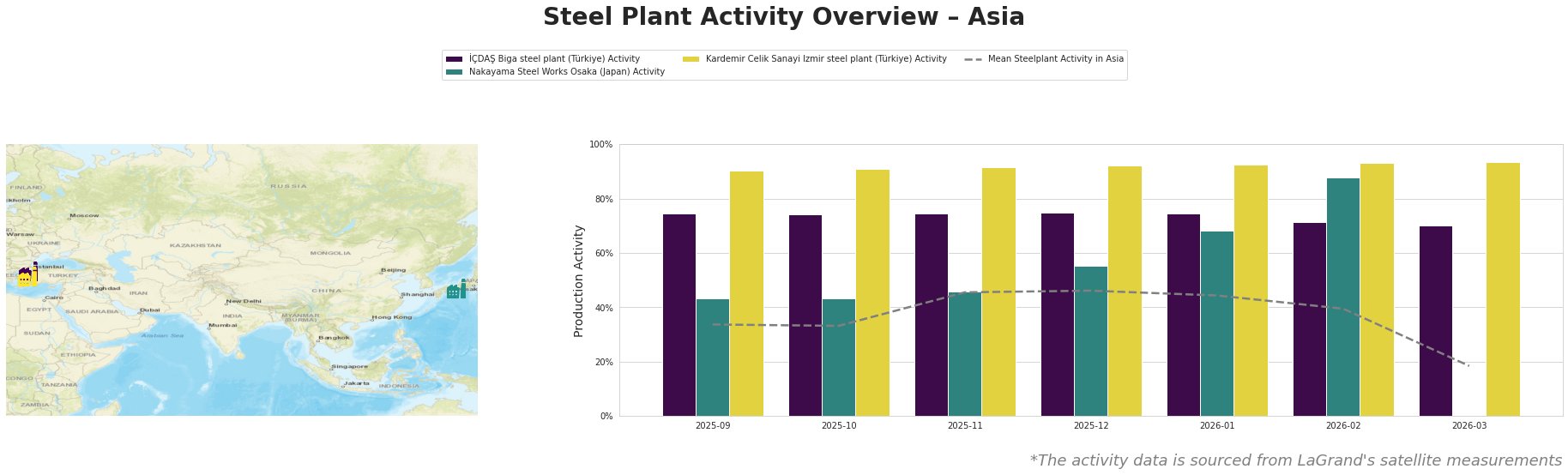
The İÇDAŞ Biga steel plant in Türkiye experienced a decrease from 71% in February to 70% activity in March 2026, maintaining relatively high levels prior but showing sensitivity to regional trade fluctuations. This drop parallels escalating concerns reported in “US ship insurance not enough for Hormuz: Sources,” where maritime risk affects raw material procurement.
Nakayama Steel Works Osaka showed remarkable activity spikes reaching 88% in February but has seen no comparative data for March, raising concerns about data gaps amid the ongoing geopolitical climate. In contrast, Kardemir Celik Sanayi Izmir demonstrated steady activity at 93% since December 2025, suggesting resilience without explicit links to the mentioned news articles.
Given the geopolitical landscape and direct implications on trade routes highlighted in articles like “US to roll out oil market calming measures,” potential supply disruptions loom, particularly for operations dependent on Middle Eastern raw materials. The announcement of increased insurance and naval escorts may not sufficiently mitigate risks associated with fluctuating shipping costs and potential adversities.
Steel buyers should consider preemptively securing inventories for key projects linked to construction and infrastructure, as the Kardemir Celik plant’s consistent output suggests possible relative safety against broader market disruptions. However, reliance on uncertain shipping conditions necessitates diversified procurement strategies for steel sourced from regions at risk of further conflict-related disruptions.