


From the Field to the Dashboard – Built by Experts, for Experts.
Discover What's Really Happening in the Steel Industry
Use the AI-powered search engine to analyze production activity, market trends, and news faster than ever before.
Try the Free AI Search EngineStrong Growth Momentum in Asia’s Steel Market Amidst Decreased Output and Emissions
In Asia, particularly within the Chinese steel industry, recent developments show a positive market sentiment. According to the article, CISA mills’ daily crude steel output down 0.1% in late Feb, stocks also down, observed decreases in steel production align with a 4.3% drop in finished steel stock levels. Additionally, the Emissions in China’s steel industry fell by 1.1% y/y in January highlights a notable reduction in environmental impact, which could enhance market perceptions and demand in the long term. However, no direct correlation was found between these emissions reductions and the changes in plant activity.
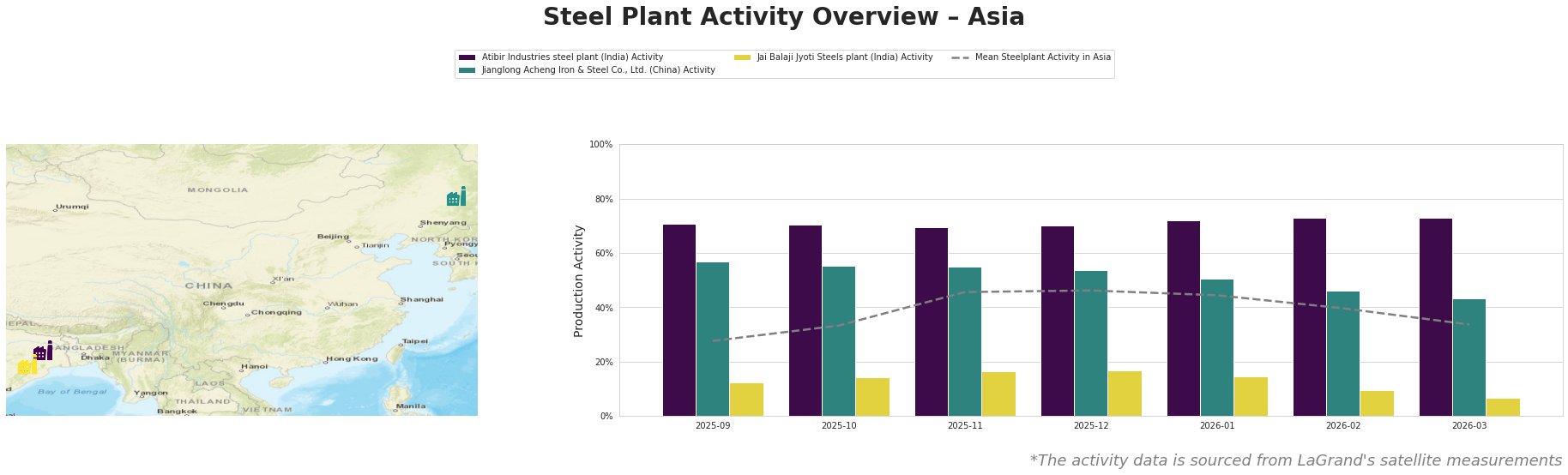
Atibir Industries steel plant in Jharkhand, India demonstrates strong performance, peaking at 73% activity in February 2026. This uptick is significant compared to the mean activity of 40%, suggesting robust operational capacity amidst the broader market context. However, activity decreased to 34% in March 2026, indicating a potential adjustment phase. The plant’s output is primarily from integrated processes and has benefited from a strategic focus on responsible steel production.
Conversely, Jianglong Acheng Iron & Steel Co., Ltd. shows a steady activity level, declining to 43% in March from 51% in January 2026. The sustainable practices reported in the Emissions in China’s steel industry fell by 1.1% y/y in January suggest that while emissions decreased, operational activity faced downward pressure possibly due to external trade conditions highlighted in the China reduced steel exports by 8.1% y/y in January-February article.
Jai Balaji Jyoti Steels plant exhibits the most considerable decline, dropping from 16% in November 2025 to 7% by March 2026, aligning with the general drop in production output. This sharp decline may indicate underlying operational or market challenges, contrasting with the generally positive sentiment in the sector.
Given the developments and trends observed, the following insights are actionable for steel buyers:
-
Strategic Procurement Planning: With a reduction in steel exports by 8.1% y/y, buyers should be aware of potential supply constraints from China, adapting procurement strategies accordingly to secure essential materials at favorable prices while embracing local suppliers for stabilized supply.
-
Monitor Emissions and Sustainability Trends: As steel industries move toward reduced emissions, focusing on suppliers who align with sustainable practices, like Atibir and Jianglong, can benefit buyers in terms of compliance and market reputation.
-
Assess Activity Rates Closely: Keep a vigilant eye on plant activity rates, especially for facilities like Jai Balaji whose significant drops may predict future supply risks.
Proactive management of these insights will be essential for navigating the evolving landscape of the Asian steel market.