


From the Field to the Dashboard – Built by Experts, for Experts.
Discover What's Really Happening in the Steel Industry
Use the AI-powered search engine to analyze production activity, market trends, and news faster than ever before.
Try the Free AI Search EngineSteel Market Update: Very Negative Sentiment in Asia Amid Geopolitical Tensions
Recent geopolitical developments in the Middle East have severely impacted the steel market in Asia, as indicated by the article “Khamenei killed in US-Israeli attack: Update 2“. As tensions escalate, activity at key steel plants has declined, with no direct improvements discernible as per satellite data.
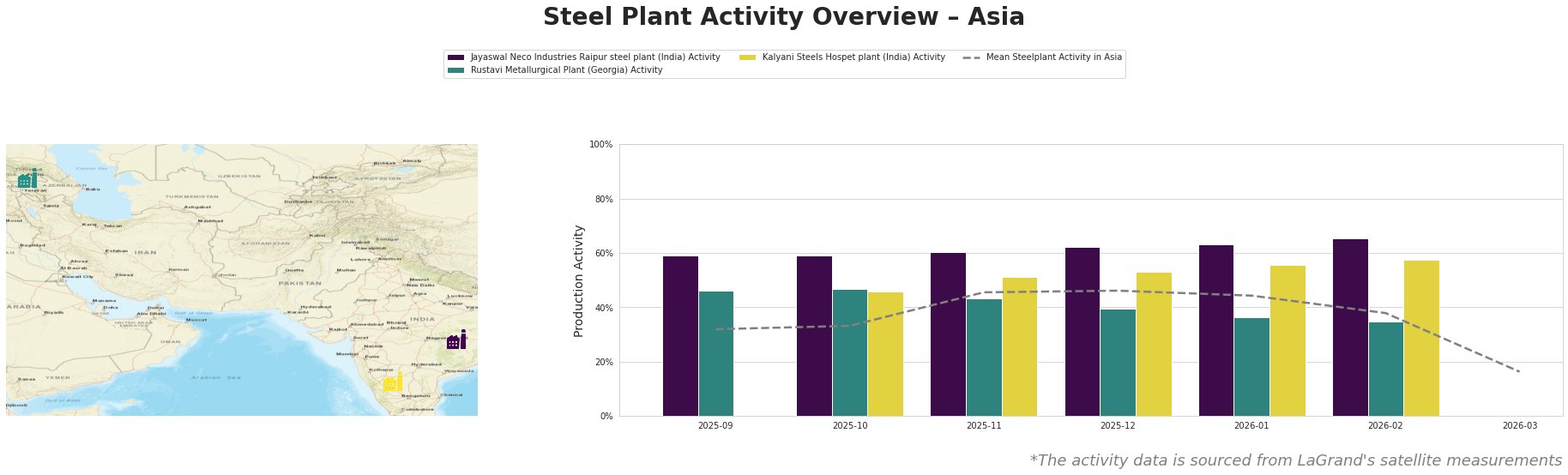
The mean activity across all observed steel plants experienced a sharp drop from 38.0% in February to 16.0% in March 2026. Activity at the Jayaswal Neco Industries Raipur steel plant saw a peak at 65.0% in February before the decline, correlating with the heightened volatility post the “Khamenei killed in US-Israeli attack” incident which likely disrupted local markets and supply chains.
Conversely, Rustavi Metallurgical Plant showed a decline from 43.0% in November to a mere 35.0% in February, reflecting broader regional instability, which has been compounded by lack of operational adjustments amid the crises. The Kalyani Steels Hospet plant activity remained mostly stable in the preceding months, registering 58.0% in February before reporting no recent activity in March, possibly due to the effects described in the articles concerning regional military escalations.
The observed declines highlight an overarching trend of disruption linked to geopolitical tensions which culminated from events such as the “Iran rejects US talks as conflict widens“ article. The commitments to ongoing military actions by the U.S., as reported in multiple articles, have exacerbated concerns regarding supply stability.
This environment underscores significant risks for steel procurement. Steel buyers should proactively evaluate and secure alternative sources to mitigate supply disruptions, especially considering both the Jayaswal Neco Industries and Rustavi Metallurgical Plant have indicated substantial instability. Prioritize relationships with suppliers less affected by geopolitical uncertainties and review contract terms to assure flexibility amid ongoing volatility. This approach will be critical in navigating the diminishing activity levels reported and prepare for anticipated shortages.