


From the Field to the Dashboard – Built by Experts, for Experts.
Discover What's Really Happening in the Steel Industry
Use the AI-powered search engine to analyze production activity, market trends, and news faster than ever before.
Try the Free AI Search EngineSteel Market Sentiment in Asia: Activity Declines Amid Escalating Tensions
The steel market in Asia is facing a very negative sentiment as recent geopolitical tensions and reduced plant activities contribute to an uncertain supply outlook. Recent articles including US steps up military buildup against Iran and US, Iranian diplomats to meet on 26 February highlight a backdrop of escalating military preparations which may impact regional supply chains, but no direct correlation to steel plant activity levels can be established from these articles.
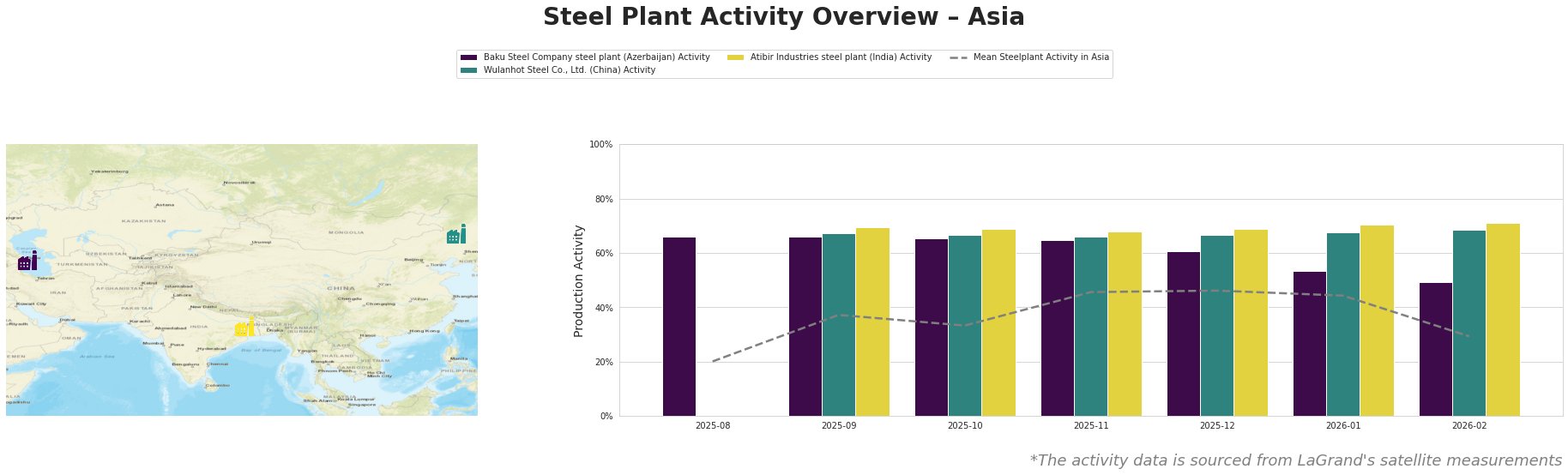
The Baku Steel Company steel plant shows a decline from 66% in September to 49% in February, illustrating a 17% drop that may influence overall production capabilities. Notably, Wulanhot Steel Co. maintained relatively high activity levels around 69% despite fluctuations, while Atibir Industries increased to its peak of 71% in February but also showed sensitivity to regional conditions.
The intensified military presence near Iran, evoked by both US steps up military buildup against Iran and US, Iranian diplomats to meet on 26 February, may instigate regional instability affecting logistical routes, yet no immediate link to steel output declines can be confirmed.
The observed trend of declining average activity levels in Asia, from 46% to 29% within six months, is alarming. Both Baku and Wulanhot steel plants appear affected, as the Baku plant struggles with a notable drop in activity.
Steel buyers should prepare for potential supply disruptions, especially from the Baku steel plant given its significant activity decrease, indicating possible overcapacity or operational challenges. Recommended actions include:
- Diversify Supply Sources: Investigate alternate suppliers, particularly where geopolitical risks may jeopardize logistics.
- Increase Procurement Volumes: Buy now to mitigate any potential supply chain constraints in the coming months, particularly focusing on sourcing from Atibir Industries, which may remain stable amid fluctuations.
In conclusion, while geopolitical tensions escalate, the correlation with observed plant activity remains weak. Buyers must remain vigilant and adjust procurement strategies based on current activity trends.