


From the Field to the Dashboard – Built by Experts, for Experts.
Discover What's Really Happening in the Steel Industry
Use the AI-powered search engine to analyze production activity, market trends, and news faster than ever before.
Try the Free AI Search EngineSteel Market Report: Iran’s Activity Levels Remain Neutral Amidst Hormuz Strait Developments
In Iran, ongoing geopolitical tensions and fluctuating maritime activity are influencing the steel industry’s operational dynamics. Recent reports highlight “Strait of Hormuz traffic increases but remains low,” connected to observed stability in steel production levels, as well as diplomatic engagements documented in “Iran negotiators let through 10 tankers: Trump.” Despite these developments, satellite-data reveals no significant spikes in plant activity linked directly to increased maritime operations.
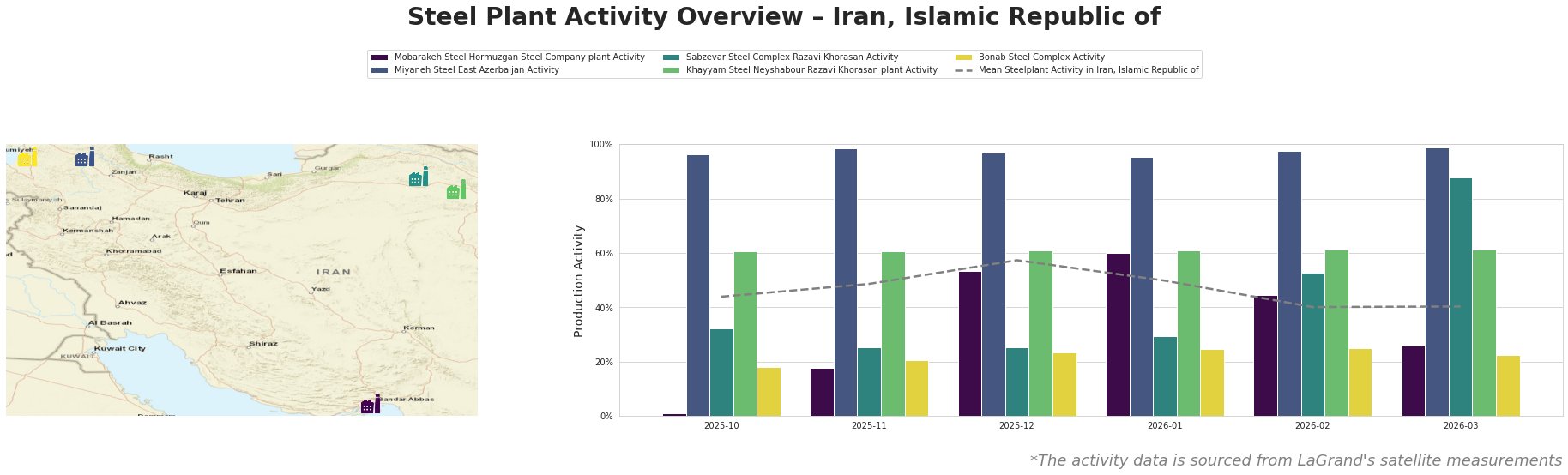
Mobarakeh Steel plant in Hormuzgan recently saw its activity dip to 26% in March, reflecting a 32% decline from January (60%). This drop may correlate with heightened uncertainties stemming from shipping routes as described in “Trump’s shift in tone fails to revive Hormuz traffic,” indicating overall regional instability.
Conversely, Miyaneh Steel’s activity rose to 88%, suggesting robust operational levels not clearly tied to the strait’s maritime activity changes but indicative of continuing demand for its output, amid a backdrop of fluctuating regional shipping conditions.
Overall, steel production in Iran reflects neutral market sentiment, as evidenced by consistent activity levels across several plants despite fluctuating conditions in the Strait of Hormuz. Specifically, the integration of a fee system for passing through the strait suggests potential supply disruptions that could impact sourcing, as indicated by the emergence of restricted maritime transit mentioned in the article “Iran’s ‘Tehran toll’ booth forces some tankers to pay millions to leave Strait of Hormuz.”
Steel procurement professionals should consider consolidating purchasing strategies with plants maintaining higher operational levels—particularly Miyaneh Steel—while being cautious of possible disruptions from the strategic maritime considerations arising from Iran’s toll mandates. Continuous monitoring of maritime traffic in conjunction with production output will be essential for effective sourcing decisions.