


From the Field to the Dashboard – Built by Experts, for Experts.
Discover What's Really Happening in the Steel Industry
Use the AI-powered search engine to analyze production activity, market trends, and news faster than ever before.
Try the Free AI Search EngineSteel Market Report: Iran Faces Significant Declines Amid Regional Instability
Iran’s steel market sentiment has turned very negative as increased military tensions disrupt activities across the region. Noteworthy incidents include the “UAE’s Fujairah terminals resume loading after attacks“ and “Iran vows retaliation on UAE for US attack on Kharg,” which underline rising local conflicts impacting operational stability. Satellite data indicates that recent combat escalations correlate with notable drops in steel production activities across various Iranian plants.
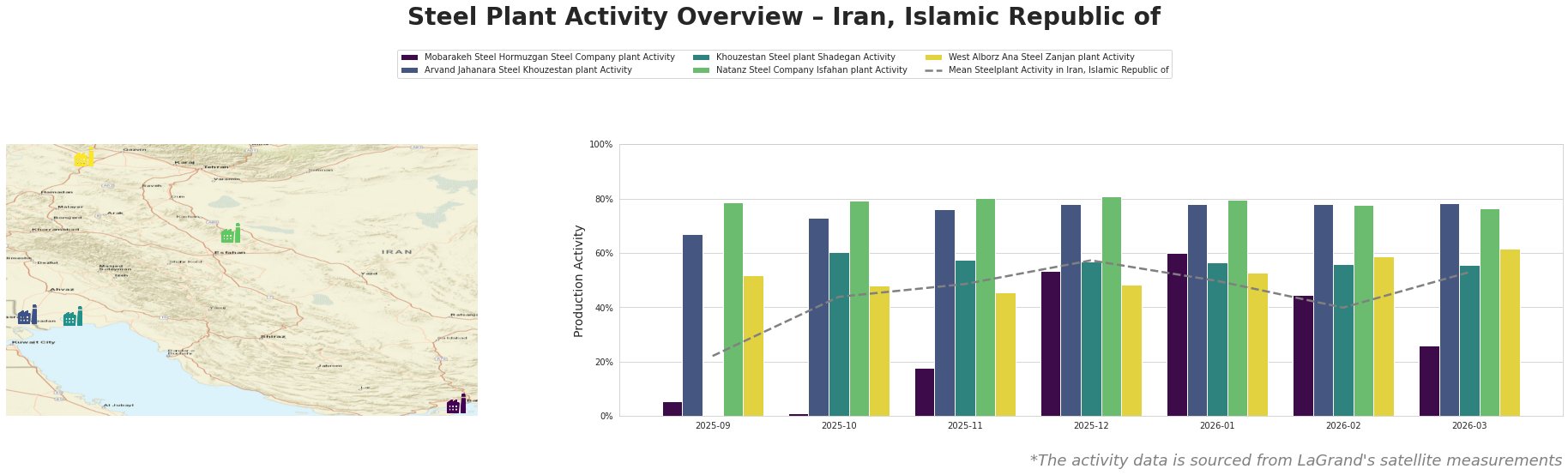
Mobarakeh Steel, notable for its integrated DRI process, experienced a drop from 60% in January to 26% in March, directly attributable to the rising geopolitical tensions, particularly highlighted in “Attacks on UAE energy assets increase as war broadens.” Khouzestan Steel’s output remained relatively stable, holding at 56%, yet the broader regional instability suggests potential future disruptions. Meanwhile, Natanz’s activity peaked at 81% but dropped to 76% by March, revealing vulnerability amid claims from Iran vows retaliation on UAE for US attack on Kharg.
Steel buyers must prepare for potential supply disruptions, particularly from Mobarakeh due to its severe decline in activity correlating with military escalations. Analysts should consider diversifying their sourcing strategies, particularly for semi-finished products, given the turbulence affecting regional players. Immediate procurement actions are recommended to mitigate risks from these identified vulnerabilities, especially as heightened conflict may lead to further logistical issues in delivery and pricing.