


From the Field to the Dashboard – Built by Experts, for Experts.
Discover What's Really Happening in the Steel Industry
Use the AI-powered search engine to analyze production activity, market trends, and news faster than ever before.
Try the Free AI Search EngineSteel Market Report: Asia Faces Decline Amid Ongoing Hormuz Tensions
Steel markets across Asia are experiencing a negative sentiment primarily driven by geopolitical instability and resulting trade disruptions. Reports, such as Hormuz transits remain 95pc down: Clarksons, indicate a drastic drop in vessel transit through the Strait of Hormuz due to military conflicts, with only four vessels recorded daily, significantly impacting supply chains and maritime activity. The reported traffic decline correlates with reduced operations within steel manufacturing plants across the region.
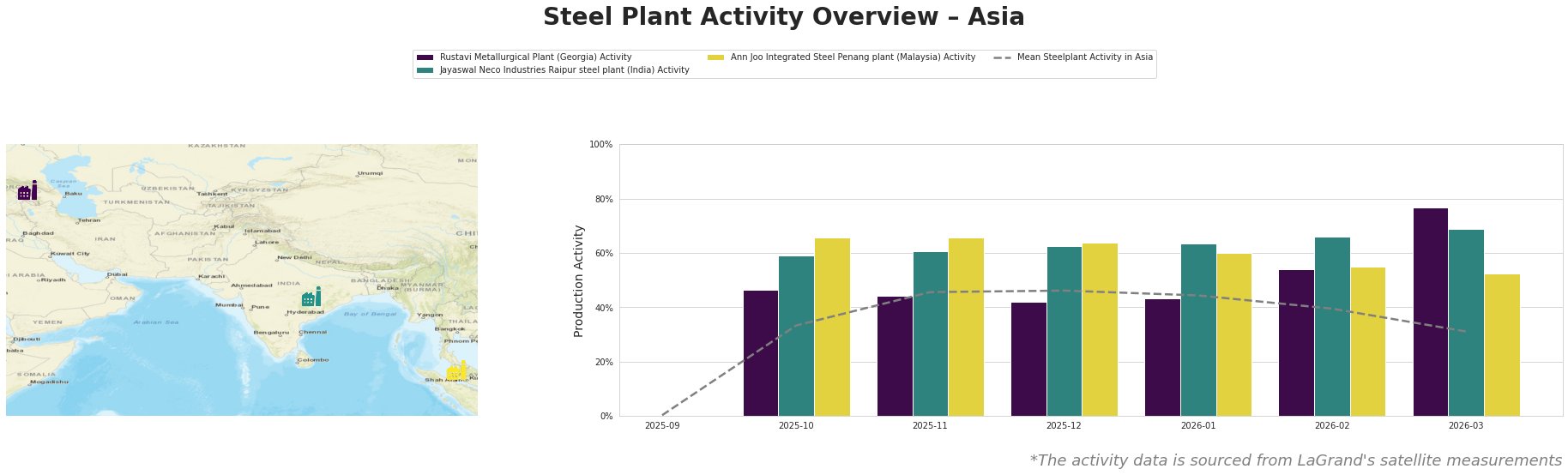
Recent activity levels reveal a marked decline in overall steel production across the region. Specifically, the Rustavi Metallurgical Plant peaked at 77% in March 2026 but is now a key outlier in the midst of declining mean activity levels, which have dropped to 31%. This drop is noteworthy considering rising tensions detailed in Iran’s ‘Tehran toll’ booth forces some tankers to pay millions to leave Strait of Hormuz, which has increased uncertainty among suppliers and buyers regarding maritime logistics.
The Jayaswal Neco Industries Raipur steel plant has seen a modest decline from 66% in February to 69% in March, exhibiting relatively stable production aligned with the broader regional decline. However, Ann Joo Integrated Steel Penang’s activity saw a decrease from 55% in February to 53% in March, indicating challenges that cannot be directly tied to maritime disruptions but perhaps reflect a broader response to economic conditions exacerbated by geopolitical tensions.
The Rustavi plant’s sharp rise to 77% in March may suggest operational adjustments in response to altered market demands. Still, these increases happen in an environment of low global maritime activity as indicated by Trump’s shift in tone fails to revive Hormuz traffic, highlighting the pervasive impact of these geopolitical factors on both shipping routes and production stability.
Considering this backdrop, procurement professionals should closely monitor developments in regional trade conditions, particularly related to Hormuz-related geopolitical tensions. It is advisable to secure supplies proactively and consider diversifying sourcing strategies to mitigate risks associated with shipping disruptions. The current reliance on strained shipping lanes poses a risk that could lead to untimely deliveries and increased costs, especially affecting operations dependent on steady steel supply. The specific circumstances surrounding individual plants, driven by real-time activity data, necessitate tailored procurement actions rather than a one-size-fits-all approach.