


From the Field to the Dashboard – Built by Experts, for Experts.
Discover What's Really Happening in the Steel Industry
Use the AI-powered search engine to analyze production activity, market trends, and news faster than ever before.
Try the Free AI Search EngineSteel Market in Asia: Rising Energy Prices Threaten Production Amid Negative Sentiment
The Asian steel market is facing significant challenges, primarily driven by escalating energy costs linked to geopolitical issues. The article “Iran-Krieg: Angst vor neuer Energiekrise“ reports gas prices surging over 40% as tensions arise due to the Iran conflict, raising concerns for energy-intensive industries in China and beyond. This has been evidenced by a measurable drop in steel production activity across several key plants.
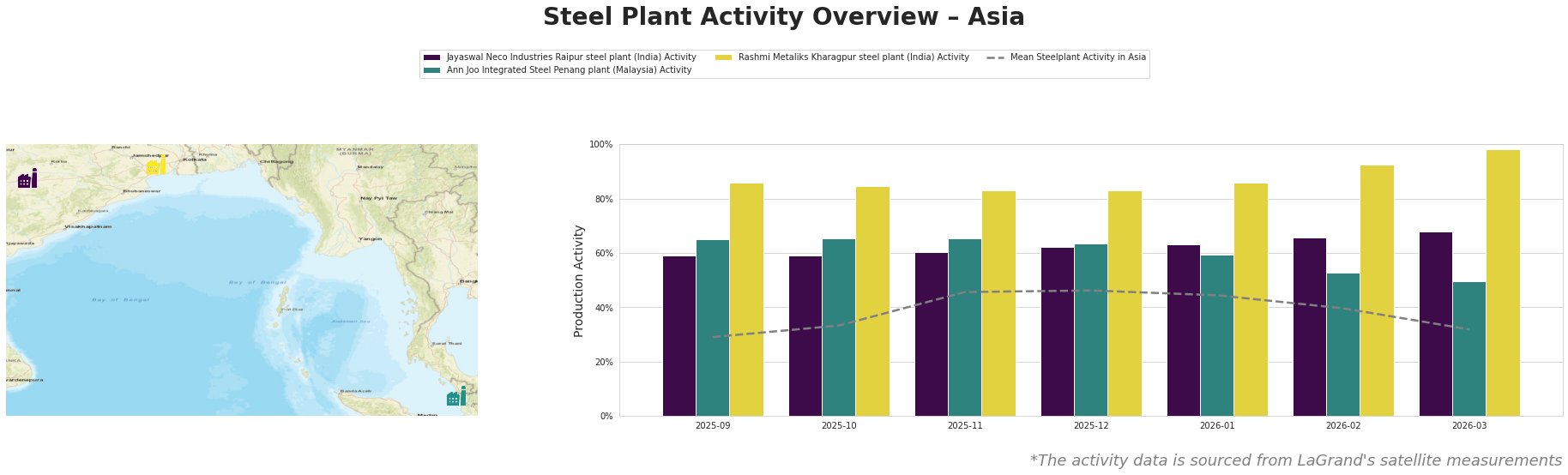
The Jayaswal Neco Industries Raipur steel plant has seen activity rise slightly from 66% in February to 68% in March 2026. However, it operates in an environment with declining sentiment due to volatile energy prices as reported in the article “Gabriel Felbermayr: Irankrieg für China schmerzhafter als für die USA“. The plant’s critical reliance on energy could lead to constrained production in response to inflationary pressures.
Conversely, Ann Joo Integrated Steel is experiencing a decline from 53% in February to 50% in March. This downturn aligns with the rising oil prices cited in “Teurer Sprit durch Iran-Krieg: Kommt der Tankrabatt zurück?“, reflecting broader economic impacts that further threaten production sustainability.
Rashmi Metaliks Kharagpur has also had consistent performance but saw a notable increase from 92% in February to 98% in March. Despite this rise, the plant may be susceptible to future interruptions, given the competitive energy landscape exacerbated by rising costs.
In summary, these plants’ operations exhibit increasing levels of activity but remain at risk due to high energy prices stemming from geopolitical tensions. Recommended procurement actions include securing supply contracts with flexible terms, monitoring price adjustments closely, and considering diversified energy options to buffer against fluctuations.