


From the Field to the Dashboard – Built by Experts, for Experts.
Discover What's Really Happening in the Steel Industry
Use the AI-powered search engine to analyze production activity, market trends, and news faster than ever before.
Try the Free AI Search EngineRising Activity at Evraz Pueblo Steel Plant: Implications for Steel Supply and Market Dynamics
The Evraz Pueblo steel plant in Pueblo, Colorado, owned by Evraz, has demonstrated notable activity growth amidst evolving market demands, with a production capacity of 1.1 million tons of crude steel per year. Specializing in finished rolled steel products such as rail, wire rod, and coiled reinforcing bar, the facility primarily serves the transport sector, positioning it as a critical player in the U.S. steel market.
Recent data indicates significant fluctuations in operational levels, highlighted by a 3.48% increase in thermal activity. This shift reflects a positive trend, particularly in the usage of the Electric Arc Furnace (EAF), where activity peaked at 40% in August 2025 before seeing slight declines in subsequent months. This operational momentum is crucial as other steel producers globally are adjusting to market conditions, such as Zaporizhstal increased its rolled steel production by 15.1% y/y in 2025 and ArcelorMittal Kryvyi Rih increased steel production by 2.3% in 2025.
Activity Overview
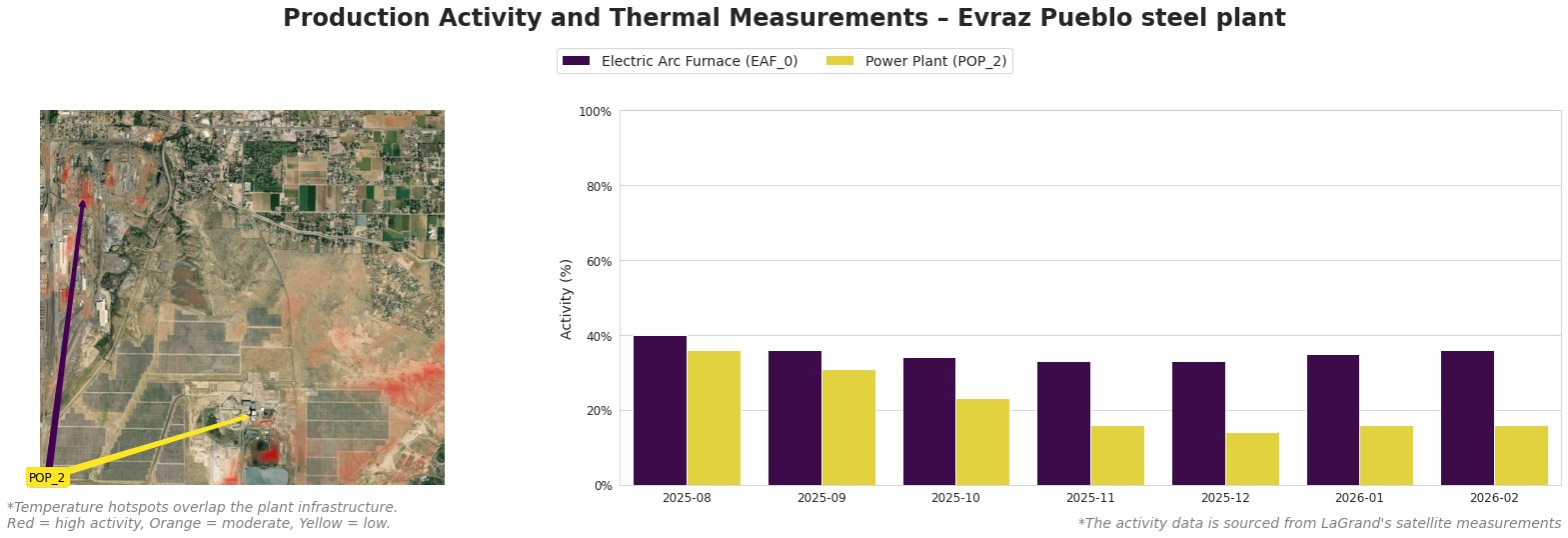
The observed trends indicate an initial surge in EAF activity, potentially driven by increased demand for key products in transport. However, the subsequent stabilization suggests operational adjustments may be necessary to balance supply amidst changing market conditions.
For steel buyers and market analysts, these developments signal important implications. The increased activity at Evraz Pueblo highlights a responsive metal supply chain capable of adapting to demand fluctuations, yet also raises concerns about potential bottlenecks if global production pressures persist. With emerging competition from other producers witnessing production increases, stakeholders must monitor these trends closely to manage procurement strategies effectively in an evolving market landscape.