


From the Field to the Dashboard – Built by Experts, for Experts.
Discover What's Really Happening in the Steel Industry
Use the AI-powered search engine to analyze production activity, market trends, and news faster than ever before.
Try the Free AI Search EnginePositive Trends in European Steel Activity Amidst Regulatory Calls for Reform
Europe’s steel market is exhibiting a positive trajectory, bolstered by proactive governmental actions to reform carbon pricing structures. Recent news articles including “Italy, France push EU for faster ETS, CBAM reforms to protect industry” and “EU governments will insist on accelerating carbon market reform” underline a surge in advocacy for measures that aim to stabilize production costs for energy-intensive sectors, including steel. This aligns with an increase in satellite-observed plant activities, suggesting a responsive adaptation within the industry.
Activity trends from selected plants indicate that the Iron Ozone 32 steel plant in Sverdlovsk has maintained stable operations, averaging 53% activity, with a slight decrease noted in March (down from 54% in February). Meanwhile, CMC Zawiercie steel plant has been consistently robust, with activity at 52% since December 2025, suggesting resilience amid ongoing discussions surrounding the ETS and CBAM. Notably, the Uralwagonsawod steel plant shows a concerning decline, hitting a low of 18% activity as of March, potentially reflecting market apprehensions linked to regulatory uncertainties highlighted in the aforementioned articles.
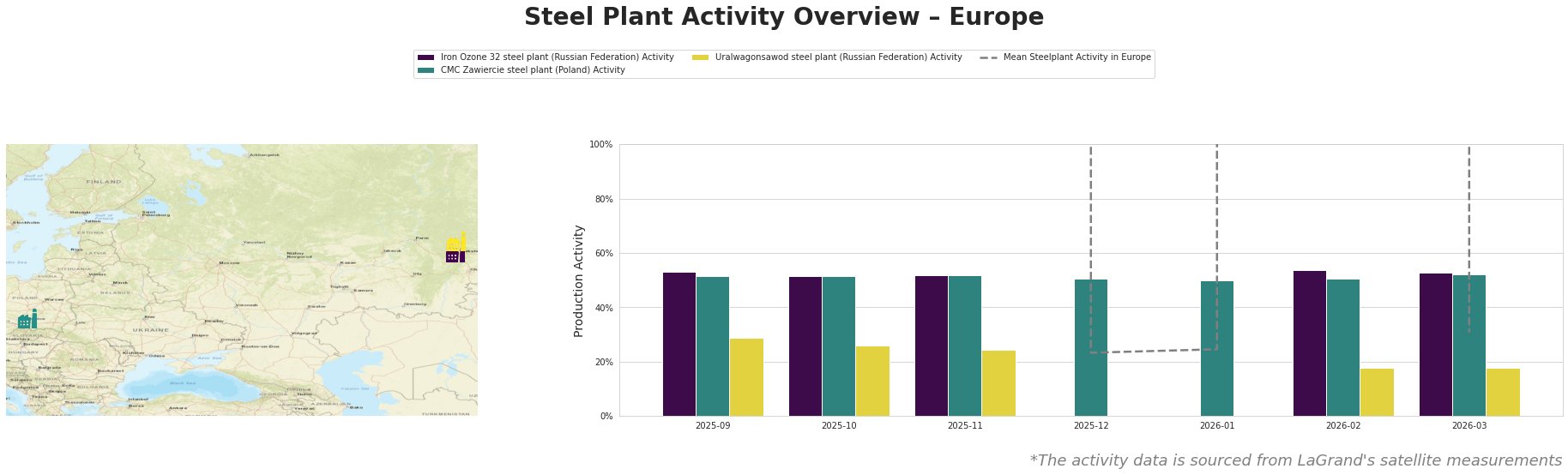
As the Italian and French governments emphasize the urgency of restructuring carbon regulations, they are underscoring a potential for market stabilization, which may bolster the competitiveness of European production. The relative stability seen in CMC Zawiercie and Iron Ozone 32 is encouraging for procurement managers, affirming a functional supply chain.
However, the significant variance, particularly with Uralwagonsawod showing sustained low performance at 18%, indicates potential supply disruptions that warrant attention. Buyers should closely monitor these changes and consider prioritizing procurement from plants with demonstrated stability and resilience, such as Iron Ozone 32 and CMC Zawiercie, given the recent push for regulatory reforms that could soon affect productivity and pricing across Europe.
Procurement strategies should be aligned with the insights drawn from the news articles and observed activity levels. Emphasizing sourcing from robust facilities like CMC Zawiercie and Iron Ozone 32 could mitigate risks associated with potential disruptions emerging from Uralwagonsawod or uncertainty in carbon regulation impacts.