


From the Field to the Dashboard – Built by Experts, for Experts.
Discover What's Really Happening in the Steel Industry
Use the AI-powered search engine to analyze production activity, market trends, and news faster than ever before.
Try the Free AI Search EnginePositive Steel Market Outlook in Asia Amid U.S. Tariff Changes
Asian steel production adjusted favorably, reflecting heightened activity levels in response to shifting U.S. tariff policies. Notably, the article titled “New Trump tariffs to exempt energy, metals, USMCA“ and “US high court strikes down Trump’s tariffs: Update“ provide context for increased operational intensity at regional plants, particularly Ansteel Group Chaoyang Steel & Iron Co., Ltd., which maintains high productivity amidst the evolving tariff landscape.
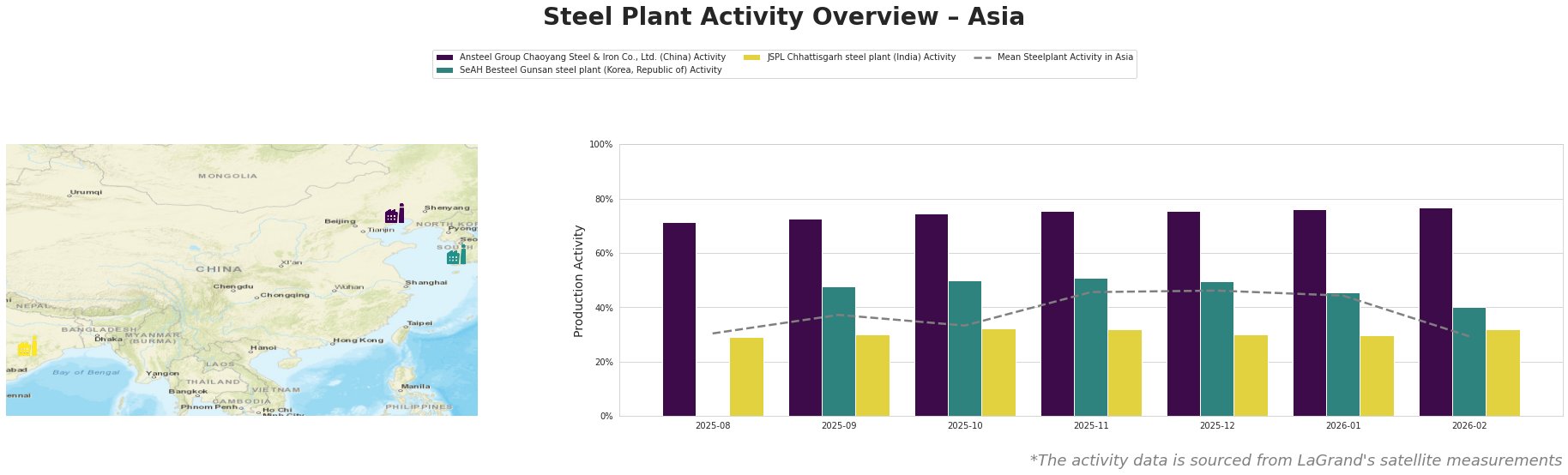
The Ansteel Group Chaoyang Steel & Iron Co., Ltd. recorded a peak activity level of 77% in February 2026, reflecting a sustained operational commitment despite external tariff pressures. This increment correlates with the U.S. tariff adjustments, as highlighted in the “New Trump tariffs to exempt energy, metals, USMCA” article, suggesting strategic opportunism in Asian markets amid uncertainties.
Conversely, the SeAH Besteel Gunsan steel plant maintained stability around 40–50% activity levels, indicating resilience against potential supply chain disruptions following U.S. tariff proposals. Meanwhile, JSPL Chhattisgarh’s activity flattered with lower fluctuations, stuck at around 30%, indicating possible supply dependencies or operational constraints requiring close surveillance.
Measured against the average of 29% mean activity levels observed in February, both Ansteel’s robust operations and the restrained performance of JSPL Chhattisgarh highlight critical variability inherent in Asian steel production landscapes, influenced heavily by external tariff complexities. The fluctuations and resilience in activity at Ansteel may suggest an increasing competitive edge.
Given this highly dynamic environment, steel buyers should prioritize procurement from Ansteel Group to leverage its capacity and productivity advantages. In contrast, maintaining a close watch on the JSPL Chhattisgarh facility might be essential, as its stagnant activity levels pose a risk for supply continuity.
Strategically, procurement plans should enhance inventory management to buffer against potential supply disruptions that could emerge from the Trump administration’s evolving tariff strategies. The combined effect of these dynamics positions Asian steel production for a sustained positive outlook, ideal for agile purchasing strategies aligned with real-time operational performance insights.