


From the Field to the Dashboard – Built by Experts, for Experts.
Discover What's Really Happening in the Steel Industry
Use the AI-powered search engine to analyze production activity, market trends, and news faster than ever before.
Try the Free AI Search EnginePositive Outlook for European Steel Market Amid Production Recoveries and Export Trends
The European steel market is experiencing a positive sentiment driven by recent production recoveries. Notably, the article titled Ukraine increased production of rolled steel by 39.5% m/m in March highlights a significant rebound in Ukrainian steel production, which increased to 544,500 tons in March, aligning with improved activity levels observed across various steel plants. Meanwhile, the news from Australia increased its exports of iron ore by 14% m/m in March indicates a strengthening iron ore supply driven by higher demand for quality ore, which is further supportive of steel production activities in Europe.
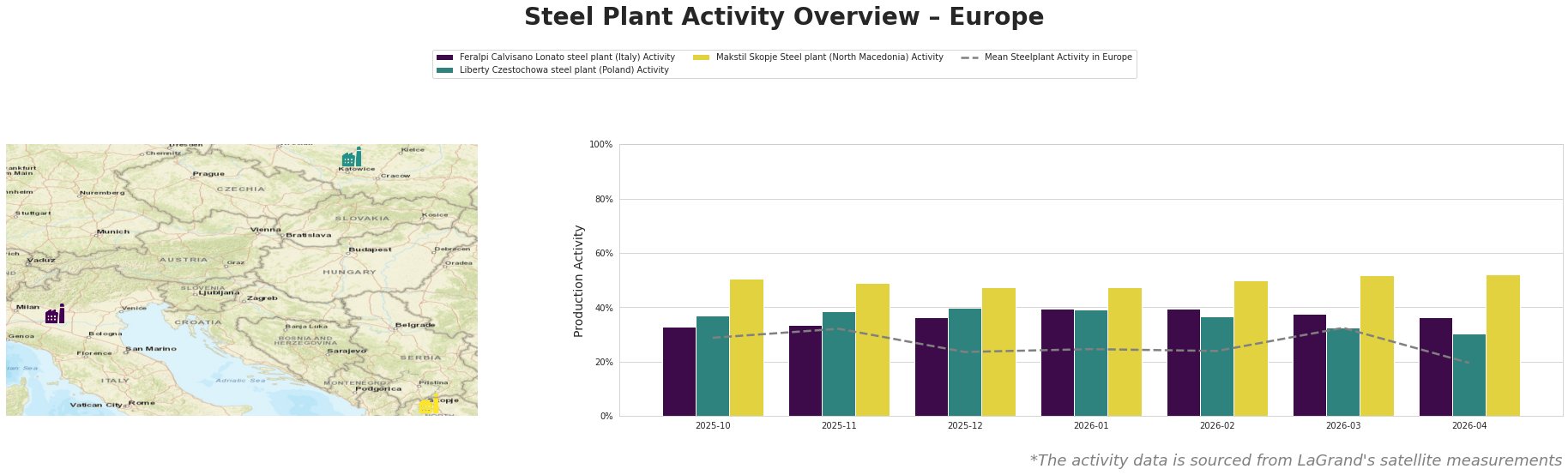
The Feralpi Calvisano Lonato steel plant showed stable activity around 36% through April 2026, reflecting consistent semi-finished product output. Despite a dip in the mean activity to 20% in April, the rise to 38% in March correlates with broader recovery trends cited in Ukraine increased production of rolled steel… Besides, the Liberty Czestochowa plant’s activity peaked at 38% in November 2025 before stabilizing at lower levels; this plant’s alignment with recovery sentiments amidst fluctuating external iron ore supplies, as noted in Australia increased its exports of iron ore by 14% m/m in March, emphasizes its role in the Polish market. Makstil Skopje’s activity maintains at a robust 52% in April despite recent fluctuations, reflecting the balancing act in response to demand shifts and regional supply challenges.
Given the production advances reported, steel procurement professionals should consider enhancing their inventory positions against potential disruptions from the continuing geopolitical situation affecting Ukraine’s exports, particularly highlighted in the article Losses in iron ore exports due to attacks on logistics amounted to $150 million in Q4 – NBU. This rebounding trend, particularly following a significant increase in Ukraine’s production, accentuates the need for timely sourcing strategies to preempt any infrastructural setbacks or logistical issues.
The positive recovery observed suggests stable procurement opportunities; however, vigilance is necessary regarding incoming iron ore supply dynamics influenced by global demand shifts, as reflected in the recent Australian export data. Optimal procurement strategies should focus on sourcing from regions with observed recovery and stable operational metrics to mitigate risks associated with fluctuating supply chains.