


From the Field to the Dashboard – Built by Experts, for Experts.
Discover What's Really Happening in the Steel Industry
Use the AI-powered search engine to analyze production activity, market trends, and news faster than ever before.
Try the Free AI Search EnginePositive Outlook for Asia’s Steel Market Amid Tariff Changes and Activity Fluctuations
Recent developments in the Asian steel market indicate a positive trajectory, primarily influenced by significant tariff changes and varying operational capacities across key steel plants. As detailed in the articles US high court strikes down Trump’s tariffs: Update and New Trump tariffs to exempt energy, metals, USMCA, the U.S. Supreme Court ruling has sparked a response from President Trump, leading to potential new tariffs that may affect international trade dynamics and prices, though specific exemptions for metals could soften impacts on companies sourcing steel from Asia.
Satellite data illustrates fluctuations in steel plant activity across the region. The mean activity level among observed steel plants in Asia as of February 2026 was reported at 29%, reflecting a notable dip compared to previous months.
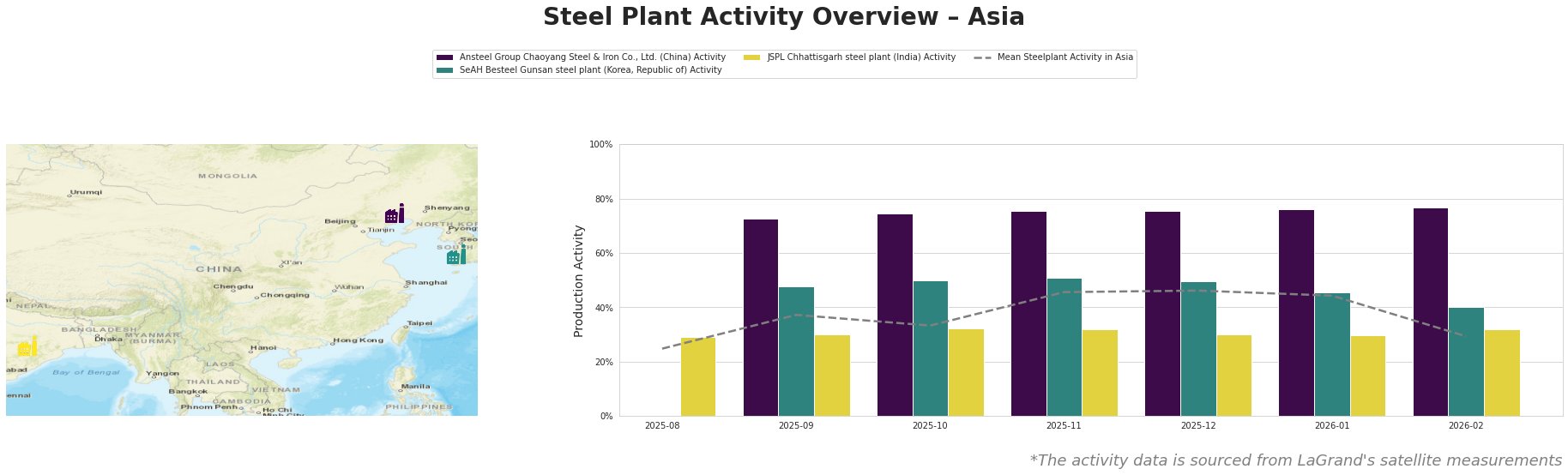
Ansteel Group Chaoyang Steel & Iron Co., Ltd.
Ansteel’s production in Liaoning remains robust with 77% activity observed in February, the highest in the past six months. This increase comes amidst ongoing tariff discussions but showcases resilience in operations that may not directly correlate with U.S. policy changes indicated in US high court strikes down Trump’s tariffs: Update.
SeAH Besteel Gunsan Steel Plant
SeAH’s activity saw a decrease to 40% in February, down from 45% in January. This shift likely reflects market uncertainties linked to the new tariff framework discussed in New Trump tariffs to exempt energy, metals, USMCA. However, its focus on specialized products for automotive and infrastructure remains crucial for maintaining solidification of market demand.
JSPL Chhattisgarh Steel Plant
JSPL maintained stable operations at 32% in February, mirroring January activity. This stability may buffer against supply disruptions stemming from new tariffs and aligns with insights from Trump threatens new 10% global tariff under Section 122 after Supreme Court deems IEEPA tariffs illegal, which could deter unexpected supply blockages.
Evaluated market conditions suggest potential procurement complications, particularly with SeAH’s declining activity possibly impacting supply in specialized steel segments critical to automotive and infrastructure sectors.
Steel buyers should consider prioritizing orders from high-activity plants like Ansteel to ensure stable supply amidst evolving tariffs. It may also be prudent to hedge against potential price volatility by engaging with suppliers for fixed contracts in light of fluctuating market conditions driven by geopolitical factors.