


From the Field to the Dashboard – Built by Experts, for Experts.
Discover What's Really Happening in the Steel Industry
Use the AI-powered search engine to analyze production activity, market trends, and news faster than ever before.
Try the Free AI Search EnginePositive Outlook for Asia’s Steel Market Amid Supply Dynamics
Recent activity in Asia’s steel market shows a positive sentiment, bolstered by specific plant operations and evolving geopolitical issues. Notably, the article Iran says Lavan refinery attacked despite ceasefire highlights regional tensions that may influence supply chains, although no direct connection to steel plant activity has been established. At the same time, the report Singapore’s bitumen prices hit historic highs signals escalating costs in related materials that could impact project budgets across the sector.
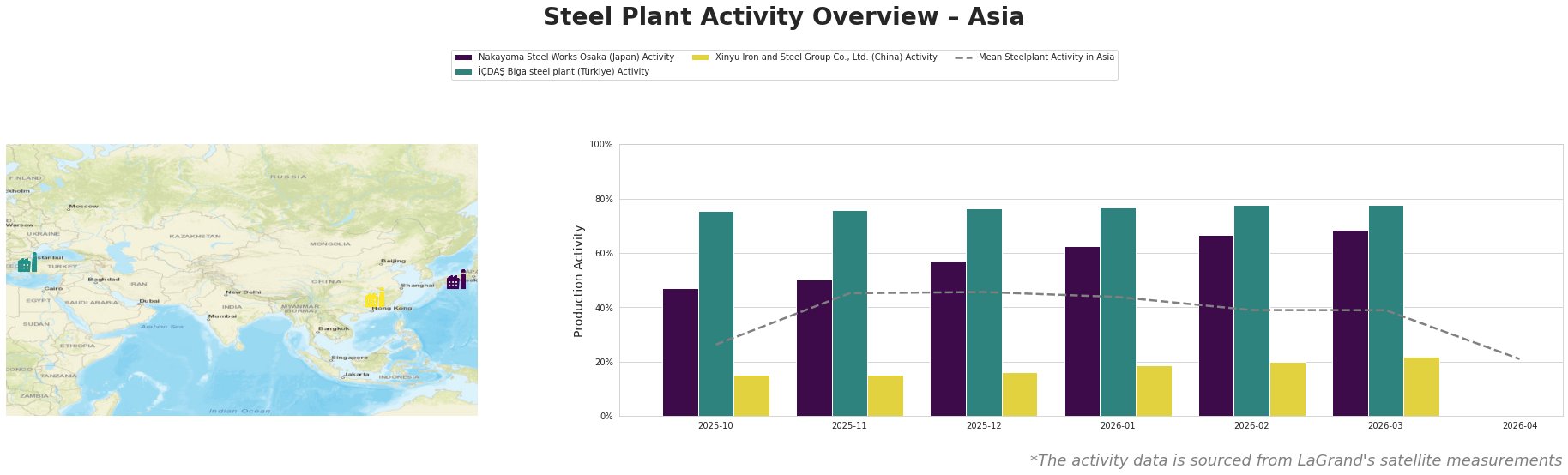
In recent months, the Nakayama Steel Works Osaka has demonstrated a consistent rise in activity, peaking at 68% in March 2026, aligning with broader market recovery efforts, although no specific news links can be made. Meanwhile, the İÇDAŞ Biga steel plant maintained strong performance, consistently operating at 76% from October 2025 through March 2026, but with no recent activity data available for April, the potential for future disruptions due to increased bitumen prices and geopolitical instability should be monitored. Contrastingly, Xinyu Iron and Steel Group Co., Ltd. showcased a decline from 15% in October 2025 to 22% in March 2026, reflecting potential challenges in operational efficiency that need closer analysis in light of rising input costs described in the bitumen price trends.
Given the interconnected nature of geopolitical developments and plant activities, the recent increase in bitumen prices is likely to strain project budgets in several end-user sectors, particularly in construction where the İÇDAŞ Biga steel plant primarily serves. Steel buyers are advised to secure contracts proactively to mitigate the risks of supply chain disruptions due to the observed stagnation in some key plants and potential geopolitical tensions outlined in the news.
In conclusion, staying ahead of procurement strategies is essential—considering the declining activity at Xinyu and rising costs attributed to external factors—quick action might be warranted to maintain operational momentum and avoid future shortages.